The New 2025/2026 Lifejacket Standards: What "Level 70" Means for Your Next PFD
It’s that time of year again. You’re pulling the boat out of storage, dusting off the coolers, and dreaming of those long summer days on Lake Erie. But before you even think about launching, you head to the store for the annual pre-season stock-up.

Dwayne Rodrigues
Boat Owner & Enthusiast
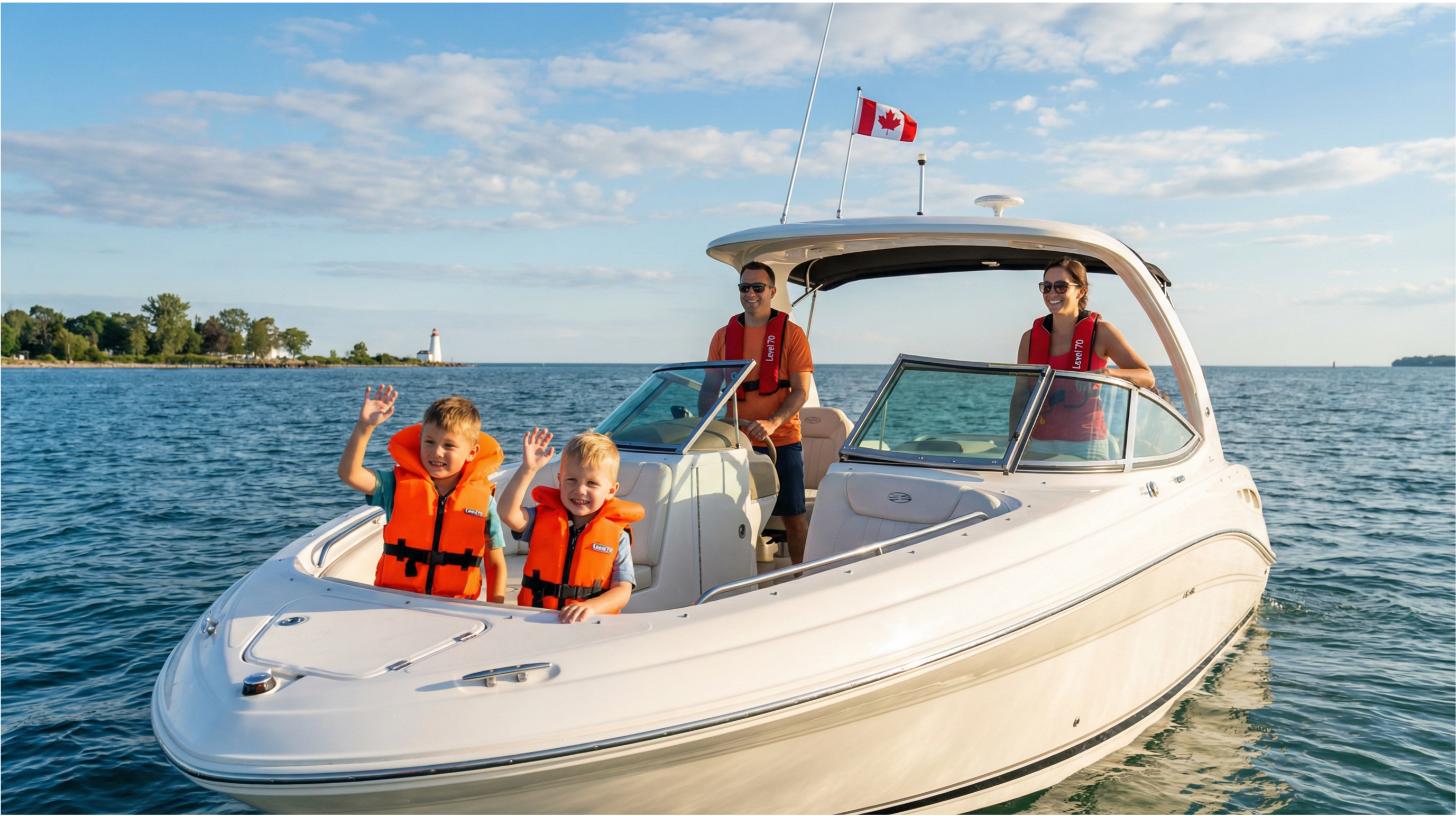
It’s that time of year again. You’re pulling the boat out of storage, dusting off the coolers, and dreaming of those long summer days on Lake Erie. But before you even think about launching, you head to the store for the annual pre-season stock-up. And there it is: a wall of brand-new lifejackets with labels that look completely foreign.
Gone are the familiar “Type II” and “Type III” classifications you’ve known for years. In their place are new labels with terms like “Level 50,” “Level 70,” and a bunch of technical jargon. What does it all mean? And more importantly, are your old lifejackets still legal?
Don’t worry, you’re not alone. Transport Canada has officially harmonized its lifejacket and PFD standards with the U.S. Coast Guard, adopting the new ANSI/CAN/UL 12402 standard. It’s a big change, but it’s designed to make things simpler and safer for boaters in the long run. Let me walk you through exactly what you need to know before you buy your next PFD.
Quick Takeaways: The New PFD Rules in 60 Seconds
New System: The old “Type I, II, III” system is being phased out for a new “Level” system (Level 50, 70, 100, etc.) based on buoyancy in Newtons.
Your Old PFD is Still Legal: You do not need to throw out your old Type-approved lifejackets. They are still legal to carry as long as they are in good condition.
Level 70 is the Sweet Spot: For most recreational boaters on Lake Erie, a Level 70 PFD offers the best balance of comfort and safety for unpredictable conditions.
Level 50 is for Calm Water: Level 50 PFDs are great for high-mobility activities like wakeboarding or swimming near shore in calm water, but they offer less buoyancy.
Inflatables Have Strict Rules: Inflatable PFDs are strictly prohibited for anyone under 16 years old and for anyone operating or riding on a Personal Watercraft (PWC) like a Sea-Doo.
So, What’s Actually Changing? From “Types” to “Levels”
For decades, we’ve been trained to look for those Roman numerals: Type I for offshore, Type II for near-shore, and Type III for recreational fun. It was a system, but it wasn’t perfect. The new harmonized standard, officially known as ANSI/CAN/UL 12402, scraps that system in favor of Performance Levels. This change, which has been in the works since the mid-2000s, finally allows manufacturers to create a single product with one label that is approved for use in both Canada and the United States.
The new system is all about buoyancy, measured in Newtons (N). The higher the number, the more flotation the device provides. It’s a more intuitive way to think about safety: instead of a vague “type,” you get a clear performance metric. According to Transport Canada’s latest policy update, this change allows for more innovative and comfortable designs, which they hope will encourage more of us to actually wear our PFDs all the time.
How to Read the New PFD Labels: A Boater’s Guide
When you’re staring at that wall of new PFDs, the new labels can be a bit intimidating. But once you know what to look for, it’s actually quite simple. The new labels are packed with information, using icons to tell you everything you need to know at a glance.
Here’s a breakdown of the key performance levels you’ll see:
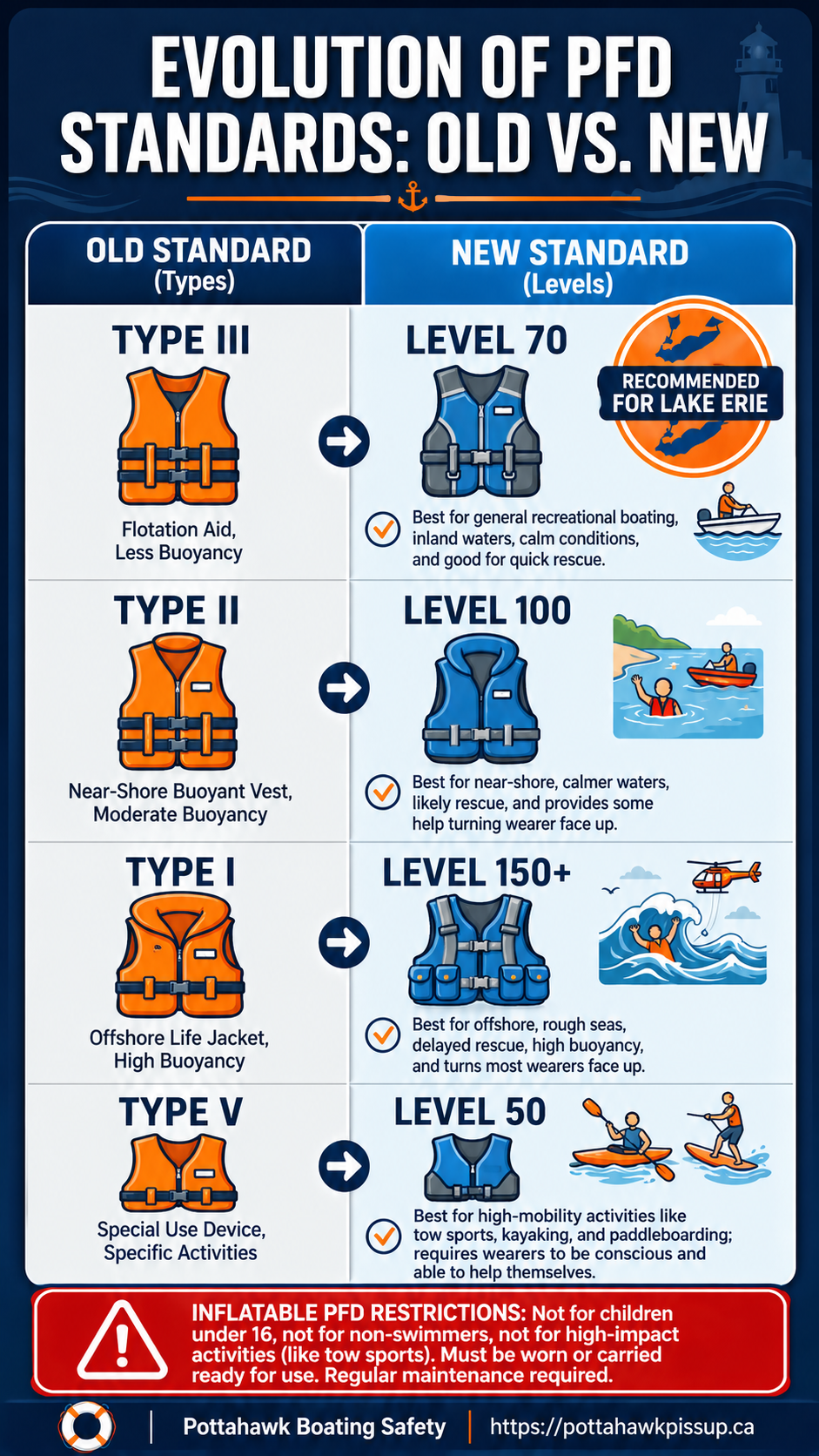
Level 50: These are your buoyancy aids. They offer a minimum of 50 Newtons of buoyancy (about 11 lbs of float). They are designed for calm, near-shore waters where rescue is fast. Think of these as your go-to for wakeboarding, tubing, or swimming off the boat on a calm day. They are comfortable and offer great mobility, but they won’t turn an unconscious person face-up.
Level 70: This is the new gold standard for most recreational boaters. Offering a minimum of 70 Newtons of buoyancy (about 15.5 lbs of float), these PFDs provide more support in the water than a Level 50. While they may not always turn an unconscious person face-up, they offer a good balance of comfort and safety for the unpredictable conditions we often see on Lake Erie. If you’re looking for one PFD to cover most of your boating activities, this is it.
Level 100: These are technically classified as lifejackets. With 100 Newtons of buoyancy (about 22 lbs of float), they are designed to turn an unconscious person face-up and are suitable for rougher, offshore conditions where rescue might be delayed. You’ll see these more in commercial applications, but they are a great choice for anyone venturing far from shore.
It’s important to remember that these are minimum buoyancy ratings. Some manufacturers, like Mustang Survival, create PFDs that far exceed the minimum for a given level, giving you an extra margin of safety.
Old vs. New: A Simple Comparison
To make it even clearer, here’s how the new levels roughly compare to the old system:
The Pottahawk Tie-In: Inflatable PFDs and PWC Rules
Now, let’s talk about Pottahawk. With the high numbers of boats Sea-Doos rafted up, PFD rules are not just a suggestion, they are critical for safety. And when it comes to inflatable PFDs, the rules are crystal clear and non-negotiable.
As confirmed by Safe Boating Course Canada, inflatable PFDs are strictly prohibited for two groups:
Anyone under 16 years old.
Anyone operating or riding on a Personal Watercraft (PWC).
This is not a guideline; it’s the law. The rapid movements and high likelihood of entering the water on a PWC make inflatable PFDs unsuitable. For Pottahawk, this means every single person on a Sea-Doo needs a properly fitted, inherently buoyant PFD, a Level 50 or, even better, a Level 70.
A Deeper Dive on Inflatables: Convenience vs. Responsibility
Inflatable PFDs are incredibly popular for their low-profile, comfortable design. But that convenience comes with responsibility. Unlike foam PFDs, they require regular maintenance and are not foolproof.
Maintenance is Mandatory: You must inspect your inflatable PFD at the start of every season. Check the CO2 cylinder to ensure it’s properly armed and hasn’t been discharged. Check the fabric for leaks and the inflator mechanism for corrosion.
Not for High-Impact Sports: The force of hitting the water at high speed (like falling off a tube or PWC) can damage the inflation mechanism or even the bladder itself.
They Are Not Buoyant Until Inflated: This seems obvious, but it’s the critical reason they are restricted for kids and on PWCs. If you are knocked unconscious upon entering the water, an inflatable that requires manual activation is useless.
Do I Need to Throw Out My Old Lifejackets?
Absolutely not! This is probably the most common question I’ve heard, and the answer is a relief. Your existing Transport Canada-approved PFDs with the old “Type” labels are still perfectly legal to use and carry on your boat, as long as they are in good condition. That means no rips, tears, or degraded foam.
The new standard applies to new products coming to market. So, when you go to replace your old, worn-out PFDs, you’ll be choosing from the new “Level” system. It’s a gradual phase-in, not a sudden mandate.
Pro-Tips for Choosing and Using Your PFD
Fit is Everything: A PFD that is too loose can ride up around your head in the water, and one that is too tight can be dangerously restrictive. To check the fit, put on the PFD and have someone pull up on the shoulders. If it moves up past your nose or head, it’s too loose.
Color Matters: Bright colors like red, orange, and yellow are far more visible in the water than blues or blacks. In an emergency, visibility is your best friend.
Add Accessories: Attach a waterproof flashlight and a pealess whistle to your PFD. These simple additions can be lifesavers, especially if you are separated from your boat at night.
What About Kids on Board? PFD Rules for Young Boaters
If you're bringing kids to Pottahawk or any Lake Erie outing, the rules are even more specific. Children must wear a PFD that is properly sized for their weight, not their age. A PFD that is too large is just as dangerous as no PFD at all, because a child can slip right through it.
For children under 16, the rules are firm: no inflatable PFDs, period. They must wear an inherently buoyant device at all times while the boat is underway. A Level 70 in the right size is the ideal choice for kids, offering good buoyancy without being so bulky that they refuse to wear it. The best PFD is the one that actually gets worn, so comfort and fit matter enormously.
If you're new to boating with a family, our Pottahawk for Beginners guide has a full breakdown of what to bring and how to prepare for your first event with kids in tow.t
Checking Your Existing PFDs: A Quick Inspection Guide
While your old Type-approved PFDs are still legal, that doesn't mean they're all still safe. Before the season starts, take 15 minutes to run through this quick inspection. It's the same habit we recommend in our Pre-Trip Inspection Checklist for a reason.
For foam PFDs, check for any tears, rips, or holes in the outer fabric. Squeeze the foam panels; they should spring back immediately. If the foam feels waterlogged, compressed, or crumbles, the PFD has lost its buoyancy and needs to be replaced. Check the buckles and zippers for corrosion or damage, and make sure all straps are intact and adjustable.
For inflatable PFDs, the inspection is more involved. Check that the CO2 cylinder is fully screwed in and has not been punctured. Look for the green indicator on the arming mechanism. Inflate the device manually by blowing into the oral inflation tube, then let it sit for 16 hours. If it holds air, the bladder is intact. If it deflates, it needs to be serviced before use.
The Bigger Picture: Why This Change Matters
Here's the thing about PFD regulations, they don't change because bureaucrats have nothing better to do. They change because people are drowning. According to Transport Canada's own data, the majority of boating fatalities in Canada involve victims who were not wearing a PFD. The new standards are specifically designed to make PFDs more comfortable and wearable, with the goal of getting more of us to actually put them on before we need them.
The harmonization with U.S. standards is also a big deal for the industry. It means manufacturers can build one product for the entire North American market, which drives innovation and lowers costs. Better gear at lower prices is a win for everyone on the water.
If you want to understand the full picture of boating safety requirements in Canada, our post on Transport Canada's 2026 Boat Licence Changes covers the other major regulatory update you need to know about this season. And if you're heading to Pottahawk on a Sea-Doo, make sure you've read our PWC Safety Guide before you launch.
The Bottom Line: Choose the Right Level for Your Adventure
This new system is a positive step forward for boating safety in Canada. It’s clearer, more performance-oriented, and gives us access to more comfortable and innovative gear. When you’re shopping for a new PFD this season, just remember this simple rule of thumb:
Calm water, high mobility, strong swimmer? Level 50 is a great choice.
All-around recreational boating on Lake Erie? Level 70 is your best bet.
Heading far offshore or into rough conditions? Look for a Level 100 or higher.
And if you’re heading to Pottahawk on a Sea-Doo, leave the inflatable at home. Grab a well-fitted Level 70 PFD and enjoy the party with peace of mind.
Sources & Further Reading
Tags
Share
Read Next
 News
NewsBoating Accident Reports and Lessons: What Recent Years Have Taught Us
Every time you turn the key and hear that outboard rumble to life, you are taking on a massive responsibility. Most days on the water end with sunburns, empty coolers, and great memories. But when things go wrong out there, they go wrong fast.

Dwayne Rodrigues
Boat Owner & Enthusiast
 News
NewsThe WAHVA Surcharge: Transport Canada's Crackdown on Abandoned Boats
Honestly, when was the last time you thought about your Pleasure Craft Licence? For most of us, it’s a piece of paper (or plastic) we got years ago, tucked away in a folder somewhere. But a small change is coming that you’ll definitely notice on your next
Dwayne Rodrigues
Boat Owner & Enthusiast
 News
NewsIs Your Boat Licence Expiring? The New 2026 Rules That Could Cost You a Fine
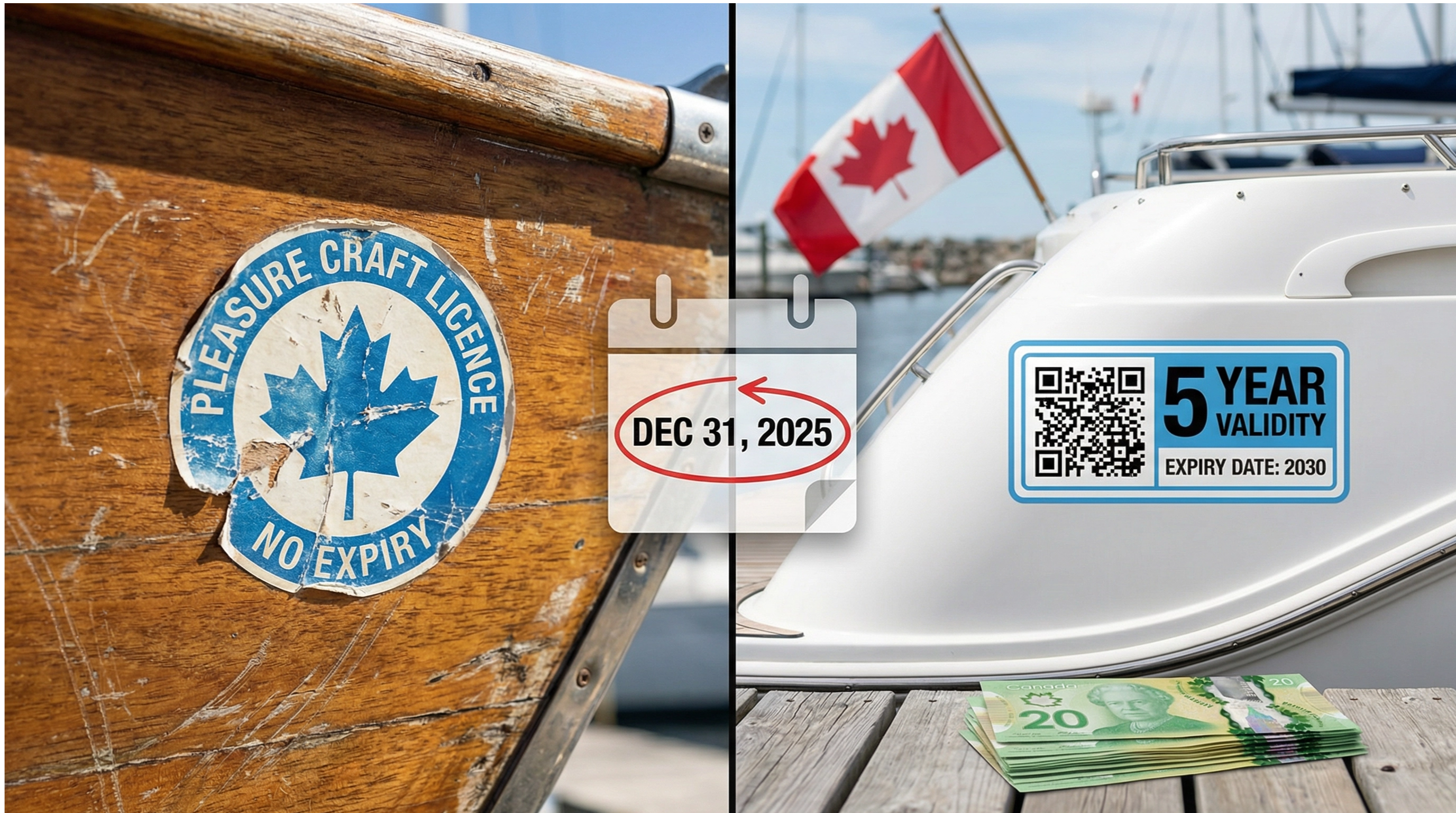
Remember when your Pleasure Craft Licence (PCL) was free and lasted pretty much forever? Well, those days are officially over. As of December 31, 2025, Transport Canada rolled out a whole new set of rules, and if you haven’t heard about them, you’re not
Dwayne Rodrigues
Boat Owner & Enthusiast