Best Boat Fenders for Docking: A Complete Buyer's Guide for Canadian Boaters
Of all the gear you can buy for your boat, fenders are probably the least glamorous. They aren’t flashy like a new chartplotter or exciting like a powerful engine. But honestly, they are one of the most important investments you can make.

Dwayne Rodrigues
Boat Owner & Enthusiast
Quick Takeaways
Sizing Rule: For cylindrical fenders, you need 1 inch of diameter for every 4 to 5 feet of your boat's length. For round fenders, it's 2 inches of diameter.
How Many: The general rule is to have at least one fender for every 10 feet of waterline, with a minimum of three fenders even for the smallest boats.
Top Brands in Canada: Look for trusted names like Polyform (G-Series, A-Series), Taylor Made (Big B, Low Freeboard), and value-packs from brands like Norestar and Five Oceans.
Material Matters: Most fenders are made from durable, UV-resistant vinyl or slightly tougher PVC. Both are excellent choices for the Great Lakes.
Rafting Requires More: For raft-ups like the Pottahawk Pissup, you'll need more fenders, and round or flat fenders are ideal for boat-to-boat protection.
Of all the gear you can buy for your boat, fenders are probably the least glamorous. They aren’t flashy like a new chartplotter or exciting like a powerful engine. But honestly, they are one of the most important investments you can make. A good set of fenders is the only thing standing between your boat’s pristine gelcoat and a very expensive, very ugly encounter with a dock, a piling, or another boat.
Think of them as your boat’s ever-vigilant bodyguards. They take the hits, absorb the shocks, and prevent the kind of scrapes, dings, and gouges that make a boat owner’s heart sink. Here on Lake Erie, where a calm morning can turn into a choppy afternoon in a hurry, having the right fenders isn't just a good idea, it's essential.
But choosing the right ones can feel overwhelming. What size do you need? How many? Are the expensive ones really worth it? This guide will walk you through everything you need to know to choose the best boat fenders for docking, rafting, and mooring in Canadian waters.
What Exactly Is a Boat Fender?
A boat fender is a durable, air-filled or foam-filled cushion that acts as a buffer between your vessel and other objects. You’ll hear people call them “boat bumpers,” and while that gets the point across, the proper marine term is “fender.” Their sole job is to absorb kinetic energy during contact, protecting your hull from damage.
It’s important not to confuse a fender with a buoy. A buoy is a floating marker used for navigation or mooring, while a fender is always attached to your boat, ready to be deployed when you come alongside a dock or another vessel.
Why Fenders Are Non-Negotiable on Lake Erie
Lake Erie’s shallow depth makes it prone to steep, choppy waves that can develop with surprising speed. A sudden squall or even the wake from a passing freighter can turn a calm docking experience into a stressful scramble. In these conditions, your fenders are working overtime.
Docking at a marina in Turkey Point, Port Dover or Nanticoke after a day on the water means contending with wind and waves that can push your boat against the dock with significant force. Without properly sized and placed fenders, you’re risking cosmetic damage at best, and structural damage at worst. And if you’re planning on joining the massive raft-up at the Pottahawk Pissup, having a robust set of fenders is a matter of basic etiquette and safety, as detailed in our Ultimate Guide to Raft-Up Safety on Lake Erie.
Fender Types: Choosing the Right Shape for the Job
Fenders come in a variety of shapes, each designed for specific applications. Here are the most common types you’ll find in Canada.
Fender Type | Description & Best Use |
|---|---|
Cylindrical Double-Eye | The most common type. Has a rope eye at each end, allowing it to be hung vertically or horizontally. A versatile workhorse for most recreational boats. |
Cylindrical Center-Hole | Also known as Hole-Through-Middle (HTM). A single line runs through the center, which can provide more cushioning and is great for larger, heavier boats. |
Round or Spherical | Excellent for protecting against contact with pointed objects or in situations with significant wave action. Their shape prevents them from getting caught. They are also ideal for rafting boats together but can be bulky to store. |
Flat / Contoured | These distribute impact over a wider area and won't roll out of position. They are perfect for tying up alongside other boats (rafting) or against flat-faced docks. |
Low Freeboard | These L-shaped fenders are specifically designed for boats that sit low in the water, like bass boats, ski boats, and runabouts. They hook over the gunwale to protect the hull where standard fenders would be too high. |
Pontoon Fenders | Uniquely shaped to hug the curve of a pontoon tube, often with molded ridges that hook under the deck for a secure fit. |
For most boaters on Lake Erie, a set of high-quality cylindrical double-eye fenders is the perfect starting point. They offer the most flexibility for docking in various conditions.
How to Choose the Right Size and Number of Fenders
This is the most critical part of the decision. Fenders that are too small won't provide enough protection, while fenders that are too large are just cumbersome and difficult to store. Luckily, there are some simple, industry-standard rules to follow.
The Sizing Rule
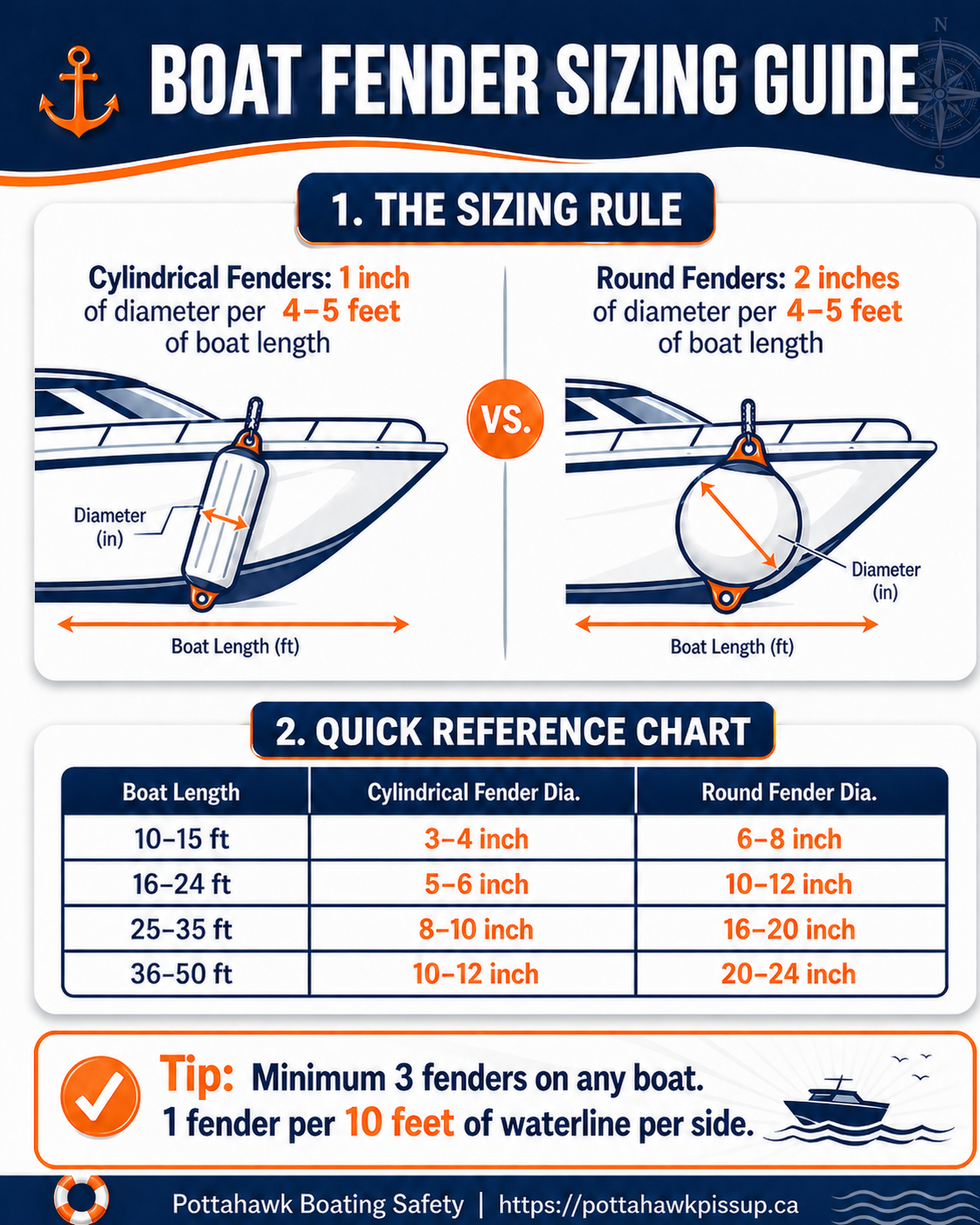
According to leading manufacturers like Taylor Made and Polyform, the rule of thumb is based on your boat's length:
For cylindrical fenders, you need 1 inch of diameter for every 4 to 5 feet of boat length.
For round or spherical fenders, you need 2 inches of diameter for every 4 to 5 feet of boat length.
Here’s a simple chart to help you visualize it:
Boat Length | Cylindrical Fender Diameter | Rounder Fender Diameter |
|---|---|---|
10–15 ft | 3–4 inches | 6–8 inches |
16–24 ft | 5–6 inches | 10–12 inches |
25–35 ft | 8–10 inches | 16–20 inches |
36–50 ft | 10–12 inches | 20–24 inches |
When in doubt, it’s always better to go one size up. You can never have too much protection.
How Many Fenders Do You Need?
The second rule of thumb is just as simple:
You should have at least one fender for every 10 feet of waterline, with a minimum of three fenders for any boat.
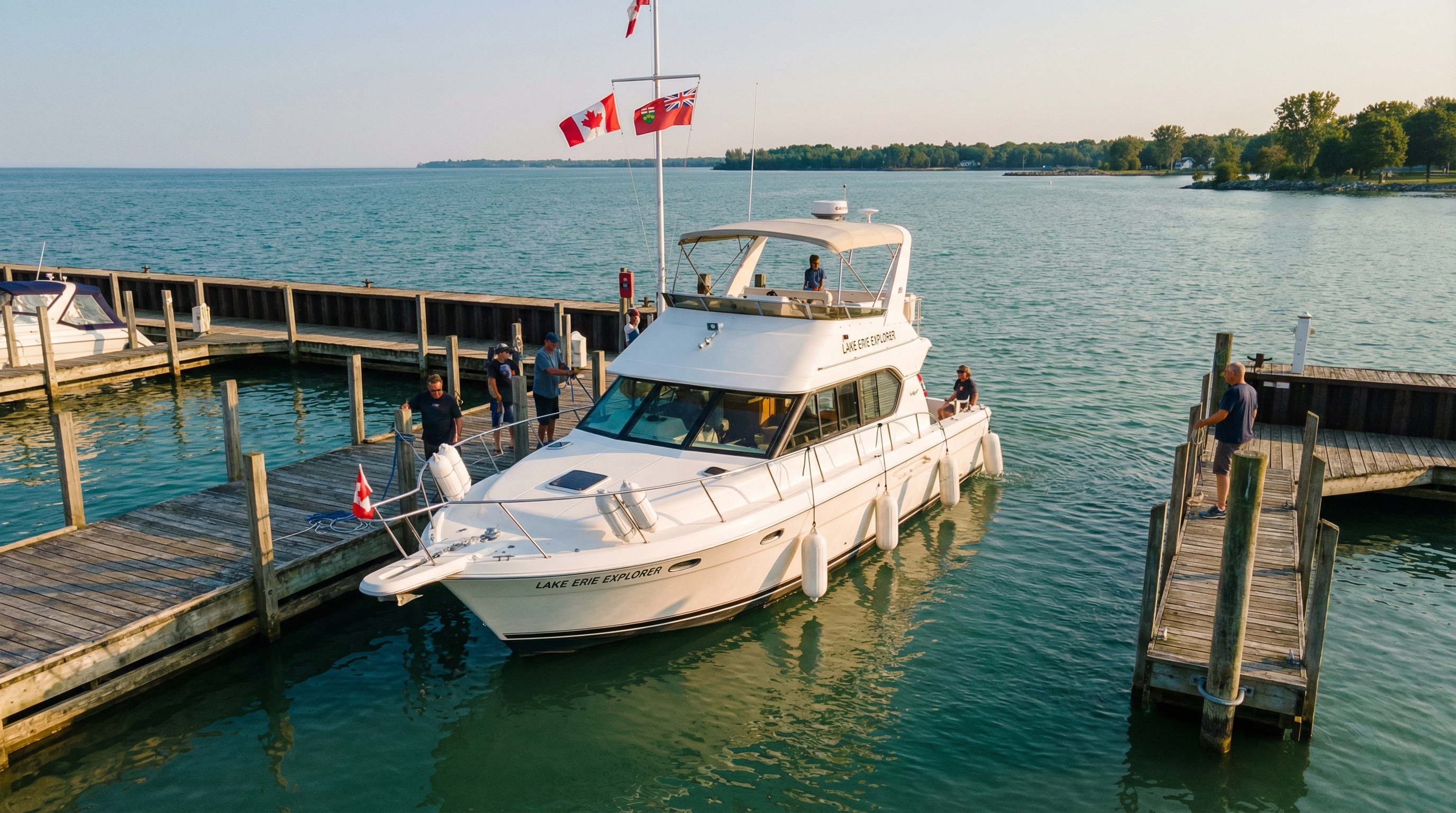
So, for a 25-foot boat, you should have at least three fenders per side. For a 40-foot boat, you’d want four per side. Remember, this is a minimum. Having a couple of extra fenders on board is always a wise idea, especially a larger one to use as a roving fender when docking in tricky spots.
A Look at Top Fender Brands and Models in Canada
While this is a buyer's guide and not a direct review, it's helpful to know the trusted names in the industry. When you're shopping at your local marine store or online, you'll likely see these brands. They have a proven track record for quality and durability.
Polyform G-Series: Often considered the gold standard for recreational boats. These are tough, ribbed, vinyl fenders that come pre-inflated and are made in the USA. The G-4 (6.5" x 22") and G-5 (8.8" x 26.8") are extremely popular sizes for boats in the 20-30 foot range.
Taylor Made Big B: Another premium option, these fenders feature a center rope tube that allows them to be hung horizontally with a single line, which is incredibly useful. They are known for their high-gloss, durable finish and lifetime guarantee against splitting.
Taylor Made Low Freeboard Fender: If you have a bass boat or ski boat, this is the fender you need. Its unique shape is the only way to properly protect the hull and gunwale on low-sided boats.
Value Packs (Norestar, Five Oceans): For boaters on a budget or those looking for a complete starter kit, brands like Norestar and Five Oceans offer 4-packs that often include fender lines and even a pump. These are a great way to get started, especially for smaller boats.
Extreme Max BoatTector: This brand offers some innovative designs, like their contour fenders that have a wraparound shape to protect both the gunwale and the hull, and they stow flatter than traditional round fenders.
Don't Forget the Accessories
Your fenders are only as good as the gear you use with them. Investing in a few key accessories will make your life much easier.
Fender Lines: Don't cheap out here. Get proper, marine-grade, three-strand or double-braid nylon lines. They should be the right diameter for your fender's eyelet and long enough to allow for adjustment.
Fender Hangers/Adjusters: These clips or straps allow you to quickly and easily adjust the height of your fenders without having to tie and untie complex knots every time. They are a huge time-saver.
Fender Racks: For larger boats, stainless steel racks that mount to your bow rail are a great way to keep your fenders secure and out of the way when underway.
Fender Care and Maintenance: Making Them Last
Once you've invested in a good set of fenders, a little care goes a long way. Vinyl fenders are generally low-maintenance, but the sun, and algae that come with life on the water can degrade them over time if you're not paying attention.
After every outing, give your fenders a quick rinse with fresh water. This is especially important if you've been in any marina with significant algae growth, which is common in the warmer months along the Lake Erie shoreline. Algae can stain vinyl and, over time, cause it to become brittle. For a deeper clean, a mild soap and a soft brush will remove most staining without damaging the material.
For inflatable fenders, check the pressure at the start of each season. Fenders that are underinflated won't absorb impact effectively they'll just compress and bottom out, which means your hull is taking the hit. Conversely, an overinflated fender is too rigid and can actually transfer more force to the hull rather than absorbing it. A fender that feels firm but has a small amount of give when you press it firmly with your thumb is about right.
Store your fenders out of direct sunlight when they're not in use. UV degradation is the number one enemy of vinyl over the long term. If you're storing your boat for the winter, deflate your inflatable fenders slightly to relieve stress on the seams, and store them in a cool, dry place. This simple habit can add years to their life.
A Special Note for Raft-Up Situations
If you're heading to a large raft-up event, the fender game changes considerably. When you're tied side-by-side with another boat, you need fenders that protect boat-to-boat contact rather than boat-to-dock contact. This means you need more of them, and the positioning matters more than ever.
For raft-up situations, round fenders and flat contoured fenders are particularly effective because they distribute pressure over a wider area and are less likely to be pushed up or down by wave action. Many experienced boaters keep a separate set of fenders specifically for rafting, often larger than their standard docking fenders.
The general rule is to position your fenders where the two hulls will make contact, which is usually amidships. But every raft-up is different, and you may need to adjust as more boats join. Keeping a roving fender on deck, one that's not tied off and can be quickly placed wherever it's needed is a practice that experienced raft-up boaters swear by. For more on raft-up safety and etiquette, our Ultimate Guide to Raft-Up Safety on Lake Erie covers everything you need to know.
Frequently Asked Questions
What is the most common fender mistake beginners make? Using fenders that are too small is by far the most common mistake. Many new boaters buy the cheapest or smallest fenders they can find, only to discover that they compress completely on contact and provide almost no protection. Always size up if you're unsure.
Can I leave my fenders out while I'm underway? You can, but it's generally considered poor seamanship. Fenders hanging over the side while underway are a sign of an inexperienced boater, and they can actually become a hazard in certain situations. Stow them when you're moving and deploy them as you approach the dock.
How often should I replace my boat fenders? A quality set of fenders, properly cared for, can last many years. The signs that it's time to replace them include visible cracking, significant discolouration, or a fender that won't hold air. If you're finding yourself re-inflating a fender every time you go out, it's time for a new one.
Do I need different fenders for saltwater vs. freshwater? For the Great Lakes and Ontario's inland waterways, you're in freshwater, which is actually easier on fender materials than saltwater. That said, the UV exposure and wave action on Lake Erie can be significant, so UV-resistant vinyl or PVC is still the right choice.
The Right Fender for the Right Situation
Ultimately, the "best" boat fender is the one that's right for your boat, your budget, and the way you use it. As a first-time boat owner, our Beginner's Guide to Boating in Canada can help you navigate these initial gear choices. The key is to not see them as an afterthought, but as a fundamental piece of your boat's safety equipment.
By investing in a quality set of properly sized fenders, you’re buying peace of mind. You’re ensuring that every return to the dock is a smooth, stress-free event, and that your boat stays looking its best for years to come.
Sources & Further Reading
Tags
Share
Read Next
 Equipment & Gear
Best Boat Anchors for the Great Lakes: A Complete Guide by Bottom Type
If you spend enough time boating on the Great Lakes, you will eventually find yourself dragging anchor. It usually happens at the worst possible time, when the wind kicks up, the chop builds, and you are surrounded by other boats.

Dwayne Rodrigues
Boat Owner & Enthusiast
 Equipment & Gear
Best Waterproof Bags for Boating: 6 Top Picks for Canadian Waters
There is a moment every boater dreads. You hit an unexpected wake, a sudden squall rolls across the lake, or someone simply slips while stepping onto the dock. In an instant, your phone, your dry clothes, and your boat registration are soaked.
Dwayne Rodrigues
Boat Owner & Enthusiast
 Equipment & Gear
Best VHF Radios for Lake Erie Boaters
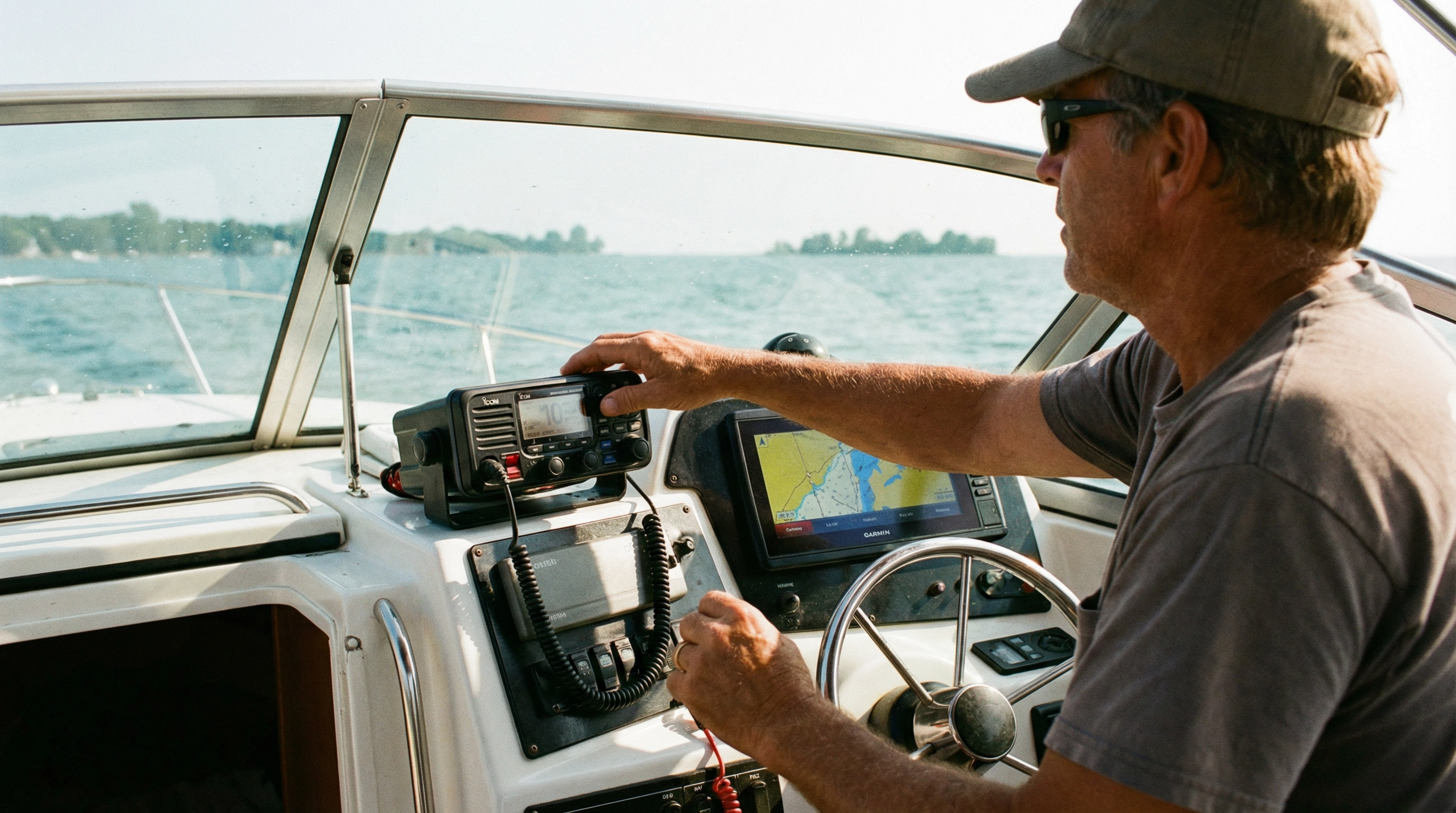
A VHF marine radio is not a luxury item. On Lake Erie, where squalls can build in under an hour and commercial traffic shares the same water as recreational boats, it is one of the most important pieces of safety equipment you can carry.
Dwayne Rodrigues
Boat Owner & Enthusiast