Best VHF Radios for Lake Erie Boaters
A VHF marine radio is not a luxury item. On Lake Erie, where squalls can build in under an hour and commercial traffic shares the same water as recreational boats, it is one of the most important pieces of safety equipment you can carry.

Dwayne Rodrigues
Boat Owner & Enthusiast
Quick Takeaways
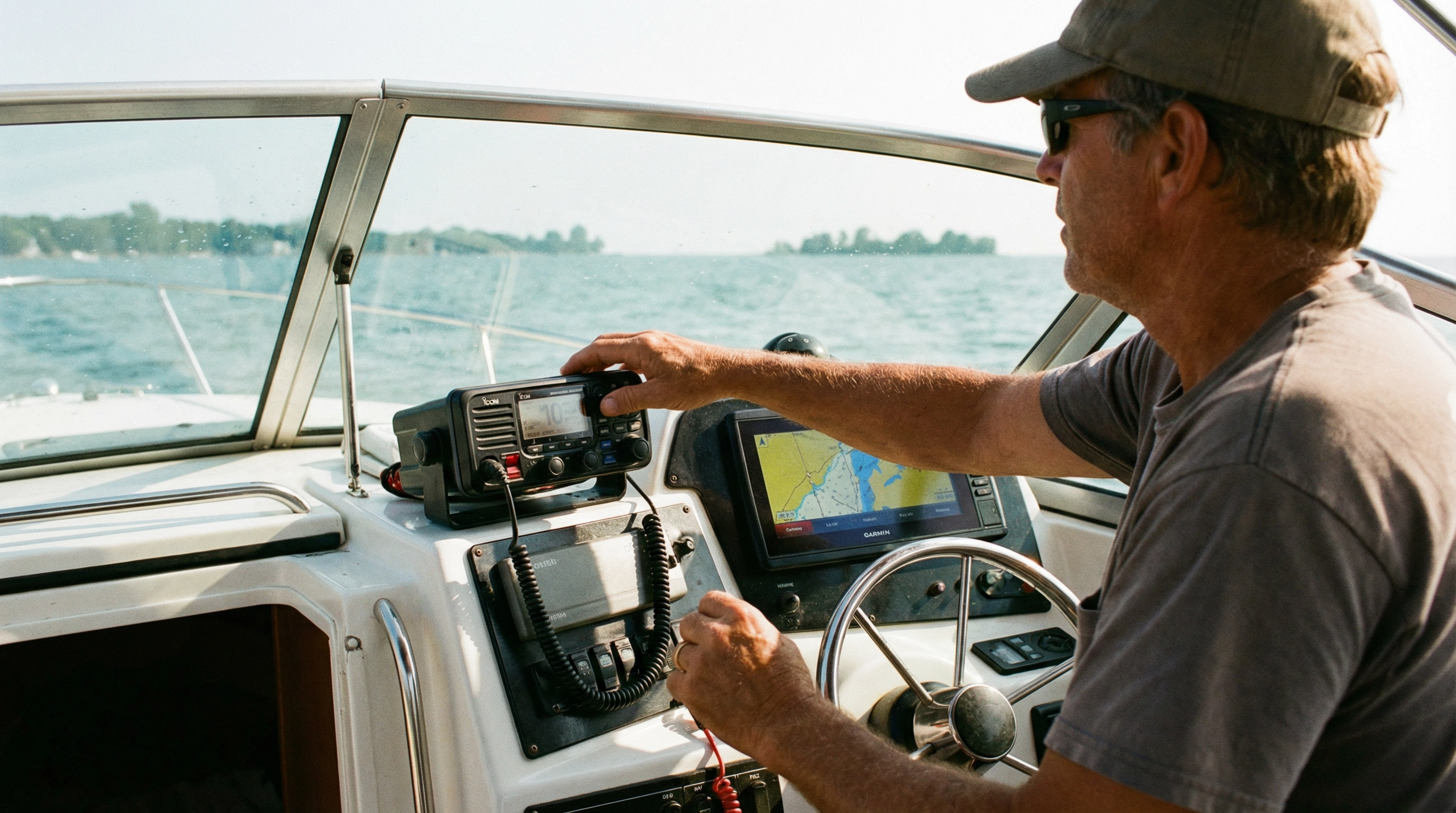
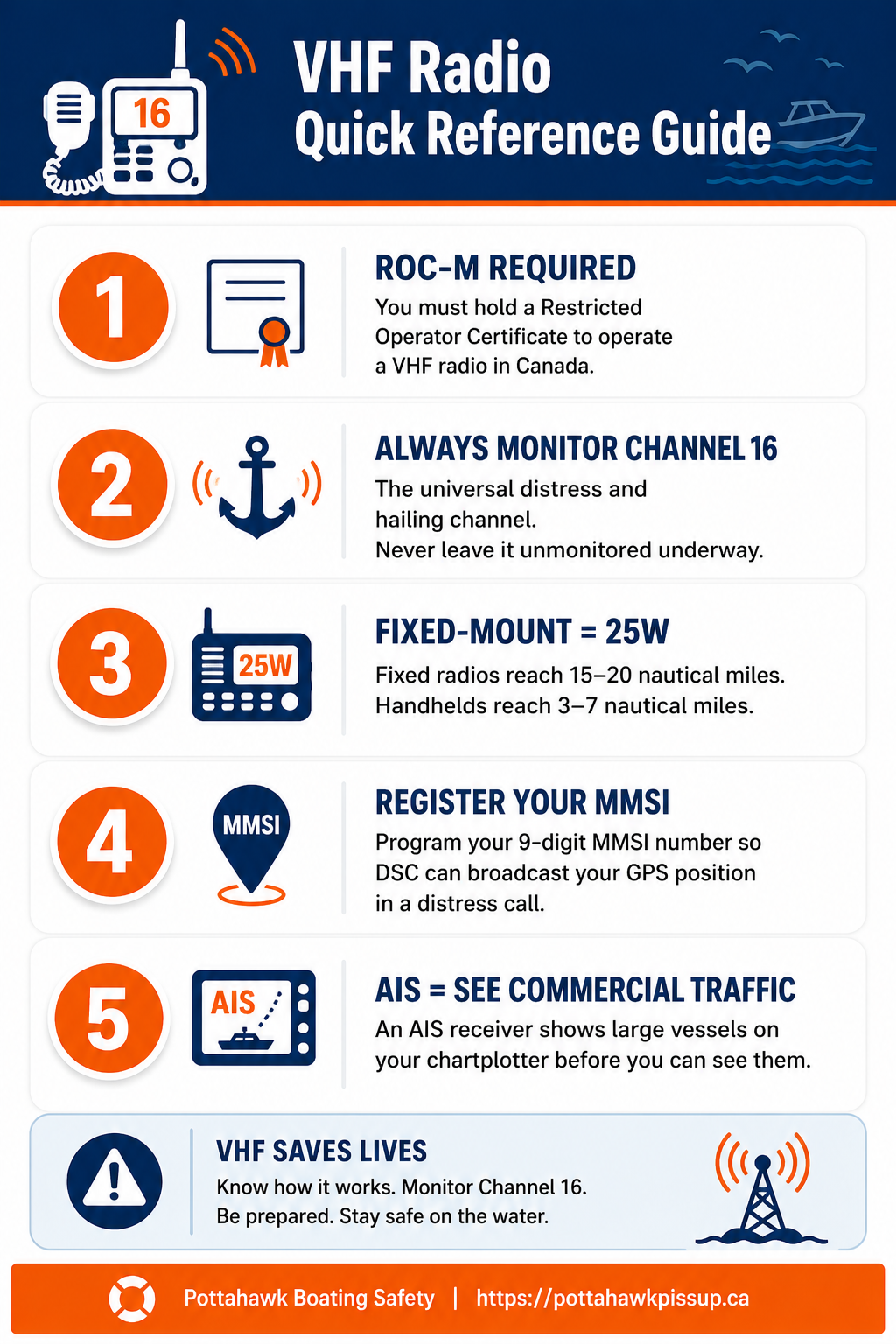
Every person who operates a VHF marine radio in Canada must hold a Restricted Operator Certificate — Maritime (ROC-M)
A ship station licence is not required for recreational boats operating exclusively in Canadian waters
Channel 16 is the universal distress and hailing channel, your radio must always be able to monitor it
Fixed-mount radios offer more power (25 watts) and range; handhelds are essential as a backup
DSC (Digital Selective Calling) allows your radio to send an automatic distress signal with your GPS position at the press of a button
AIS integration lets you see commercial traffic on your chartplotter, a genuine safety advantage on Lake Erie
A VHF marine radio is not a luxury item. On Lake Erie, where squalls can build in under an hour and commercial traffic shares the same water as recreational boats, it is one of the most important pieces of safety equipment you can carry. Your cell phone will not reach the Canadian Coast Guard from the middle of the lake but your VHF radio will.
This guide is written specifically for Lake Erie boaters heading out of Ontario ports, whether you are running from Port Dover to Long Point Bay for Pottahawk weekend, crossing to Erie, Pennsylvania, or just day-cruising along the north shore. We cover what the law requires in Canada, what the technology actually does, and which specific models are worth your money in 2026.
What the Law Requires in Canada
Before buying any radio, it helps to understand the two separate legal requirements that apply to Canadian recreational boaters.
The ROC-M Certificate
Anyone who operates a VHF marine radio in Canadian waters must hold a Restricted Operator Certificate — Maritime (ROC-M), this is not optional. The ROC-M is administered by the Canadian Power and Sail Squadrons (CPS) and requires passing an exam that covers basic radio procedures, the NATO phonetic alphabet, and the rules around distress calls. The course can be completed online in a single day.
The Ship Station Licence
This is where many boaters get confused. A ship station licence is generally not required if your boat operates exclusively in Canadian waters. However, if you plan to cross into US waters, which is a common trip for Lake Erie boaters heading to Presque Isle, Put-in-Bay, or Kelleys Island, you will need both a ship station licence from Innovation, Science and Economic Development Canada (ISED) and an FCC Ship Station Licence for the US side. If you are a regular cross-border boater, budget time to obtain both before your first crossing. Our guide to crossing Lake Erie safely covers the full customs and documentation requirements.
Channel 16: The One Rule Everyone Must Know
Channel 16 is the international distress and hailing frequency. All vessels must monitor it while underway. The Canadian Coast Guard monitors Channel 16 continuously and uses it to broadcast weather alerts, safety notices, and to coordinate search and rescue. If you ever need to make a distress call, you transmit "MAYDAY MAYDAY MAYDAY" on Channel 16 and provide your vessel name, position, the nature of the emergency, and the number of people on board.
Fixed-Mount vs. Handheld: Which Do You Need?
Most experienced Lake Erie boaters carry both. Here is why.
Feature | Fixed-Mount | Handheld |
|---|---|---|
Transmit Power | 25 watts | 5-6 watts |
Range | 15-20+ nautical miles | 3-7 nautical miles |
DSC Class | Class D (standard) | Class D (most models) |
AIS | Available on premium models | Available on premium models |
Power Source | Vessel's 12V system | Rechargeable battery |
Waterproofing | IPX7/IPX8 (flush mounted) | IPX7/IPX8 |
Best Use | Primary radio at the helm | Backup, tender, man overboard |
A fixed-mount radio is your primary communication tool. With 25 watts of transmit power, it can reach the Coast Guard and other vessels across a much wider range than any handheld. A handheld is your backup, it goes in the ditch bag, it goes with the person who falls overboard, and it goes on the tender when you anchor off Pottahawk Point.
Understanding DSC and Why It Matters
Digital Selective Calling (DSC) is the feature that separates a modern VHF radio from an old one. Every new fixed-mount radio sold in Canada is required to be DSC-capable (Class D). Here is what it does.
When your radio is connected to your boat's GPS and programmed with your Maritime Mobile Service Identity (MMSI) number, a unique nine-digit identifier registered to your vessel, pressing the red distress button sends an automated digital distress signal on Channel 70. That signal includes your vessel name, your MMSI, your GPS position, and the time of the distress. It is received by every DSC-capable radio and by the Coast Guard within range, all without you having to say a word.
For a boater who has gone overboard or is incapacitated, DSC is the difference between being found and not being found. Getting your MMSI number is free through BoatUS or through ISED Canada. Do it before you leave the dock.
What Is AIS and Do You Need It on Lake Erie?
AIS (Automatic Identification System) is a transponder system used by commercial vessels to broadcast their position, speed, heading, and vessel name. An AIS receiver in your VHF radio lets you see that traffic on your chartplotter so you know that the 200-metre bulk carrier heading for the Port of Cleveland is 4 nautical miles away and closing at 14 knots before you can see it with your eyes.
On Lake Erie, AIS is a genuine safety advantage. The lake carries significant commercial traffic, particularly in the western basin near Windsor and in the approaches to Cleveland and Toledo. An AIS receiver (receive-only) is available on mid-range fixed-mount radios for around $400–$500 CAD. A full AIS transponder (transmit and receive) is available on premium models and makes your vessel visible to commercial traffic, which is the real safety benefit.
For Pottahawk weekend specifically, AIS is less critical because you are operating in a known, confined area with slow-moving recreational traffic. But for any open-lake crossing or passage through commercial shipping lanes, it is worth having.
The Best Fixed-Mount VHF Radios for Lake Erie
Standard Horizon GX2400 - Best Overall
The Standard Horizon GX2400 is the most popular fixed-mount VHF radio among Great Lakes recreational boaters, and for good reason. It delivers 25 watts of transmit power, a built-in 66-channel GPS receiver, an AIS receiver, Class D DSC, and NMEA 2000 plug-and-play connectivity all in a compact, flush-mount housing rated IPX8 (submersible to 1.5 metres for 30 minutes). The colour display is readable in direct sunlight, the menu system is intuitive, and the build quality is exceptional.
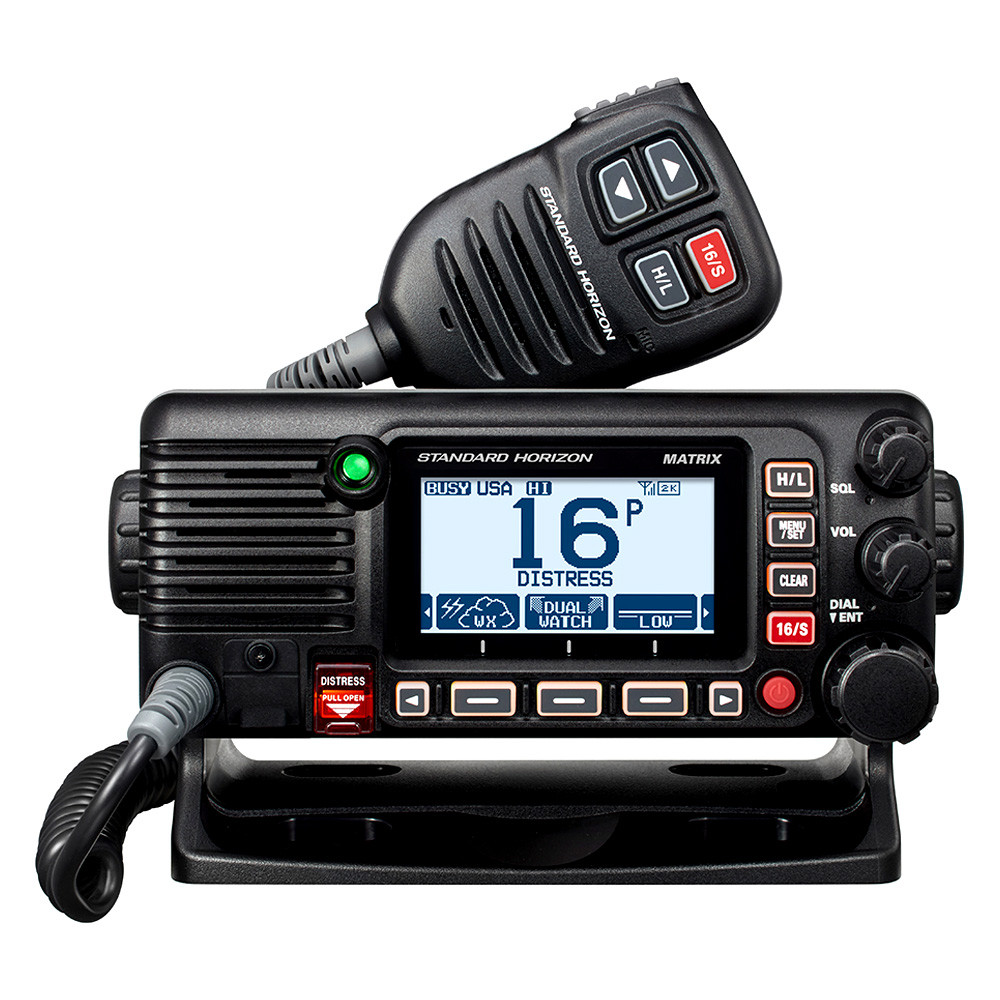
At approximately $450–$500 CAD, it sits at the sweet spot between price and capability. If you are buying one fixed-mount radio for a Lake Erie powerboat, this is the one.
Icom IC-M510 - Best for Chartplotter Integration
The Icom IC-M510 is the choice for boaters who want deep integration with their existing electronics. It offers 25 watts, built-in GPS, Class D DSC, AIS receive capability, and both NMEA 0183 and NMEA 2000 connectivity. What sets it apart is its built-in Wi-Fi, which allows you to control the radio from a smartphone app and integrate it with Icom's RS-M500 wireless handset system. If you run a Garmin or Raymarine chartplotter and want everything talking to everything else, the M510 is the cleaner solution.
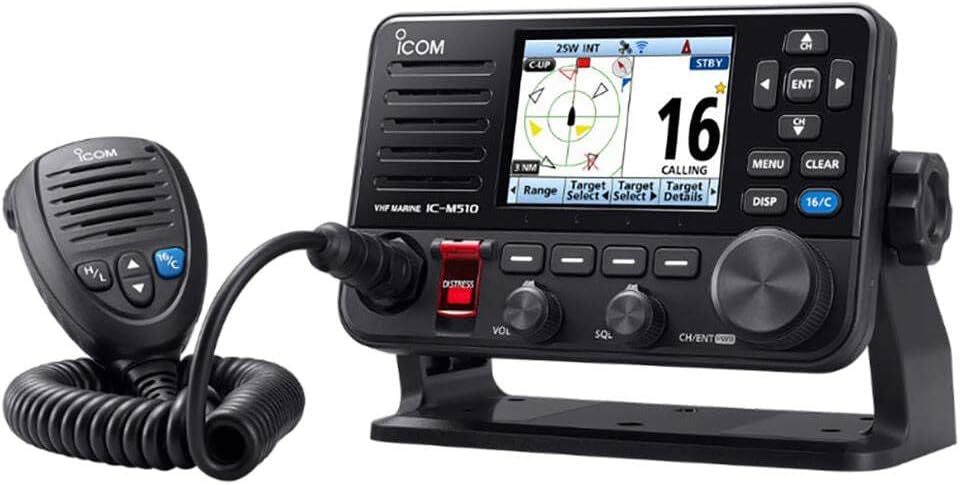
Priced around $500–$550 CAD, it is slightly more expensive than the Standard Horizon but the integration capabilities justify the premium for boaters who have invested in a full electronics suite.
Garmin VHF 215i - Best for Garmin Ecosystem Users
If your helm is already built around Garmin, a GPSMAP chartplotter, Garmin autopilot, or Garmin instruments, the VHF 215i is the natural choice. It integrates directly with the Garmin network via NMEA 2000, allowing your chartplotter to display AIS targets, control the radio, and send DSC distress calls with your vessel's GPS position automatically. The 215i offers 25 watts, built-in GPS, AIS receive, and Class D DSC.
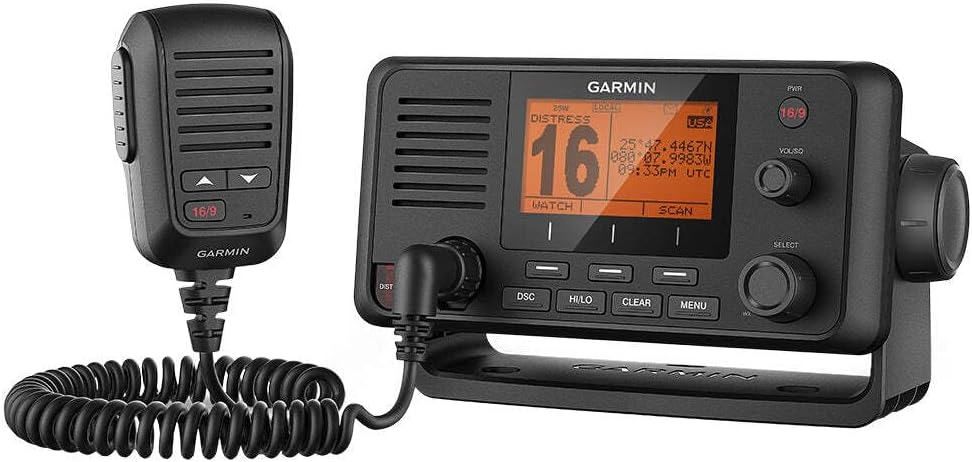
At approximately $480–$520 CAD, it is competitive with the other premium options. The one caveat: if you do not already have a Garmin chartplotter, the integration benefits are largely lost and the Standard Horizon GX2400 is a better value.
The Best Handheld VHF Radios for Lake Erie
Standard Horizon HX890 - Best Overall Handheld
The HX890 is the handheld that serious boaters reach for. It transmits at 6 watts (down to 2 and 1 watt), floats, has an IPX8 waterproof rating, a built-in WAAS GPS receiver, Class D DSC with man-overboard (MOB) function, an FM radio receiver, and an emergency strobe light that activates automatically when submerged. The battery gives approximately 11 hours of combined use. At around $250–$280 CAD, it is the most capable handheld on the market at a reasonable price.
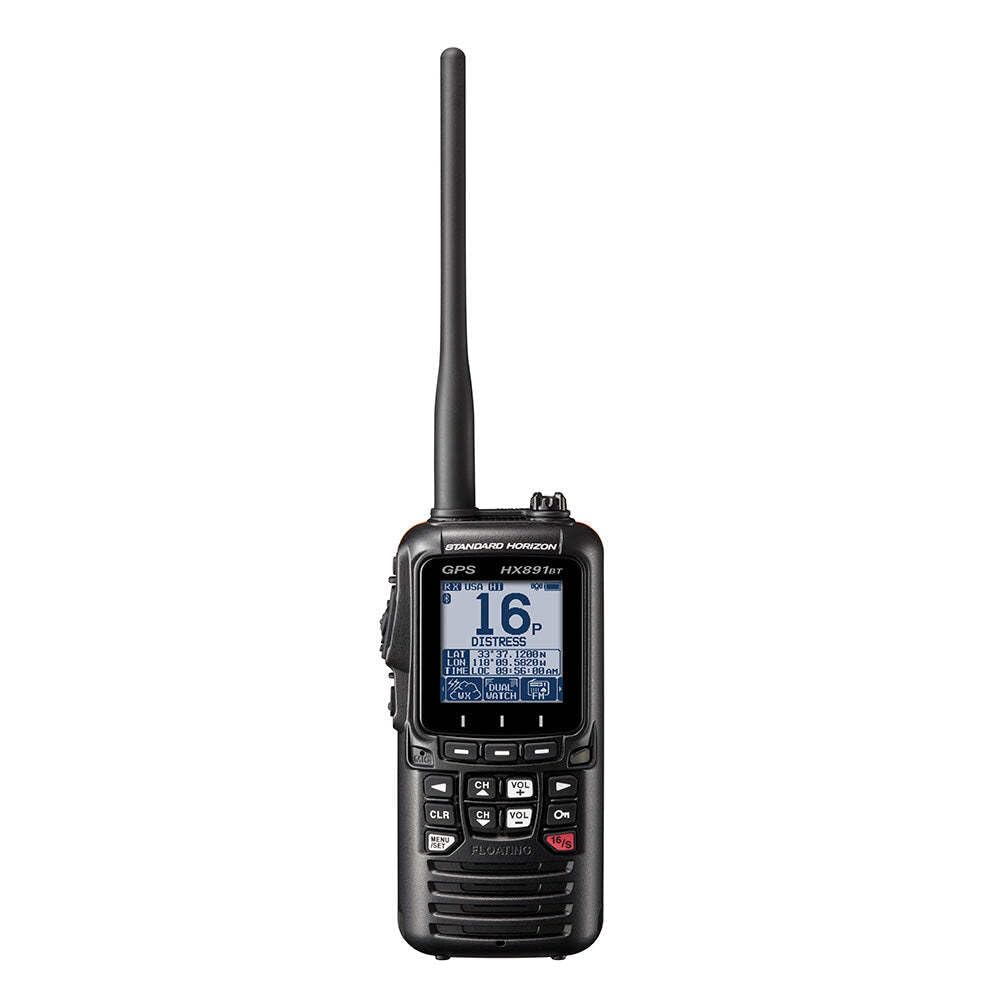
For Lake Erie boaters, the MOB function is particularly valuable. Press the button when someone goes overboard and the radio logs the GPS coordinates of the incident, giving you a precise location to return to even in deteriorating conditions.
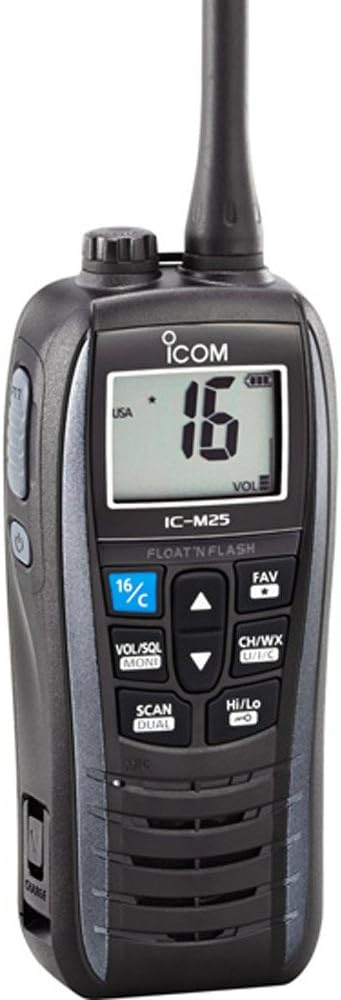
Icom IC-M25 - Best Budget Handheld
If you need a reliable, no-frills backup radio without spending $250, the Icom M25 is the answer. It transmits at 5 watts, has an IPX7 waterproof rating, a lithium-ion battery good for 11 hours, and the AquaQuake draining function that vibrates water out of the speaker. It does not have DSC or GPS, but at approximately $120–$140 CAD it is an excellent ditch bag radio or a second unit for the tender.
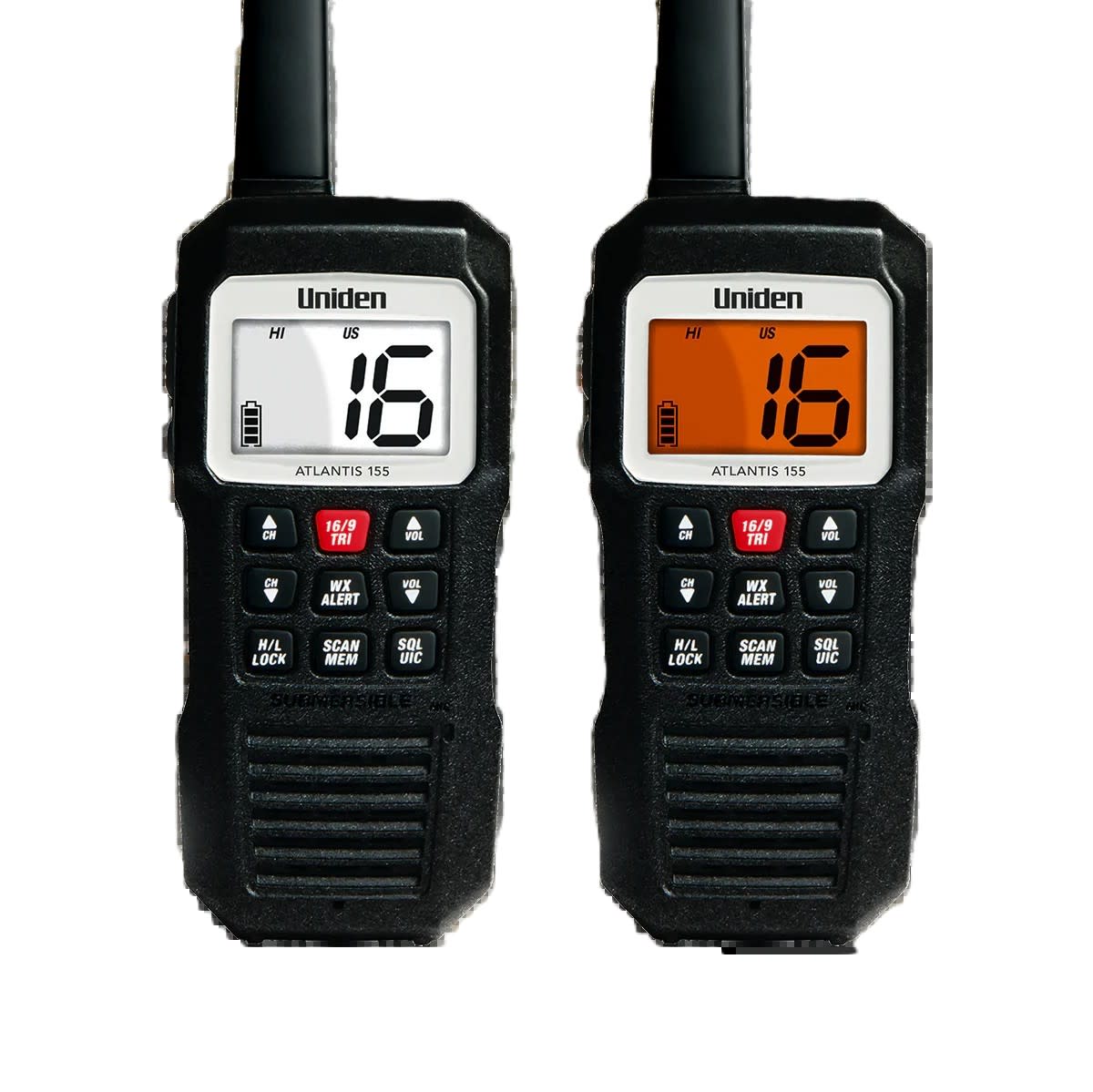
Uniden Atlantis 155 - Best Entry-Level Option
For boaters who want a basic, affordable handheld for coastal day trips and short-range use, the Uniden Atlantis 155 covers all USA, international, and Canadian marine channels, all NOAA weather channels, and transmits at 3 watts. It is IPX7 submersible and costs under $80 CAD. It is not a primary radio for open-lake use, but as a backup for fishing trips and near-shore cruising it does the job.
Key Features to Look For
When comparing radios, these are the features that matter most for Lake Erie conditions:
Feature | Why It Matters on Lake Erie |
|---|---|
DSC with GPS | Sends your exact position in a distress call automatically |
AIS Receiver | Shows commercial traffic on your chartplotter |
25W Transmit Power | Reaches the Coast Guard across the full lake |
IPX7/IPX8 Waterproofing | Lake Erie chop puts water everywhere |
NMEA 2000 Connectivity | Integrates with chartplotter and autopilot |
Tri-Watch / Dual-Watch | Monitor Channel 16 while using a working channel |
A VHF radio is one of those pieces of gear you hope you never truly need, but will be profoundly grateful for when you do. On Lake Erie, where conditions change fast and help can be far away, it belongs on every boat. If you are putting together a complete safety kit, our Lake Erie Boating Safety Guide and Essential Boating Safety Equipment Checklist cover everything else you need to carry before leaving the dock.
Frequently Asked Questions
Do I need a licence to use a VHF radio in Canada? You need an ROC-M (Restricted Operator Certificate — Maritime) to operate a VHF marine radio in Canada. A ship station licence for the radio itself is generally not required if you stay in Canadian waters, but is required for cross-border trips to the United States.
What channel should I monitor on Lake Erie? Always monitor Channel 16 while underway. It is the international distress and hailing channel, and the Canadian Coast Guard broadcasts weather alerts and safety notices on it continuously.
What is the range of a VHF radio on Lake Erie? A fixed-mount radio transmitting at 25 watts has a line-of-sight range of approximately 15–20 nautical miles in open water. Handheld radios at 5–6 watts typically reach 3–7 nautical miles. Atmospheric conditions and the height of your antenna affect actual range.
Do I need AIS on my VHF radio? AIS is not legally required for recreational vessels, but it is a meaningful safety upgrade for any boater who crosses commercial shipping lanes or navigates in reduced visibility. On Lake Erie, it is particularly useful in the western basin near Windsor and on any open-lake crossing.
What is an MMSI number and how do I get one? An MMSI (Maritime Mobile Service Identity) is a nine-digit number registered to your vessel that is used by DSC to identify your boat in a distress call. In Canada, you can register for a free MMSI through BoatUS or through ISED Canada. It must be programmed into your radio before DSC will function.
Can I use my VHF radio when anchored at Pottahawk? Yes. There are no restrictions on using a VHF radio at anchor. Monitoring Channel 16 is good practice even when anchored, as it keeps you aware of any safety broadcasts or emergencies in the area.
Sources & Further Reading
Tags
Share
Read Next
 Equipment & Gear
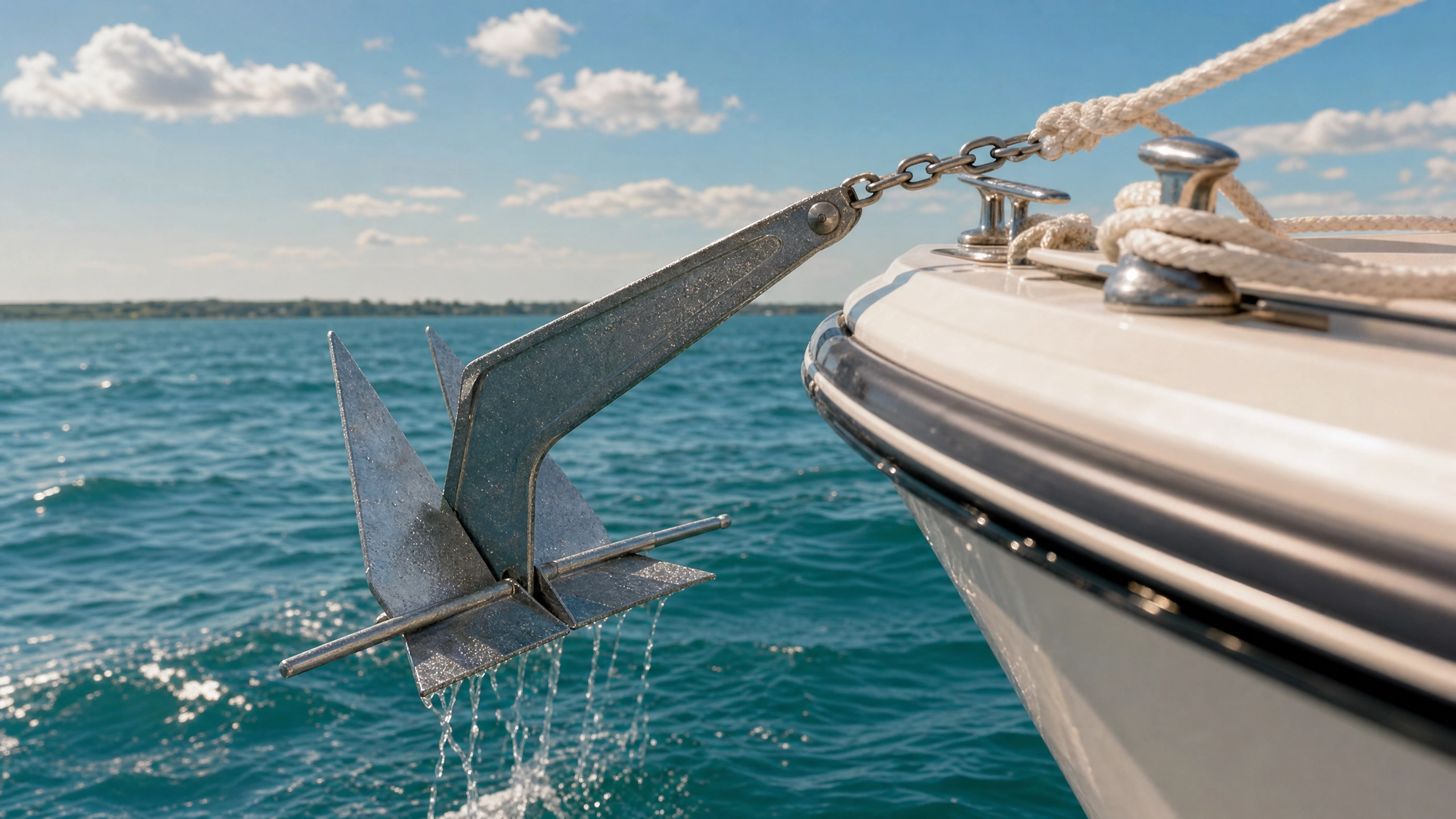
Best Boat Anchors for the Great Lakes: A Complete Guide by Bottom Type
If you spend enough time boating on the Great Lakes, you will eventually find yourself dragging anchor. It usually happens at the worst possible time, when the wind kicks up, the chop builds, and you are surrounded by other boats.

Dwayne Rodrigues
Boat Owner & Enthusiast
 Equipment & Gear
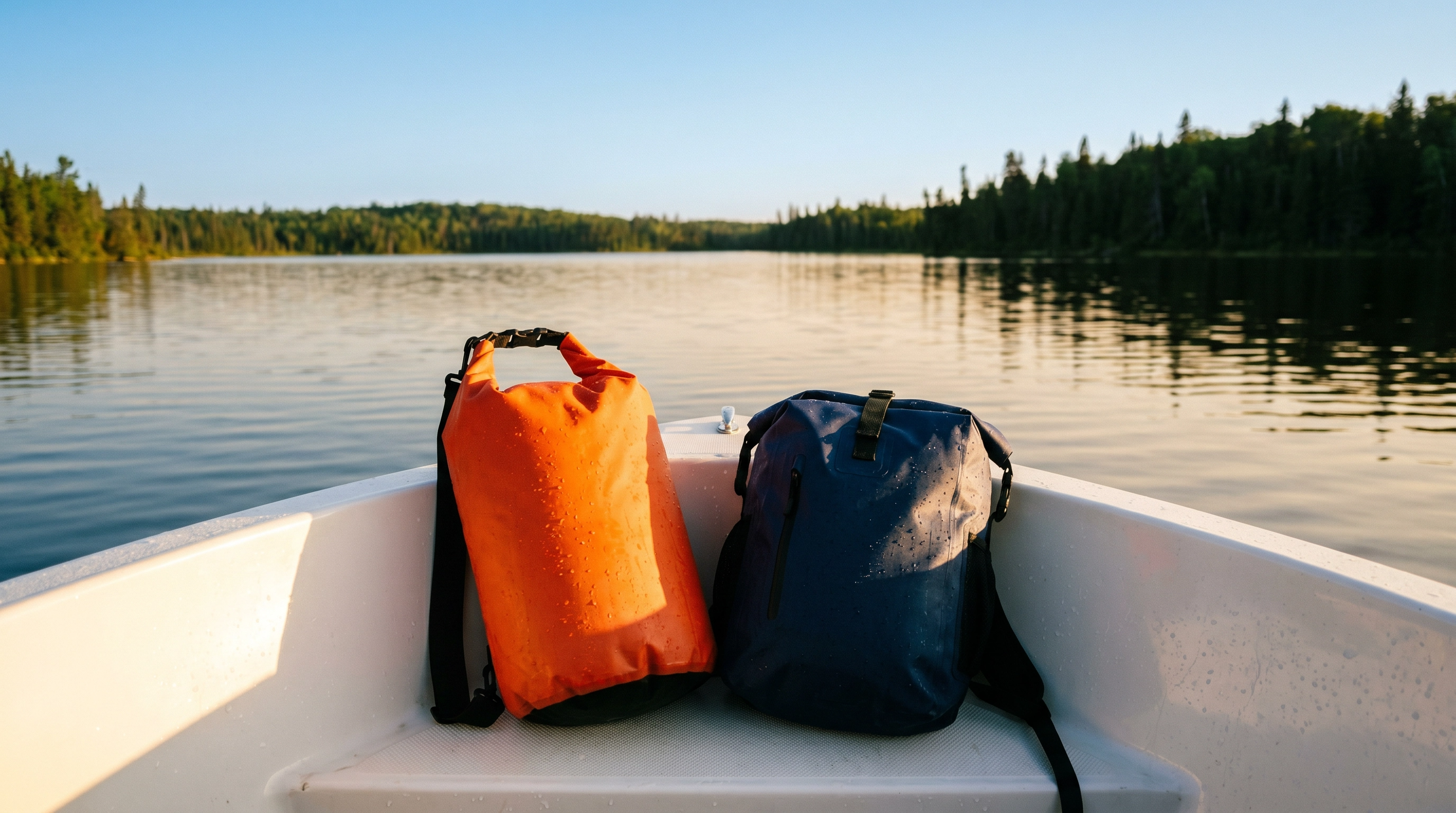
Best Waterproof Bags for Boating: 6 Top Picks for Canadian Waters
There is a moment every boater dreads. You hit an unexpected wake, a sudden squall rolls across the lake, or someone simply slips while stepping onto the dock. In an instant, your phone, your dry clothes, and your boat registration are soaked.
Dwayne Rodrigues
Boat Owner & Enthusiast
 Equipment & Gear
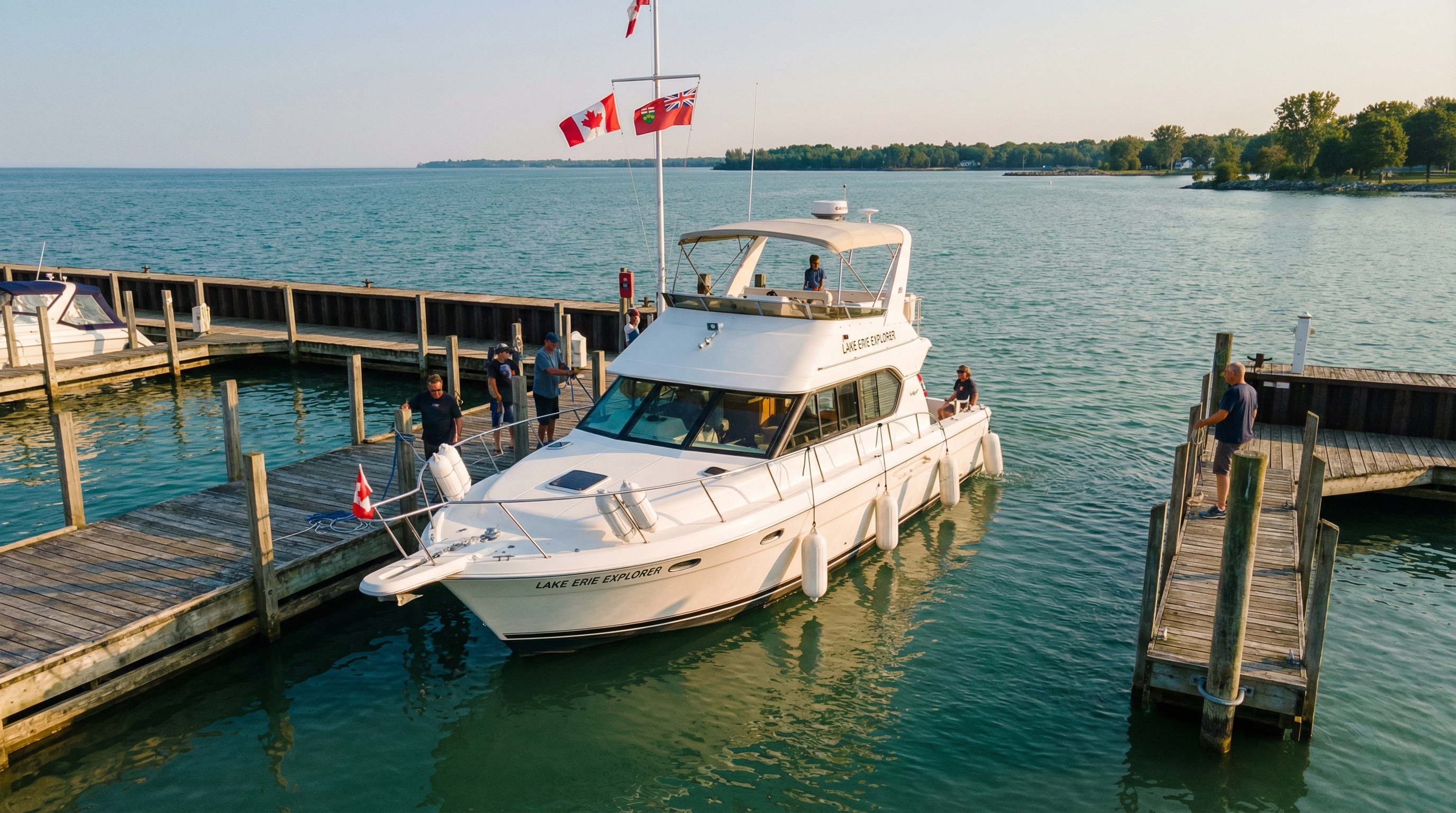
Best Boat Fenders for Docking: A Complete Buyer's Guide for Canadian Boaters
Of all the gear you can buy for your boat, fenders are probably the least glamorous. They aren’t flashy like a new chartplotter or exciting like a powerful engine. But honestly, they are one of the most important investments you can make.
Dwayne Rodrigues
Boat Owner & Enthusiast