The Ultimate Boat Safety Equipment Checklist for Canadian Waters (2026 Edition)
For any boater in Canada, from the calm inlets of the Pacific coast to the rugged shores of the Atlantic, safety is the bedrock of every successful voyage. But nowhere is this more true than on the Great Lakes, and especially on the notoriously

Dwayne Rodrigues
Boat Owner & Enthusiast
Quick Takeaways:
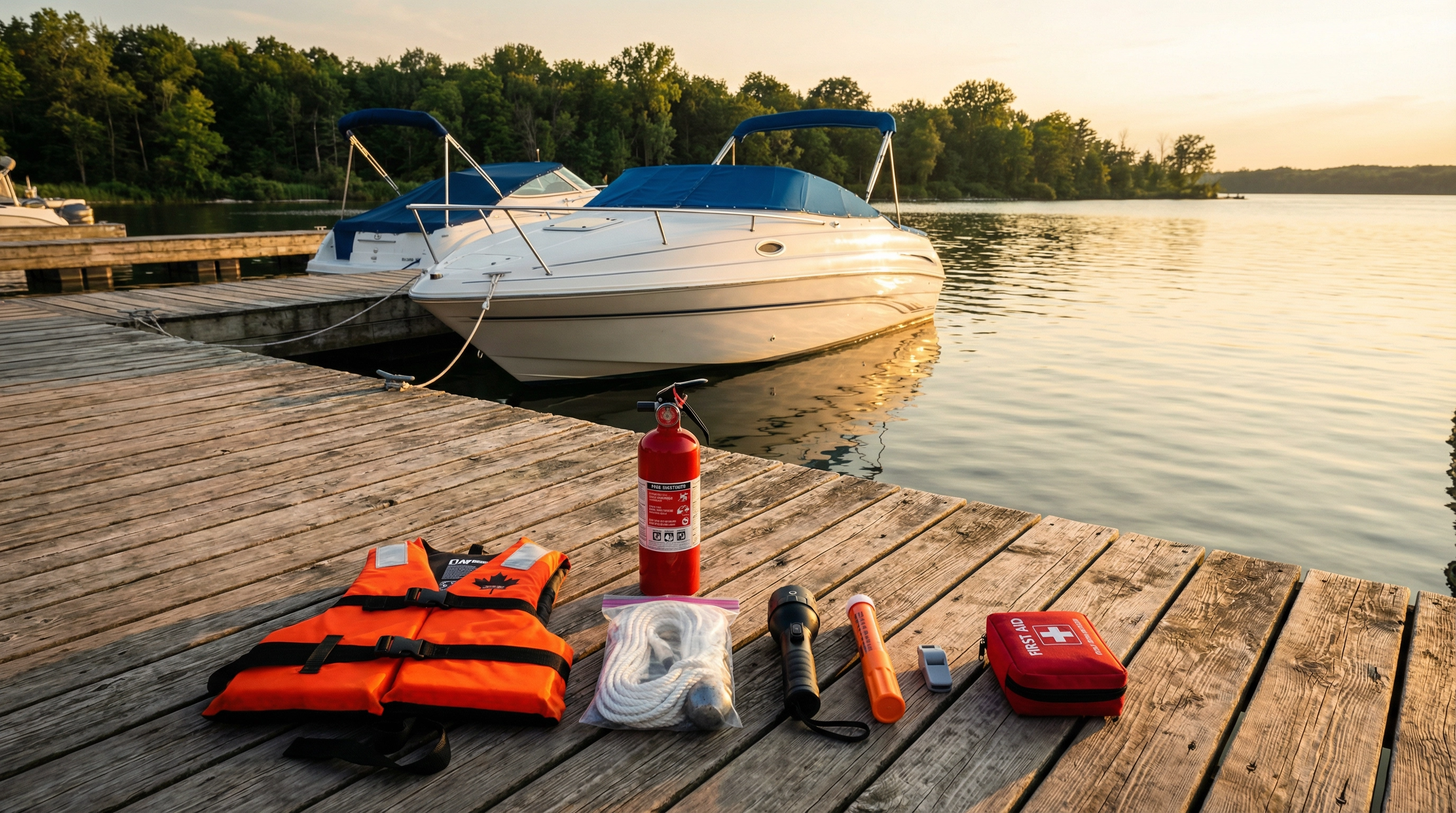
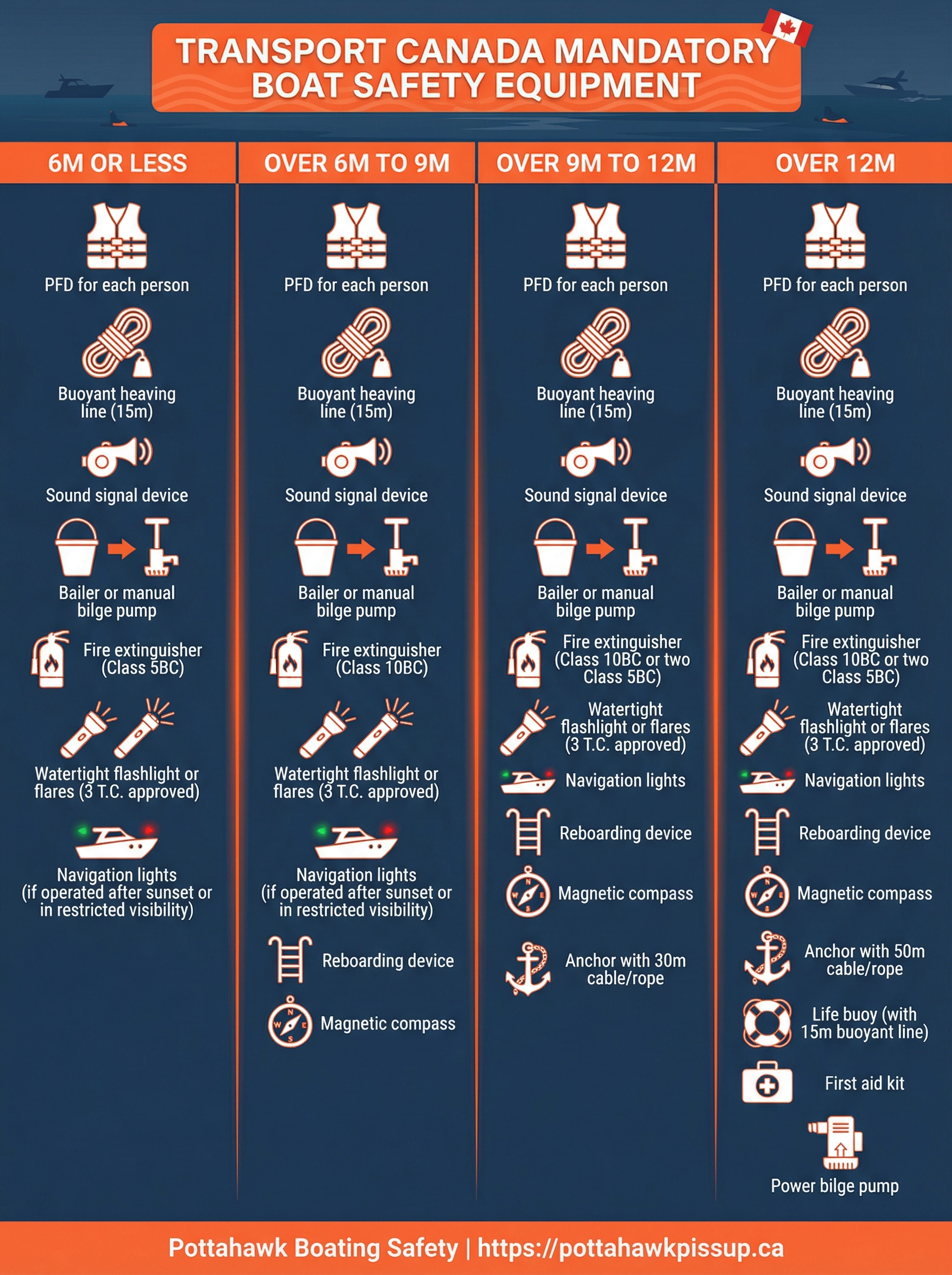
Vessel Length is Key: Transport Canada's mandatory equipment requirements are based on your boat's length. The four key categories are: 6 metres (19’8”) or less, over 6m up to 9m (29'6"), over 9m up to 12m (39'4"), and over 12m.
PFDs Are Non-Negotiable: You must have one Canadian-approved lifejacket or PFD of the appropriate size for every person on board. No exceptions.
Visual Signals are a Lifeline: Flares, smoke signals, or an electronic visual distress signal (eVDS) are mandatory for most boats and are your best bet for being seen in an emergency.
Navigation is Safety: A sound-signalling device (horn, whistle), navigation lights, and a magnetic compass are required on most vessels to see, be seen, and know where you are.
Fire and Flooding: All boats with a motor, a fuel-burning appliance, or a battery system must carry a fire extinguisher. A manual bilge pump or bailing device is required to deal with water ingress.
Introduction: Why Your Safety Equipment is More Than Just a Checklist
For any boater in Canada, from the calm inlets of the Pacific coast to the rugged shores of the Atlantic, safety is the bedrock of every successful voyage. But nowhere is this more true than on the Great Lakes, and especially on the notoriously unpredictable waters of Lake Erie. As we detail in our Lake Erie Boating Safety Guide, this shallowest of the Great Lakes can transform from a placid mirror to a treacherous sea in minutes. Your best defence against the unexpected isn't just skill; it's preparation. And preparation begins with a thorough, compliant, and well-maintained set of safety equipment.
This guide is designed to be the definitive resource for Canadian boaters on mandatory safety equipment. We will break down the specific requirements from Transport Canada's Small Vessel Regulations, item by item, based on the length of your boat. This isn't just about avoiding a fine from the OPP Marine Unit during a spot check at the mouth of the river; it's about having the right tools on board to save a life — maybe even your own.
We'll cover the essentials that every single pleasure craft needs, from personal flotation devices (PFDs) to sound signals. Then, we'll dive deep into the specific requirements for four key vessel length categories. Finally, we'll go beyond the legal minimums to discuss the recommended gear that seasoned Lake Erie boaters swear by. Think of this not as a chore, but as an investment in peace of mind for you, your family, and your guests. This comprehensive approach ensures that you are not just compliant, but truly prepared for whatever the water throws at you.
Understanding the Law: The Small Vessel Regulations
The legal framework governing safety equipment on Canadian pleasure craft is the Small Vessel Regulations, part of the Canada Shipping Act, 2001. These regulations are not suggestions; they are the law. The core principle is that the required equipment is directly tied to the length of your vessel. This is a logical approach, as larger boats tend to travel further from shore, in more challenging conditions, and carry more passengers, thus requiring more comprehensive safety gear.
It's crucial to understand that the responsibility for carrying this equipment lies squarely with the vessel's operator. "I didn't know" is not a valid defence. As we cover in our guide to the Dangers of Impaired Boating, the operator is responsible for the safety of everyone on board. This includes ensuring the boat is not only properly equipped but that the equipment is in good working order, readily accessible, and that everyone on board knows where to find it. The fines for non-compliance can be significant, but they pale in comparison to the potential cost of not having the right gear in an emergency.
PFDs vs. Lifejackets: A Critical Distinction
While often used interchangeably, Personal Flotation Devices (PFDs) and lifejackets are not the same. A lifejacket is designed to turn an unconscious person face-up in the water. They offer the highest level of flotation but are often bulkier. A PFD, on the other hand, is designed to keep a conscious person afloat. They are more comfortable and come in a variety of styles, including inflatable models. For most recreational boating, a PFD is sufficient, but for children and non-swimmers, a lifejacket is the safer choice. Inflatable PFDs have their own set of rules: they must be worn to be legal, and they are not legal for anyone under 16 or for use on a PWC. It is also important to note that PFDs and lifejackets must be approved by Transport Canada, the Canadian Coast Guard, or Fisheries and Oceans Canada. Look for a label indicating its a permanent label indicating that it has been approved for use in Canada and we also cover the recent changes to the lifejacket standards in our guide The New 2025/2026 Lifejacket Standards: What "Level 70" Means for Your Next PFD.
The Foundation: Equipment for All Pleasure Craft
Regardless of your boat's size, there are a few items that are universally required on almost every pleasure craft in Canada.
One Canadian-Approved PFD or Lifejacket for Each Person: This is the most important rule. Each PFD must be the correct size for the person it's intended for. Inflatable PFDs are popular for their comfort, but they must be worn to be legal. For anyone under 16, a PFD is a much better choice than a lifejacket as it is designed to turn an unconscious person face-up in the water.
A Sound-Signalling Device: This can be a pealess whistle, a compressed air horn, or an electric horn. Its purpose is to make your presence known, especially in fog or when approaching a blind bend. For boats over 12 metres, a fitted horn is mandatory.
Category 1: Boats 6 Metres (19’8”) or Less
This category covers the vast majority of day boats, fishing boats, and personal watercraft (PWCs).
PFDs or Lifejacket: One for each person.
Buoyant Heaving Line (15m): A floating rope at least 15 metres (50') long, designed to be thrown to a person in the water.
Manual Propelling Device or Anchor: You need a way to move the boat if the engine fails. This can be a paddle or an oar. Alternatively, you can carry a proper anchor with at least 15 metres of rope, chain, or cable. Given the risks we outline in our Anchor Failure Scenarios guide, a quality anchor is always the better choice.
Bailer or Manual Bilge Pump: Something to get water out of the boat. A simple bailer made from a cut-open jug is sufficient, but a small manual pump is more effective.
Class 5BC Fire Extinguisher: Required if the boat has an inboard engine, a fixed fuel tank, or a fuel-burning appliance.
Watertight Flashlight or 3 Flares: You need a way to signal for help at night. A waterproof flashlight is the simplest option. If you opt for flares, you can choose between Type A (parachute), B (multi-star), or C (handheld).
Navigation Lights: If you operate the boat between sunset and sunrise or in restricted visibility, you must have proper navigation lights.
Category 2: Boats Over 6m up to 9m (29'6")
This category includes many popular cruisers and larger day boats.
All items from Category 1, plus:
Reboarding Device: A ladder or other device to help a person get back into the boat from the water. This is only required if the freeboard (the height from the water to the deck) is greater than 0.5 metres (1'8").
6 Flares: The requirement for visual signals becomes more stringent. You must carry 6 flares. The most common combination is 3 Type B (multi-star) and 3 Type C (handheld), but other combinations are allowed. A magnetic compass is also required if the boat is operated out of sight of navigation marks. This is a critical piece of equipment on the Great Lakes, where it is easy to lose sight of land.
Category 3: Boats Over 9m up to 12m (39'4")
This category covers larger cruisers and small yachts.
All items from Category 2, plus:
Anchor: A paddle is no longer sufficient. You must carry a proper anchor with at least 30 metres (100') of rope, chain, or cable.
12 Flares: The requirement doubles again. You must have 12 flares on board. A common and effective combination is 6 Type A (parachute), 2 Type B (multi-star), and 4 Type C (handheld).
Fire Extinguisher: A 10BC fire extinguisher is required, which is larger than the 5BC required for smaller boats.
Category 4: Boats Over 12 Metres (39'4")
This category covers yachts and large cruisers.
All items from Category 3, plus:
Fitted Bilge Pump: A manual bailer is no longer sufficient. You must have a fitted manual or electric bilge pump.
Lifebuoy: A SOLAS-approved lifebuoy attached to a buoyant line.
Fitted Horn: A compressed air or electric horn is no longer sufficient. You must have a fitted horn capable of producing a 4-second blast audible for at least 0.5 nautical miles.
Visual Distress Signals In-Depth: Flares and eVDS
Flares are a critical piece of safety gear, but they can be intimidating. There are three main types of pyrotechnic flares:
Type A (parachute), which can be seen from the greatest distance;
Type B (multi-star), which are effective for getting attention; and
Type C (handheld), which are best for pinpointing your location once help is nearby. An electronic visual distress signal (eVDS) is a battery-powered alternative that can flash for hours. While not a full replacement for flares in all situations, an eVDS is a great, long-lasting backup.
Beyond the Minimum: Recommended Safety Gear for Lake Erie
The legal requirements are just that: the minimum. Seasoned boaters on Lake Erie know that the unique challenges of this Great Lake demand more. Here is a checklist of highly recommended items that should be on your boat, even if the law doesn't require them.
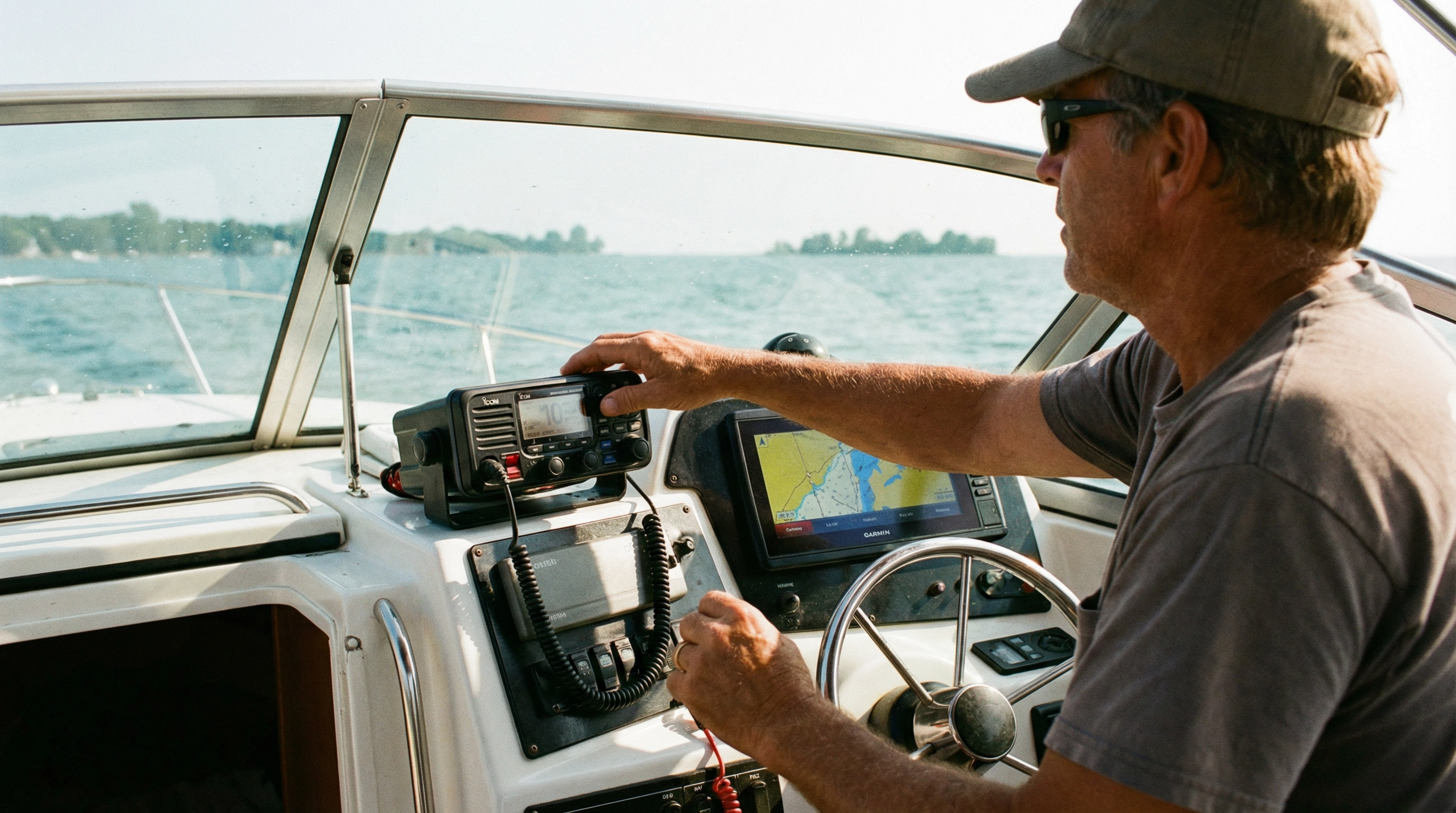
VHF Marine Radio: A cell phone is not a reliable communication device offshore. A VHF radio allows you to communicate with other boats, marinas, and the Coast Guard. It is the single most important piece of safety equipment you can add to your boat.
GPS/Chartplotter: Knowing your position is critical, especially when the weather turns. A modern chartplotter is an invaluable tool for safe navigation. As we note in our Long Point Bay Navigation Guide, having detailed charts is essential for avoiding hazards.
Extra Anchor and Rode: As our guide to Anchor Failure Scenarios makes clear, having a second, different style of anchor can be a lifesaver if your primary anchor drags.
First Aid Kit: A comprehensive marine first aid kit is a must-have. Your kit should be in a waterproof case and include supplies for common injuries, seasickness, and sun exposure.
Tool Kit and Spares: A basic tool kit, along with spare belts, filters, and impellers, can help you fix minor mechanical issues that could otherwise leave you stranded.
High-Capacity Bilge Pump: The bilge pump that came with your boat is likely undersized for a real emergency. A high-capacity backup pump can make the difference between staying afloat and sinking.
Carbon Monoxide Detector: If your boat has an enclosed cabin, a CO detector is a must-have. Carbon monoxide is a silent killer, and a detector is the only way to know if it's present.
Fire Safety Deep Dive: Extinguishers and Prevention
Fire on a boat is a terrifying prospect. All boats with a motor, fuel-burning appliance, or battery system must carry a fire extinguisher. The "BC" rating on an extinguisher indicates it is effective against flammable liquids (Class B) and electrical fires (Class C). A 5BC extinguisher is the minimum for most small boats, while a 10BC is required for larger vessels. Prevention is key: always run your blower for at least four minutes before starting an inboard engine, and never leave fuelling unattended.
Cold Water Survival and Man Overboard (MOB)
Even in the summer, the water in Lake Erie is cold enough to cause cold water shock. If someone falls overboard, the first minute is critical. The "1-10-1" rule is a good guideline: you have 1 minute to get your breathing under control, 10 minutes of meaningful movement, and 1 hour before you become unconscious due to hypothermia. A quick, practiced man overboard procedure is essential. The "point, shout, and throw" method is a good start: one person points at the person in the water, another shouts to alert the crew, and a third throws a buoyant heaving line or lifebuoy.
Maintaining Your Gear: The Forgotten Responsibility
Having the right equipment on board is only half the battle. That gear must be in good working order and you must know how to use it. Before every season, and regularly throughout, you should perform a full safety equipment audit.
Check Flare Expiry Dates: Pyrotechnic flares have a four-year expiry date from the date of manufacture. Expired flares are not legally compliant and may not work when you need them.
Test Your Fire Extinguishers: Check the gauge to ensure they are fully charged. Turn them upside down and shake them to prevent the chemical powder from compacting.
Inspect Your PFDs: Check for rips, tears, and sun damage. Test the zippers and buckles. For inflatable PFDs, check the CO2 cylinder and the inflator mechanism.
Service Your Engine: A well-maintained engine is your most important piece of safety equipment. Follow the manufacturer's service schedule religiously. Our Pre-Trip Inspection Checklist is a great resource for this.
Pre-Departure Checklist & Filing a Trip Plan
Before you cast off the lines for every single trip, a final check is in order. This should become a non-negotiable habit.
Weather Check: Check the marine forecast, not just the local forecast. Look at the wind speed and direction, wave heights, and any approaching weather systems.
Fluid Levels: Check your engine oil and fuel levels. The Rule of Thirds for fuel is a great guideline: one-third for the trip out, one-third for the trip back, and one-third in reserve.
Safety Briefing: Give your guests a quick safety briefing. Show them where the PFDs, fire extinguishers, and flares are located. Explain how to use the VHF radio to call for help.
File a Trip Plan: Always tell someone where you are going and when you expect to be back. This can be a friend, family member, or your local marina. A formal trip plan includes your boat's description, the number of people on board, your destination, and your estimated time of return.
Conclusion: A Culture of Safety
Building a comprehensive safety kit for your boat is a foundational part of responsible ownership. It's a process that starts with meeting the legal minimums set out by Transport Canada and then thoughtfully adding the gear that makes sense for your boat and your cruising grounds. For boaters on Lake Erie, this means preparing for the worst while hoping for the best.
Ultimately, safety isn't about a single piece of equipment; it's a culture. It's about filing a trip plan, checking the weather before you leave the dock, wearing your PFD, and knowing how to use every piece of equipment on your boat. By embracing this culture of safety, you ensure that every trip you take is a round trip.
Sources & Further Reading
Tags
Share
Read Next
 Equipment & Gear
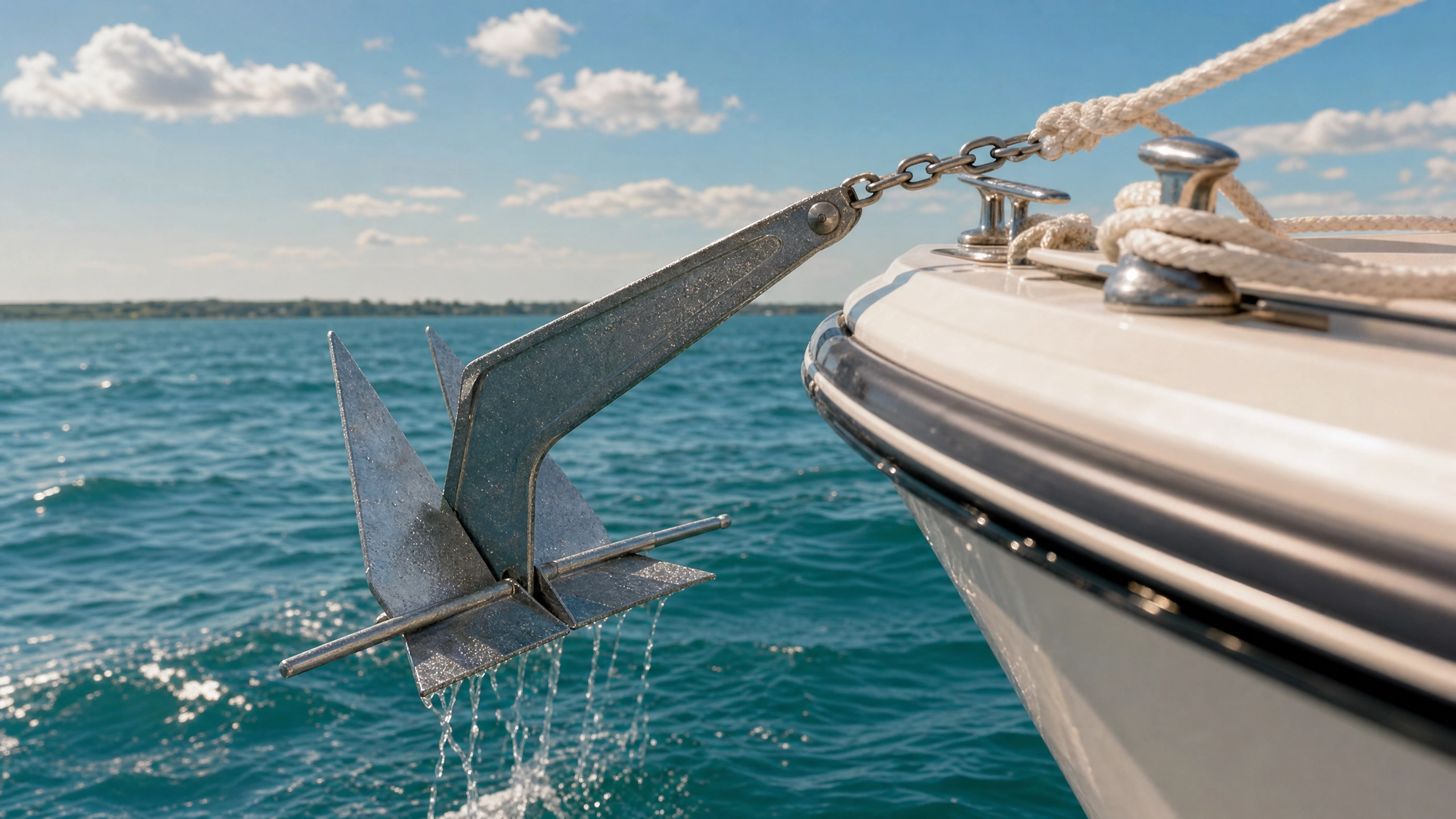
Best Boat Anchors for the Great Lakes: A Complete Guide by Bottom Type
If you spend enough time boating on the Great Lakes, you will eventually find yourself dragging anchor. It usually happens at the worst possible time, when the wind kicks up, the chop builds, and you are surrounded by other boats.

Dwayne Rodrigues
Boat Owner & Enthusiast
 Equipment & Gear
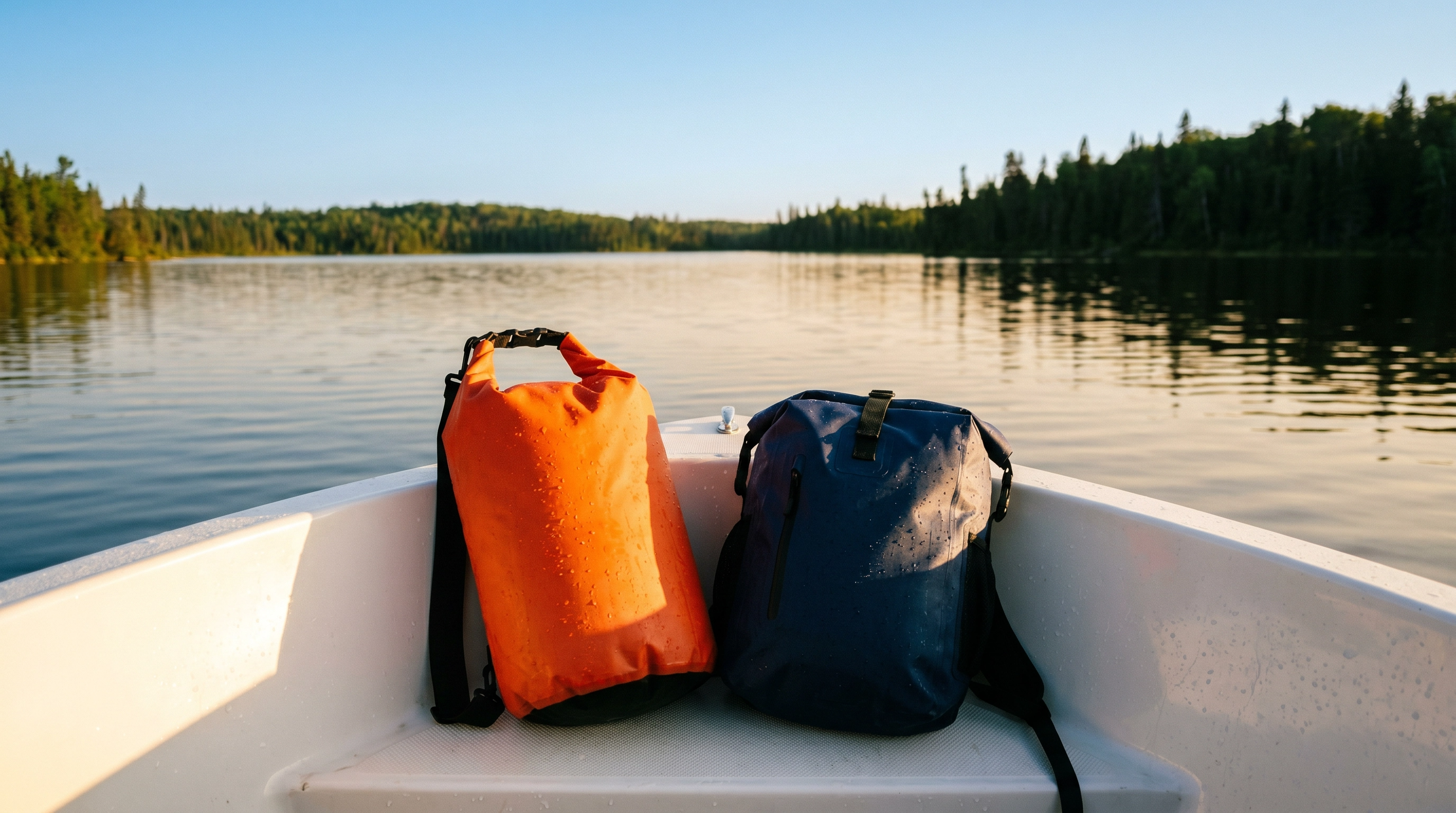
Best Waterproof Bags for Boating: 6 Top Picks for Canadian Waters
There is a moment every boater dreads. You hit an unexpected wake, a sudden squall rolls across the lake, or someone simply slips while stepping onto the dock. In an instant, your phone, your dry clothes, and your boat registration are soaked.
Dwayne Rodrigues
Boat Owner & Enthusiast
 Equipment & Gear
Best VHF Radios for Lake Erie Boaters
A VHF marine radio is not a luxury item. On Lake Erie, where squalls can build in under an hour and commercial traffic shares the same water as recreational boats, it is one of the most important pieces of safety equipment you can carry.
Dwayne Rodrigues
Boat Owner & Enthusiast