The Dangers of Impaired Boating in Canada: Why One Drink is Too Many
It’s a perfect summer afternoon on Lake Erie. The sun is high, the water is calm, and the cooler is stocked. For many, cracking open a cold beer feels like a natural part of the boating experience.

Dwayne Rodrigues
Boat Owner & Enthusiast
Quick Takeaways: Impaired boating is a criminal offence in Canada with the same penalties as impaired driving, including fines, licence suspension, and jail time. The legal blood alcohol concentration (BAC) limit is 0.08, but impairment begins with the first drink. The combination of sun, wind, and boat motion—what’s known as “boater’s fatigue”—magnifies the effects of alcohol, making one drink on the water feel like three on land. The only safe captain is a sober captain.
It’s a perfect summer afternoon on Lake Erie. The sun is high, the water is calm, and the cooler is stocked. For many, cracking open a cold beer feels like a natural part of the boating experience. It’s a ritual, a tradition, a way to unwind. But here’s the thing: that seemingly harmless drink is the first step toward a danger that too many boaters underestimate. Impaired boating isn’t just a bad idea; it’s a criminal offence with life-altering consequences.
We’ve all heard the slogans: “If you drink, don’t drive.” But what about, “If you drink, don’t captain?” The message doesn’t seem to have the same weight, but it should. In fact, it needs to. According to Transport Canada, alcohol is a factor in over 65% of boating accidents. That’s a staggering statistic, and it points to a culture that has, for too long, separated the act of drinking from the act of operating a vessel.
This isn’t about being a killjoy. It’s about understanding the science, the law, and the very real risks that come with mixing alcohol and boating. It’s about ensuring that a day of fun on the water doesn’t end in tragedy. As we cover in our Complete Guide to the Pottahawk Pissup, a good day on the water is a safe day on the water.
The Science of Impairment on the Water: Boater's Fatigue is Real
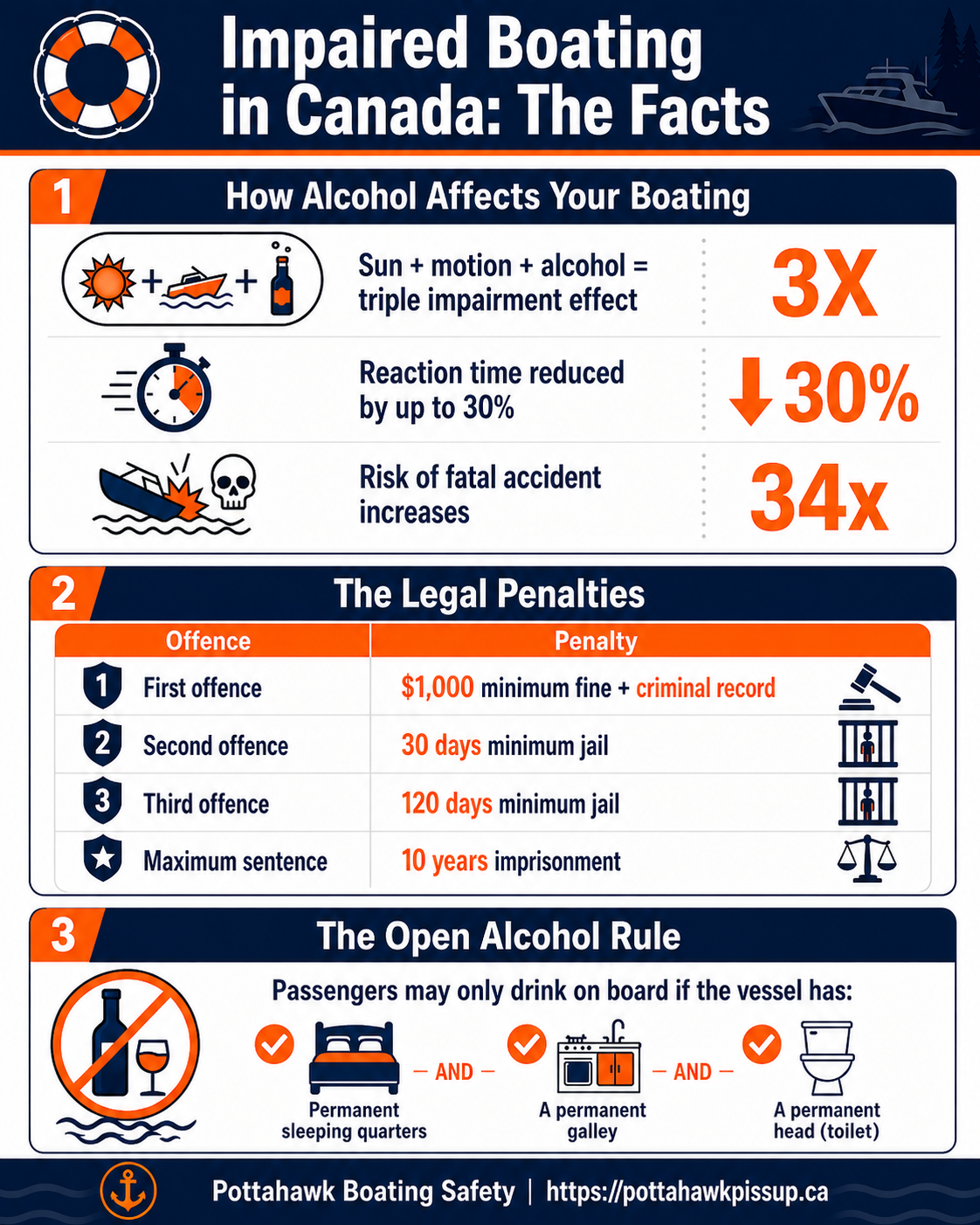
Here’s a fact that might surprise you, one drink on a boat is not the same as one drink on your couch. The unique environment of a boat, the constant motion, the sun beating down and the wind in your face, creates a phenomenon known as “boater’s fatigue.” This combination of stressors accelerates the effects of alcohol. Your balance is compromised, your judgment is clouded, and your reaction time slows down far more quickly than it would on land.
Think of it this way, your body is already working overtime to compensate for the rocking of the boat and the glare of the sun. When you add alcohol to the mix, you’re essentially pouring gasoline on a fire. Your cognitive functions, which are already under strain, begin to degrade rapidly. That’s why a single beer can have the same effect as three or four drinks in a bar. You might feel fine, but your ability to make critical decisions, to spot a swimmer in the water, to react to a sudden change in weather or to navigate a crowded channel is severely diminished.
Let's break down the science a bit more. Alcohol is a depressant, which means it slows down your central nervous system. This affects:
Vision: Your peripheral vision narrows, your ability to distinguish colours (especially red and green, the colours of navigation lights) is reduced, and your night vision is significantly impaired. This is especially dangerous at night, when you need to be able to see other boats and navigational aids.
Cognitive Function: Your ability to process information and make sound judgments is one of the first things to go. You're more likely to take risks, like driving too fast or getting too close to other boats. You may also have difficulty with basic navigation, like reading a chart or using a GPS.
Reaction Time: The time it takes for you to see a hazard, process it, and react is significantly longer. In a boating emergency, a split-second delay can be the difference between a close call and a catastrophe. For example, if a child falls overboard, an impaired operator may not be able to react quickly enough to shut down the engine and throw a life-saving device.
Balance and Coordination: The rocking of the boat already challenges your balance. Alcohol makes it much worse, increasing the risk of falling overboard. A simple task like moving around the boat can become a dangerous undertaking.
Here's a real-world example: A few years ago, a man was operating his boat on a sunny afternoon with his family. He'd had a few beers, but he felt fine. As he was cruising along, a child on an inner tube fell off in front of him. Because his reaction time was slowed by the alcohol, he wasn't able to turn the boat in time and the child was seriously injured. This is a tragic, but all-too-common, example of how impaired boating can have devastating consequences.
The Law is Not on Your Side: A Criminal Offence
Let’s be crystal clear, impaired boating is not a slap on the wrist. It is a criminal offence under the Criminal Code of Canada, and the penalties are identical to those for impaired driving. That means if you are caught operating a boat with a blood alcohol concentration (BAC) of 0.08 or higher, you are facing:
A minimum fine of $1,000 for a first offence.
A potential jail sentence of up to 10 years.
A criminal record that will follow you for the rest of your life.
The suspension of your driver’s licence, not just your boating licence.
That last point is the one that catches most people by surprise. An impaired boating conviction will affect your ability to drive your car to work, to pick up your kids from school, to live your life. The consequences are far-reaching and severe.
And what about passengers? Can they drink on a boat? The answer is yes, but only under specific circumstances. In Ontario, alcohol can only be legally consumed on a boat if it is equipped with permanent sleeping facilities, a permanent galley (kitchen), and a permanent head (toilet). Even then, the boat must be anchored or docked. If you are on a typical day boat, like a bowrider or a fishing boat, it is illegal for anyone on board to have open alcohol. This is a key part of the Lake Erie Boating Safety Guide.
It's also important to note that the 0.08 BAC limit is not a target. You can be charged with impaired operation of a vessel even if your BAC is below 0.08, if the police officer has reasonable grounds to believe that your ability to operate the vessel is impaired by alcohol or a drug. This is a subjective standard, and it's not worth the risk.
The OPP is Watching: Zero Tolerance on the Water
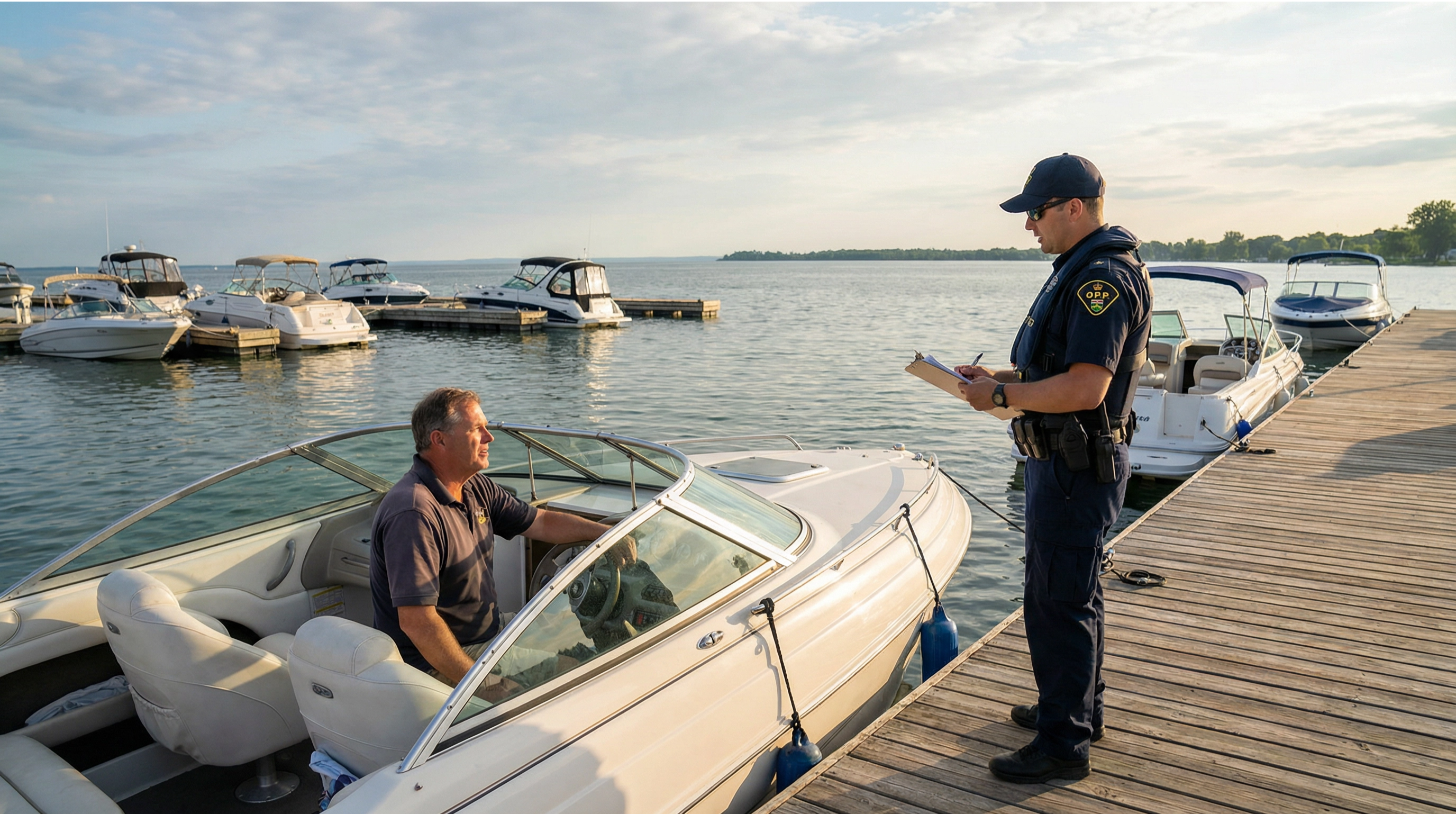
The Ontario Provincial Police (OPP) Marine Unit takes impaired boating very seriously, especially on busy waterways like Lake Erie and at events like the Pottahawk Pissup. They conduct regular patrols and set up RIDE-style checks on the water. They have the authority to stop any vessel to check for sobriety, and they have the equipment to conduct breathalyzer tests on the spot.
In a recent press release, the OPP reported that they laid over 600 impaired boating charges in a single season. That’s 600 people whose lives were changed forever because of a bad decision. The OPP’s message is simple: there is zero tolerance for impaired boating. If you are caught, you will be charged.
The Unseen Dangers: Beyond the Legal Risks
Beyond the legal consequences, there are the practical dangers of impaired boating. Alcohol affects your vision, making it harder to distinguish between colours, especially at night. It affects your coordination, making it more difficult to perform simple tasks like tying a knot or pulling up an anchor. It affects your judgment, leading you to take risks you would never consider when sober.
And then there’s the water itself. If you fall overboard while impaired, your chances of survival plummet. The cold water will shock your system, and the alcohol will make it harder for you to stay afloat and to think clearly. It’s a deadly combination. This is why having the right boat safety equipment is so critical.
The Sober Captain Solution: A Badge of Honour
So, what’s the solution? It’s simple: designate a sober captain. Before you even leave the dock, have a conversation with your friends and family and decide who will be responsible for getting everyone home safely. That person agrees to abstain from alcohol for the entire day. No exceptions.
Being a sober captain is a badge of honour. It means you are the one your friends and family can count on. It means you are the one who is putting their safety first. And it means you are the one who will be able to enjoy a lifetime of boating memories, instead of a lifetime of regret.
Here are some tips for being a great designated captain:
Make the decision before you leave the dock. Don't leave it to chance.
Stay hydrated. Drink plenty of water throughout the day.
Enjoy the ride. You're still on the water, enjoying the sun and the company of your friends and family.
Be proud. You're doing the right thing, and everyone on board will thank you for it.
The Financial Cost of an Impaired Boating Conviction
Beyond the criminal penalties, the financial consequences of an impaired boating conviction can be staggering. Consider the full picture, a minimum $1,000 fine is just the beginning. You will also face significant legal fees if you hire a lawyer to defend you, and you should. The cost of a criminal defence lawyer can easily run into the tens of thousands of dollars.
Then there's your insurance. An impaired boating conviction will almost certainly result in your boat insurance being cancelled. When you try to get new coverage, you will be considered a high-risk client, and your premiums will skyrocket. The same applies to your car insurance. In Ontario, an impaired boating conviction is treated the same as an impaired driving conviction, which means your auto insurance rates will increase significantly.
And let's not forget the impact on your employment. A criminal record can affect your ability to get a job, especially if your work involves driving, operating machinery, or working with vulnerable populations. It can also affect your ability to travel to the United States, which has strict rules about admitting people with criminal records.
The bottom line is this: the financial cost of an impaired boating conviction can easily exceed $50,000 when you factor in fines, legal fees, and increased insurance premiums. That's a lot of money for a few drinks.
Pottahawk and Impaired Boating: A Special Warning
Events like the Pottahawk Pissup are a lot of fun, but they also present a unique set of challenges when it comes to impaired boating. With thousands of boats and tens of thousands of people gathered in one place, the temptation to drink is high but so is the risk.
The OPP Marine Unit is always present at Pottahawk, and they are actively looking for impaired operators. They have a zero-tolerance policy, and they will not hesitate to charge you if they have reasonable grounds to believe that you are impaired. Our Complete Guide to the Pottahawk Pissup has more information on how to enjoy the event safely and responsibly.
The key is to plan ahead, designate a sober captain before you leave the dock. Make sure everyone on board knows the rules about alcohol consumption and if you are going to drink, make sure you are not the one driving the boat home.
Sources & Further Reading
Tags
Share
Read Next
 Safety
Marine Emergencies: A Complete Guide to On-Water Incidents
There is a moment every boater dreads. You are cruising along, enjoying the sun and the water, when suddenly the engine cuts out, smoke starts billowing from the hatch, or someone slips and falls over the rail. In that split second, the peaceful day on the

Dwayne Rodrigues
Boat Owner & Enthusiast
 Safety
Do You Need a Boating Licence in Canada?
If you are planning to spend any time on the water this summer, you have probably asked yourself the big question: do you need a boating licence in Canada? The short answer is yes. If your boat has a motor, you need a licence.
Dwayne Rodrigues
Boat Owner & Enthusiast
 Safety
How to Avoid Running Aground: A Boater's Guide to Shallow Water Safety
Running aground is one of those boating experiences that ranges from a minor, face-reddening embarrassment to a catastrophic emergency. One minute you are cruising along enjoying the sun, and the next, there is a sickening crunch, a sudden stop, and every
Dwayne Rodrigues
Boat Owner & Enthusiast