Night Boating on Lake Erie: Real Talk About the Risks
There’s a certain magic to being on the water after the sun goes down. The air cools, the stars pop, and the shoreline transforms into a string of distant, twinkling lights. It feels peaceful, private, almost like you have the whole lake to yourself.

Dwayne Rodrigues
Boat Owner & Enthusiast
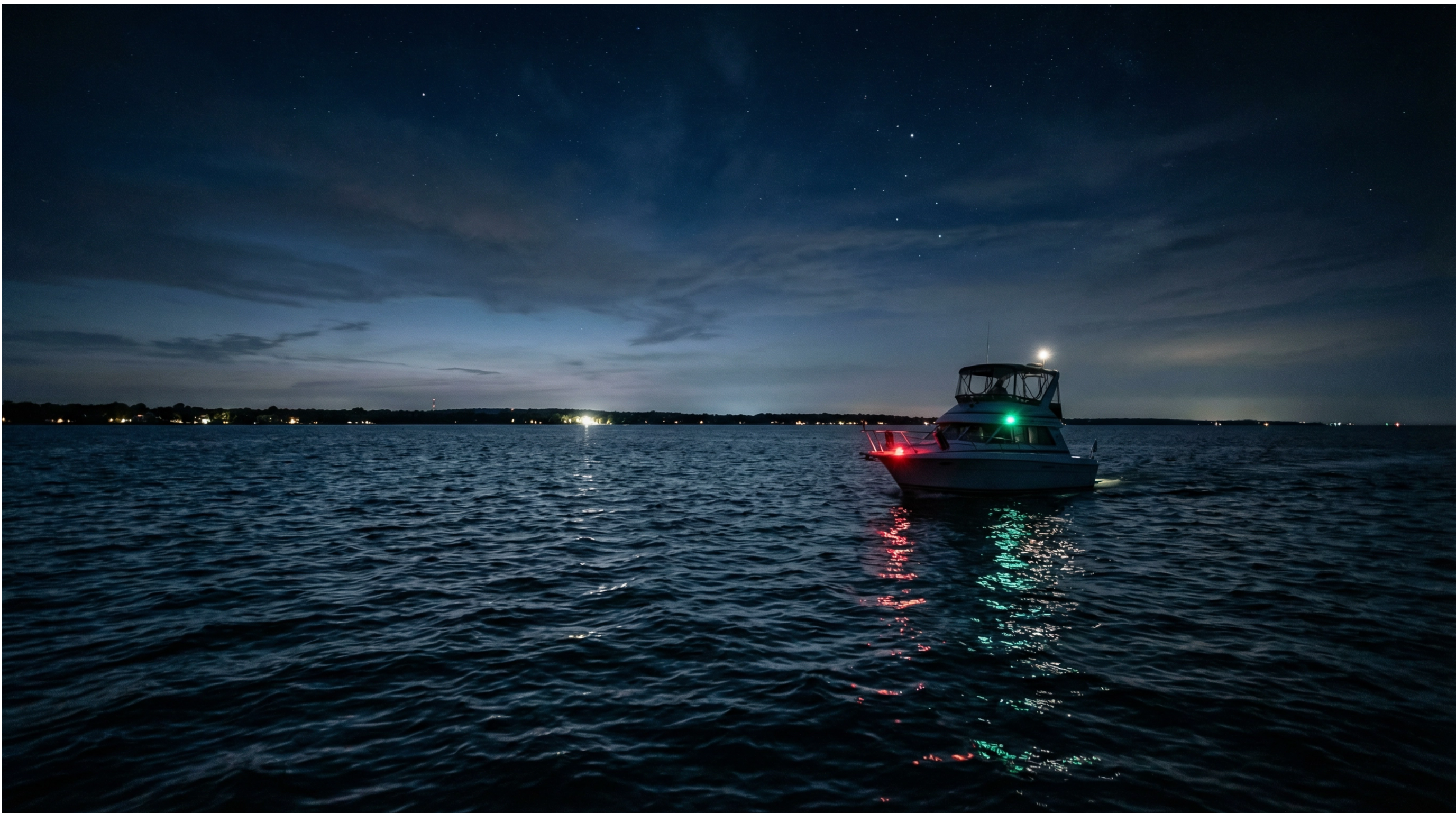
There’s a certain magic to being on the water after the sun goes down. The air cools, the stars pop, and the shoreline transforms into a string of distant, twinkling lights. It feels peaceful, private, almost like you have the whole lake to yourself. But on Lake Erie, that serene feeling can be a dangerous illusion. The same lake that was a playground during the day becomes an entirely different, and much more unforgiving, environment at night.
I’ve spent countless nights on these waters, and I’ve seen firsthand how quickly things can go wrong. We’re not just talking about getting a little lost; we’re talking about life-altering, catastrophic mistakes that happen in the blink of an eye. This isn’t about fear-mongering. It’s about having a frank conversation about the real, tangible risks of night boating on Lake Erie, so you can make smarter decisions and ensure you always make it back to the dock.
The Hard Truth: What the Statistics Tell Us
It’s easy to think, “It won’t happen to me.” But the numbers paint a sobering picture. While there are far fewer boats on the water after dark, a staggering percentage of fatal accidents happen during these hours. According to the BoatUS Foundation, the time between midnight and 2:30 AM is when accidents are 30% more likely to turn fatal.
Why? It’s a combination of factors that create a perfect storm of risk. Reduced visibility is the most obvious culprit, but it’s more than just being dark. Your depth perception is shot, making it impossible to tell if that light is a distant freighter or a small fishing boat 100 yards away. Add in the prevalence of alcohol use after sunset, and you have a recipe for disaster.
Scenario 1: The Collision You Never Saw Coming
This isn’t a hypothetical. On a November night in 2021, during the Walleye Fall Brawl derby on Lake Erie, two boats collided just a half-mile from shore. Matt Mooney was trolling at a slow speed when his boat was struck from behind by another vessel traveling at 15-20 mph. The impact was devastating. Two men on the other boat, neither of whom were wearing lifejackets, ended up in the 45-degree water and unfortunately did not survive.
The ensuing investigation centered on a single, critical question was Mooney’s stern navigation light on? A forensic engineer later confirmed that his light was on and would have been visible for two miles. The operator of the other boat simply wasn’t keeping a proper lookout.
This is the number one risk of night boating, the inability to see and be seen. At night, your boat’s navigation lights are its voice. They tell other boaters where you are, what you’re doing, and which way you’re headed. If they aren’t working, or if another boater isn’t paying attention, the consequences are dire.
Reading the Lights: A Non-Negotiable Skill
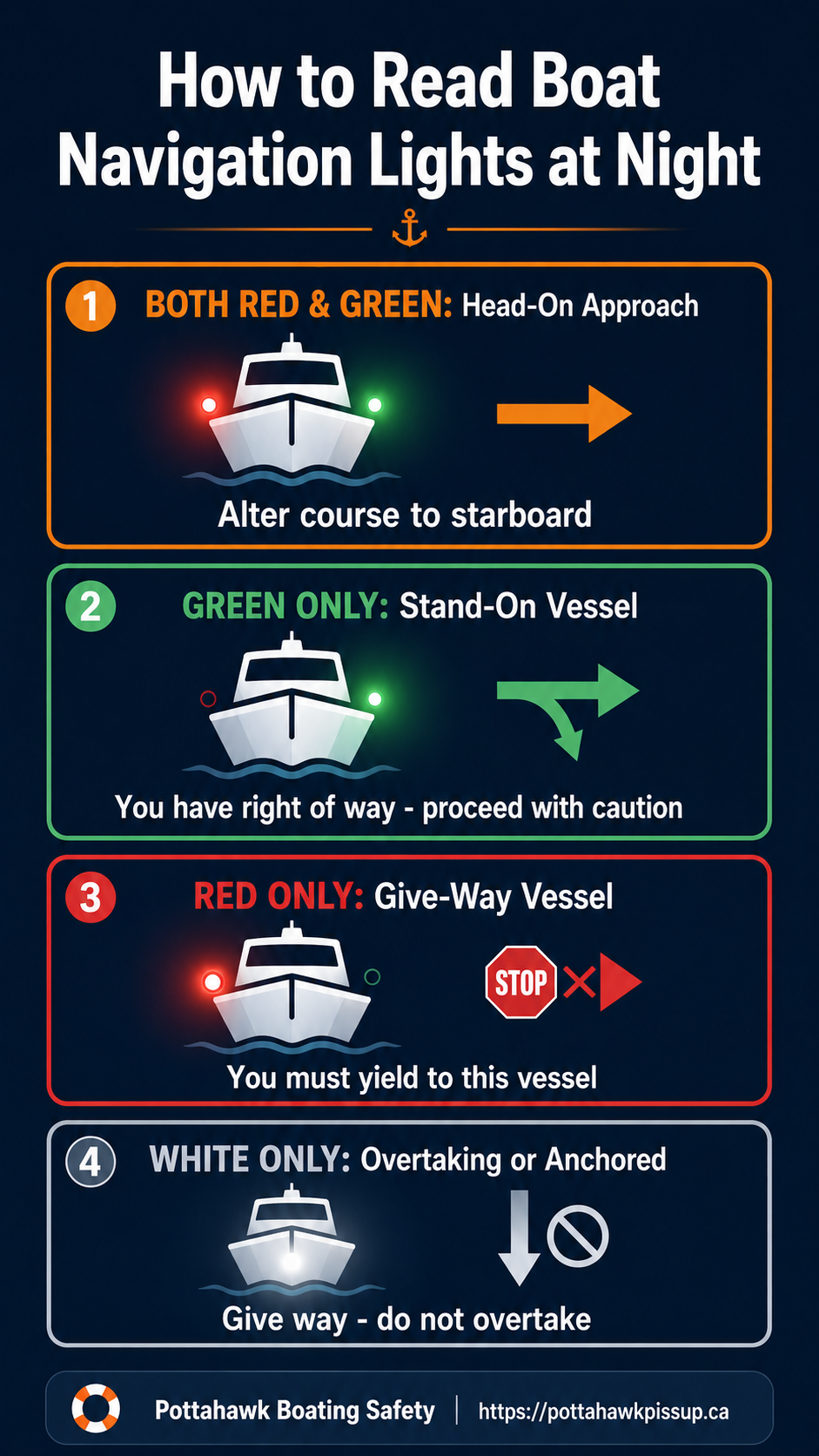
Understanding navigation lights isn’t just a good idea; it’s a legal requirement under Transport Canada’s regulations. Here’s the simple breakdown:
See Both Red and Green? A boat is coming directly at you. Both vessels should alter course to starboard (to the right) to pass each other safely.
See Only Green? You are looking at the starboard (right) side of another boat. You are the “stand-on” vessel and have the right of way, but you should still proceed with extreme caution.
See Only Red? You are looking at the port (left) side of another boat. You are the “give-way” vessel and must yield.
See Only White? You are likely approaching another boat from behind or looking at an anchored or human-powered craft. In either case, you must give way.
Before you even think about leaving the dock for a night cruise, you must check that every single one of your navigation lights is working. No excuses.
Protecting Your Most Important Tool: Night Vision
Your most critical piece of safety equipment at night isn’t your GPS or your radar, it’s your own two eyes. It takes about 30 minutes for your eyes to fully adapt to darkness, a state known as being “dark-adapted.” During this time, the pupils dilate and your retinas switch from using cone cells (for color and detail) to rod cells (for low-light vision).
A single, brief flash of bright white light from a phone screen, a cockpit light, or another boat’s spotlight can instantly reset this process, leaving you effectively blind for several crucial minutes as your eyes struggle to readjust. This is why preserving your night vision is paramount.
Go Red: Switch all possible cockpit and instrument lights to red. Red light has a longer wavelength that doesn’t trigger the same pupil-constricting reflex as white or blue light, preserving your dark adaptation.
No Phones on Deck: Implement a strict “no phones” rule for the captain and any lookouts. The bright screen is a night vision killer.
Dim Everything: Turn down the backlighting on your chartplotter and all other displays to the absolute minimum level required to see them.
Avoid the Spotlight: Never use a spotlight to scan the water ahead. It will only reflect off the water and blind you. Save it only for the final moments of docking or in an emergency.
Lake Erie’s Unique Nighttime Dangers
Every body of water has its risks, but Lake Erie is a special kind of beast after dark.
The Shallow Water Effect: As we’ve discussed in our Lake Erie Weather Pattern Survival Guide, Erie’s shallow depth allows waves to build with incredible speed. A calm evening can turn into a churning mess of steep, chaotic waves in under 30 minutes, a situation made infinitely worse when you can’t see them coming.
Shoreline Light Pollution: The very lights that are supposed to guide you can become a source of deadly confusion. The background clutter of lights from houses, streets, and buildings along the shore makes it incredibly difficult to pick out individual navigation buoys or the lights of other vessels.
Unmarked Hazards: Lake Erie is littered with hazards that are hard enough to spot during the day, let alone at night. These include commercial fish nets that can stretch for miles, submerged rocks and old shipwrecks just below the surface, and unlit private buoys.
The Pottahawk Exit: Leaving a crowded event like Pottahawk after dark is one of the highest-risk situations imaginable. You have dozens of boats, many with operators who may have been drinking, all trying to navigate in close quarters. This is where a deep understanding of raft-up safety mistakes and a commitment to sober boating are absolutely critical.
Your Night Boating Survival Playbook
Being safe at night isn’t about having the fanciest gear; it’s about changing your entire mindset. Your approach must shift from casual to methodical.
Slow Down. Then Slow Down More. Your speed should be reduced to the point where you can stop within the distance you can clearly see. On a dark night, that might be just above idle speed.
Appoint a Dedicated Lookout. The operator’s attention is divided between the helm, the instruments, and the water. You need a second person whose only job is to scan the horizon 360 degrees, listen for other boats, and report anything they see or hear.
Trust Your Instruments, Not Your Eyes. Your GPS chartplotter is your best friend at night. It doesn’t get confused by shoreline lights. Trust its position, heading, and depth readings over what your eyes think they see. If you have radar, use it. It can see things your eyes can’t, like a small boat without lights or a floating log.
Kill Your Cockpit Lights. Bright lights from your dashboard or cabin will destroy your night vision. Dim them as much as possible or cover them. It takes about 30 minutes for the human eye to fully adapt to darkness, and a single flash of bright light can reset that clock.
Wear Your PFD. If you fall overboard at night, the chances of being found are drastically reduced. Don’t just have your lifejacket accessible; wear it. Attach a waterproof strobe light to it for good measure.
Never Boat Under the Influence. This should be obvious, but it’s the single biggest contributing factor to fatal night boating accidents. If you’re the captain, your blood alcohol level must be zero.
Pre-Night-Trip Checklist
Before you even consider a night trip, run through this list:
Check All Navigation Lights: Port, starboard, masthead, and stern/all-round. Carry spare bulbs.
Test Horn and Sound Signals: Ensure they are loud and functional.
Charge All Electronics: Phones, VHF radio, handheld GPS, and flashlights.
Review Your Route: Study your planned route on a chart before you leave. Identify potential hazards and note key navigation aids.
Check the Marine Forecast: Look for any signs of fog, rain, or wind that could develop after sunset.
Brief Your Crew: Make sure everyone on board knows the plan, where safety equipment is located, and what their role is.
Pack for the Cold: Temperatures drop significantly on the water at night. Pack extra layers, even on a warm day.
Night boating on Lake Erie can be a beautiful and rewarding experience, but it demands respect. It requires a level of preparation, caution, and sobriety that goes far beyond a casual day trip. By understanding the unique risks and adopting a safety-first mindset, you can ensure that your night on the water ends peacefully back at the dock, not as another tragic headline.
Sources & Further Reading
Tags
Share
Read Next
 Anchorages & Navigation
Navigating Like a Pro: Canadian Boating Rules, Buoys & Charts
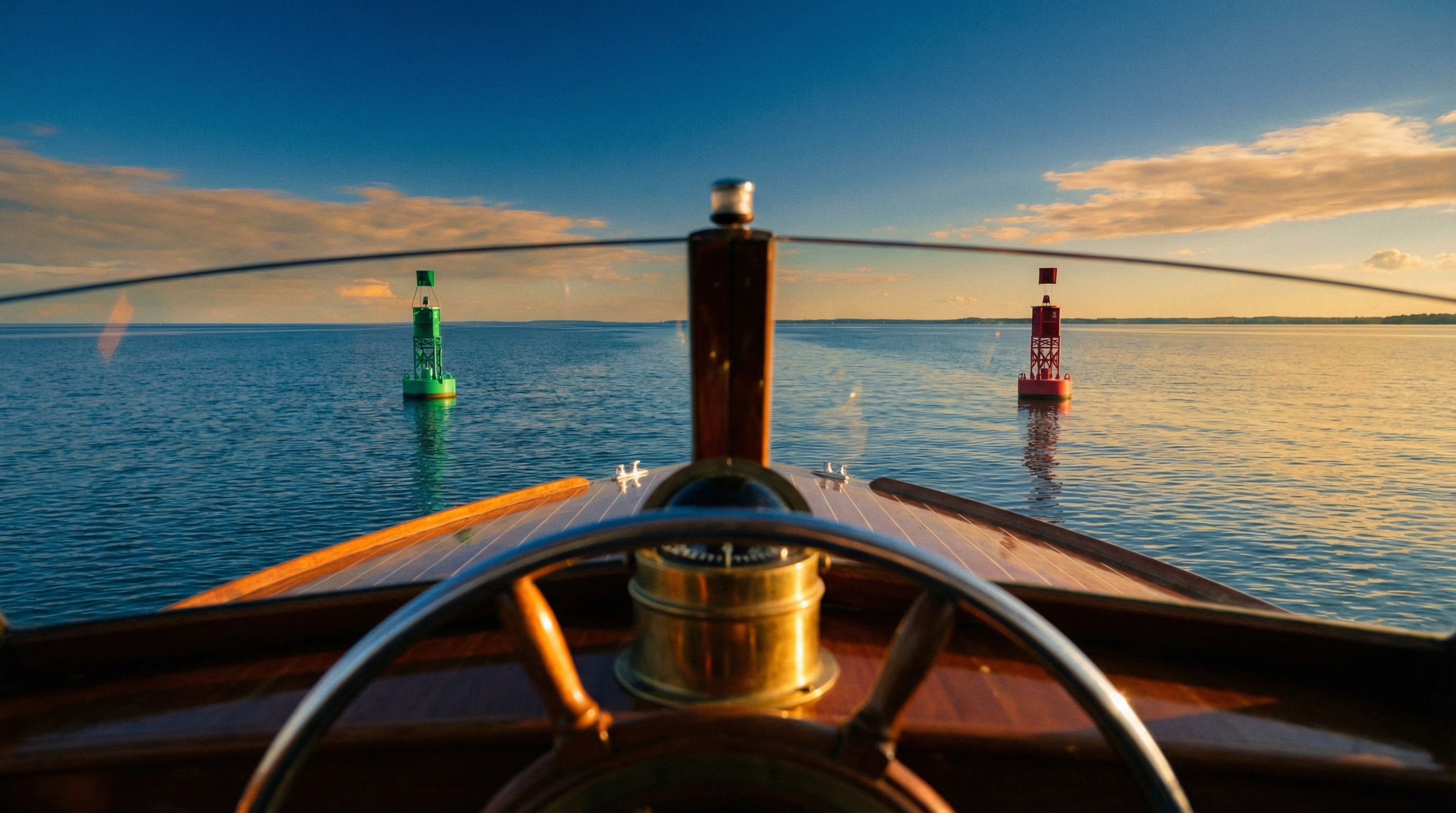
There is a moment every new boater experiences on Lake Erie. You are cruising along, the sun is shining, and the water is relatively calm. Then, you spot a cluster of buoys ahead. One is red, one is green, and another has horizontal stripes.

Dwayne Rodrigues
Boat Owner & Enthusiast
 Anchorages & Navigation
How to Read Nautical Charts for Beginners
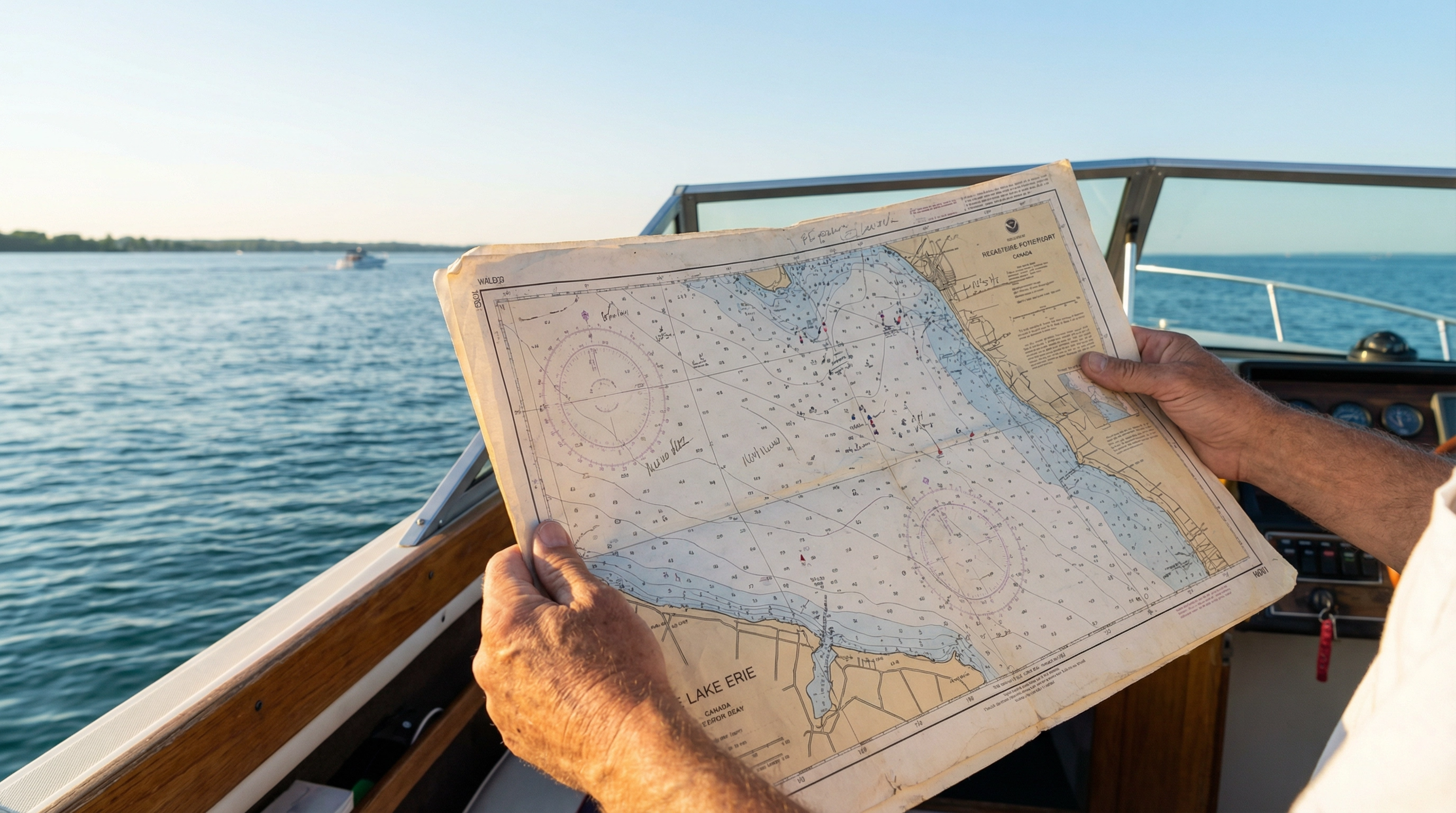
If you are new to boating on Lake Erie, looking at a nautical chart for the first time can feel like trying to read a foreign language. There are numbers scattered everywhere, strange symbols, and intersecting lines that do not seem to make much sense.
Dwayne Rodrigues
Boat Owner & Enthusiast
 Anchorages & Navigation
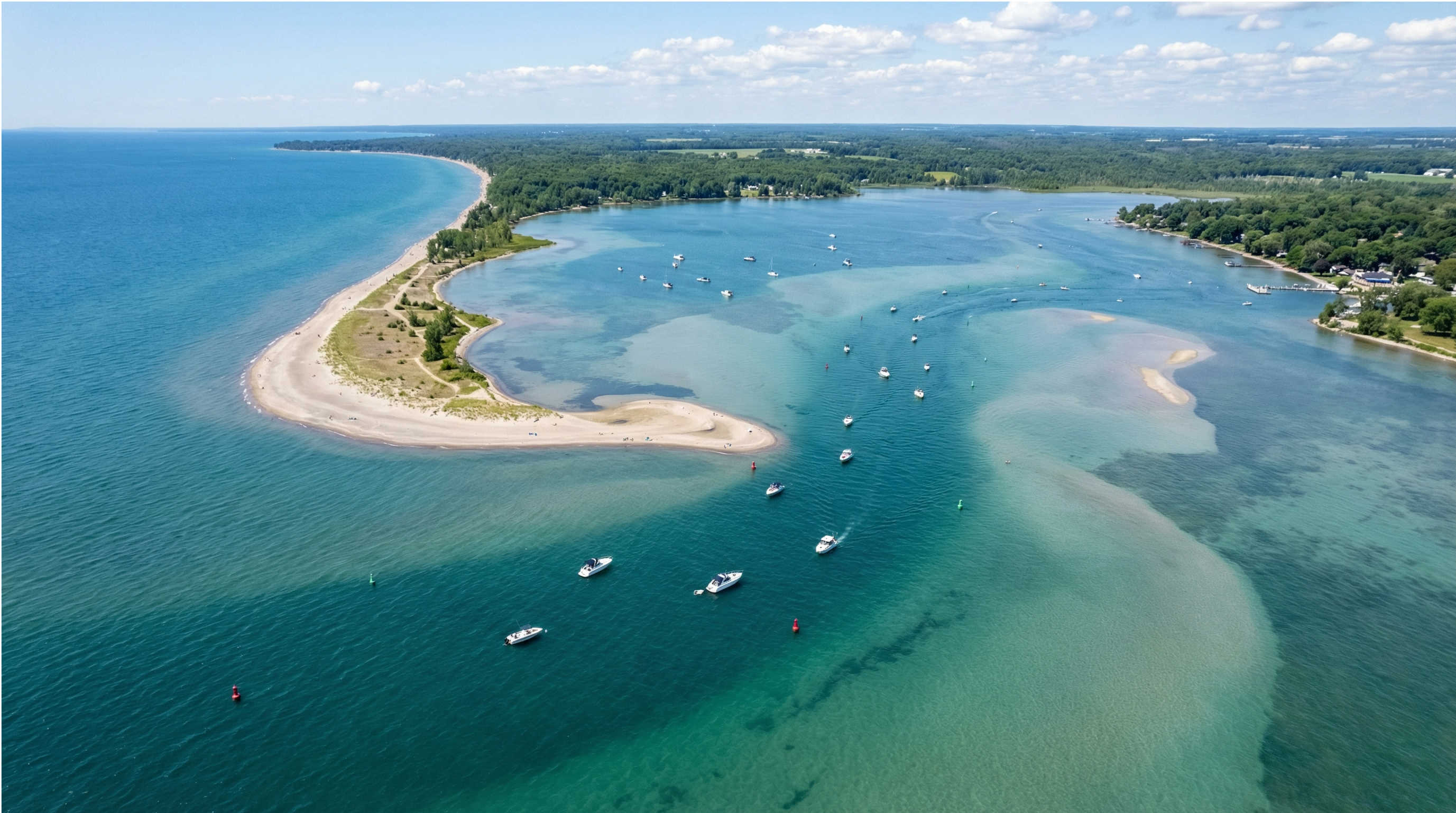
Long Point Bay Boater Navigation Guide
Long Point Bay is a boater’s paradise. It’s a place where the wild, unpredictable nature of Lake Erie is tamed by the protective embrace of the Long Point peninsula. For those of us who have spent years navigating these waters, the bay feels like a sanctua
Dwayne Rodrigues
Boat Owner & Enthusiast