Raft-Up Safety Mistakes That Cause Damage
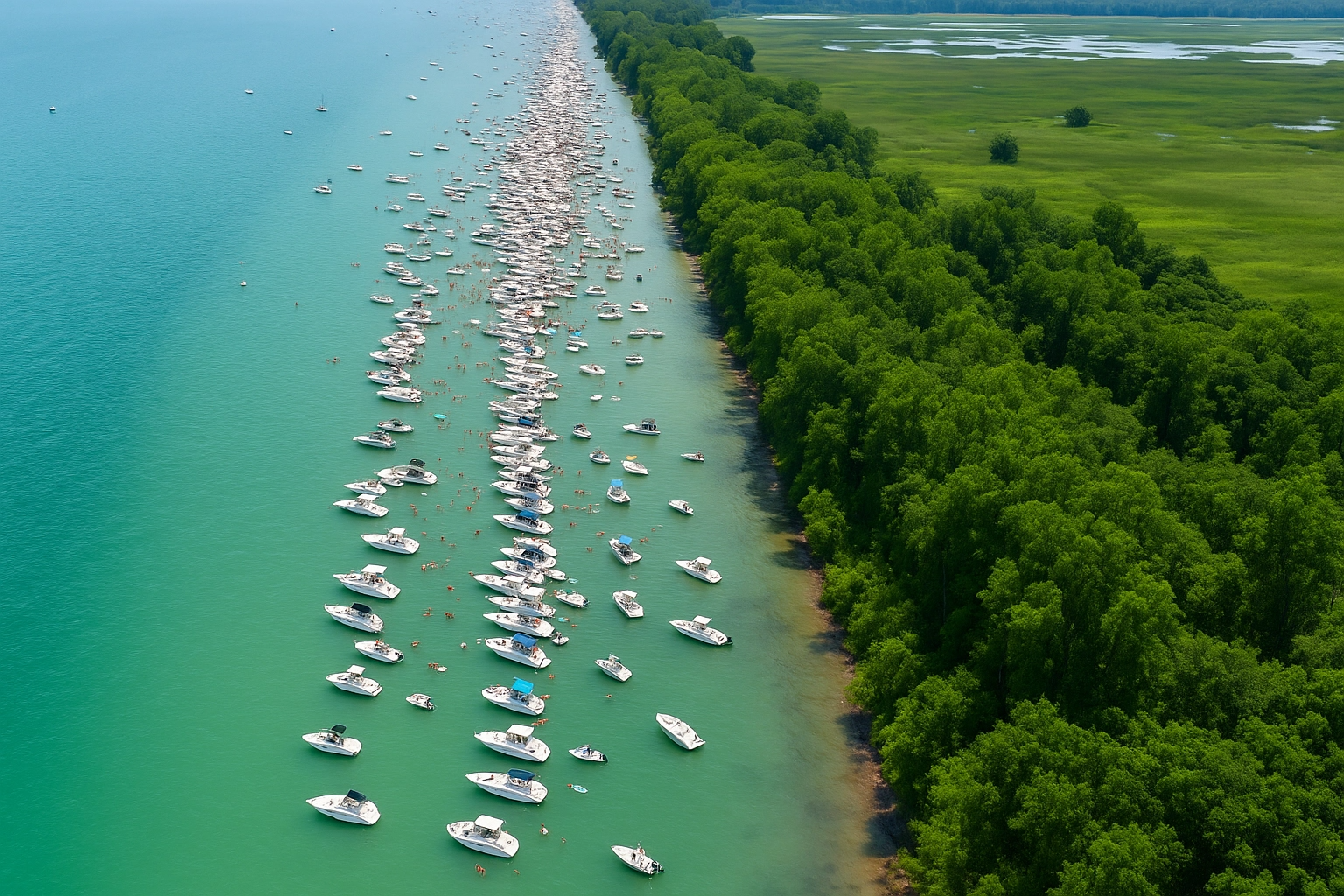
There’s nothing quite like it. The sun is high, the water is warm, and you’re surrounded by friends, old and new, all tied together in a floating community. The raft-up is a cornerstone of the boating lifestyle, especially for events like Pottahawk.

Dwayne Rodrigues
Boat Owner & Enthusiast
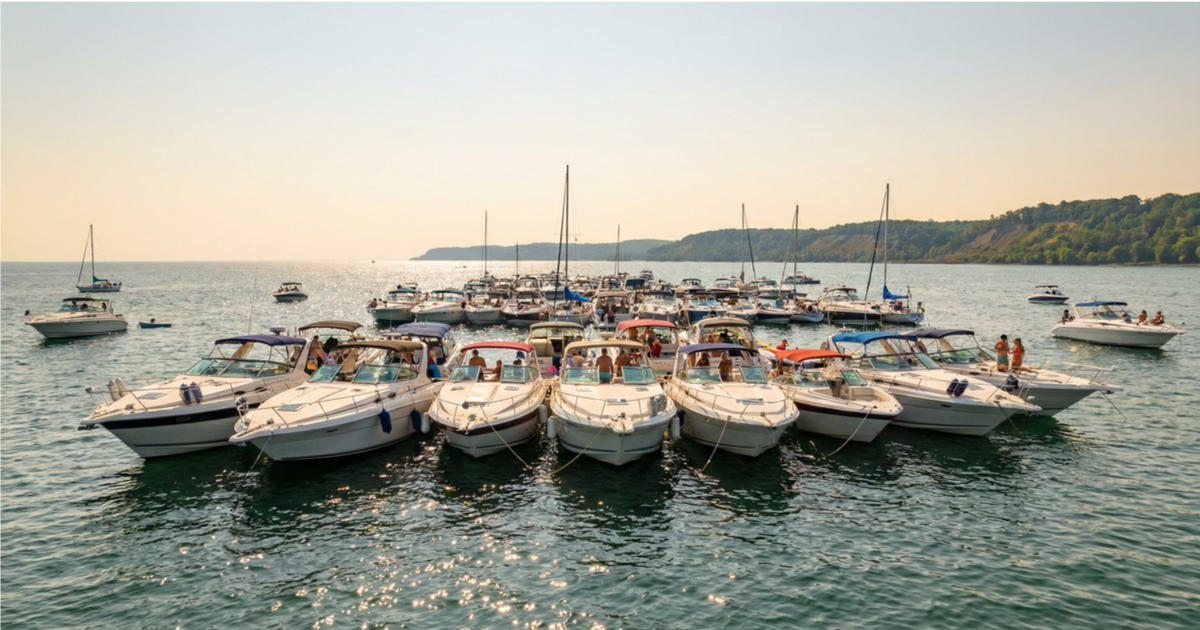
There’s nothing quite like it. The sun is high, the water is warm, and you’re surrounded by friends, old and new, all tied together in a floating community. The raft-up is a cornerstone of the boating lifestyle, especially for events like Pottahawk. It’s the ultimate expression of shared joy on the water.
But let’s be honest for a second. We’ve all seen it happen. The gentle rocking turns into a violent slam. A perfectly good fender pops out of place. You hear that sickening crunch of fiberglass on fiberglass. Suddenly, that carefree party has a price tag, and it’s usually a four-figure one for gelcoat repair.
Most raft-up guides focus on the basics of tying up. But today, we’re going to talk about the expensive stuff. The stuff that actually causes damage. These are the common, seemingly small mistakes that lead to big repair bills, strained friendships, and in the worst cases, serious injuries. Because a great day on the water is one you don’t have to pay for later.
Quick Takeaways:
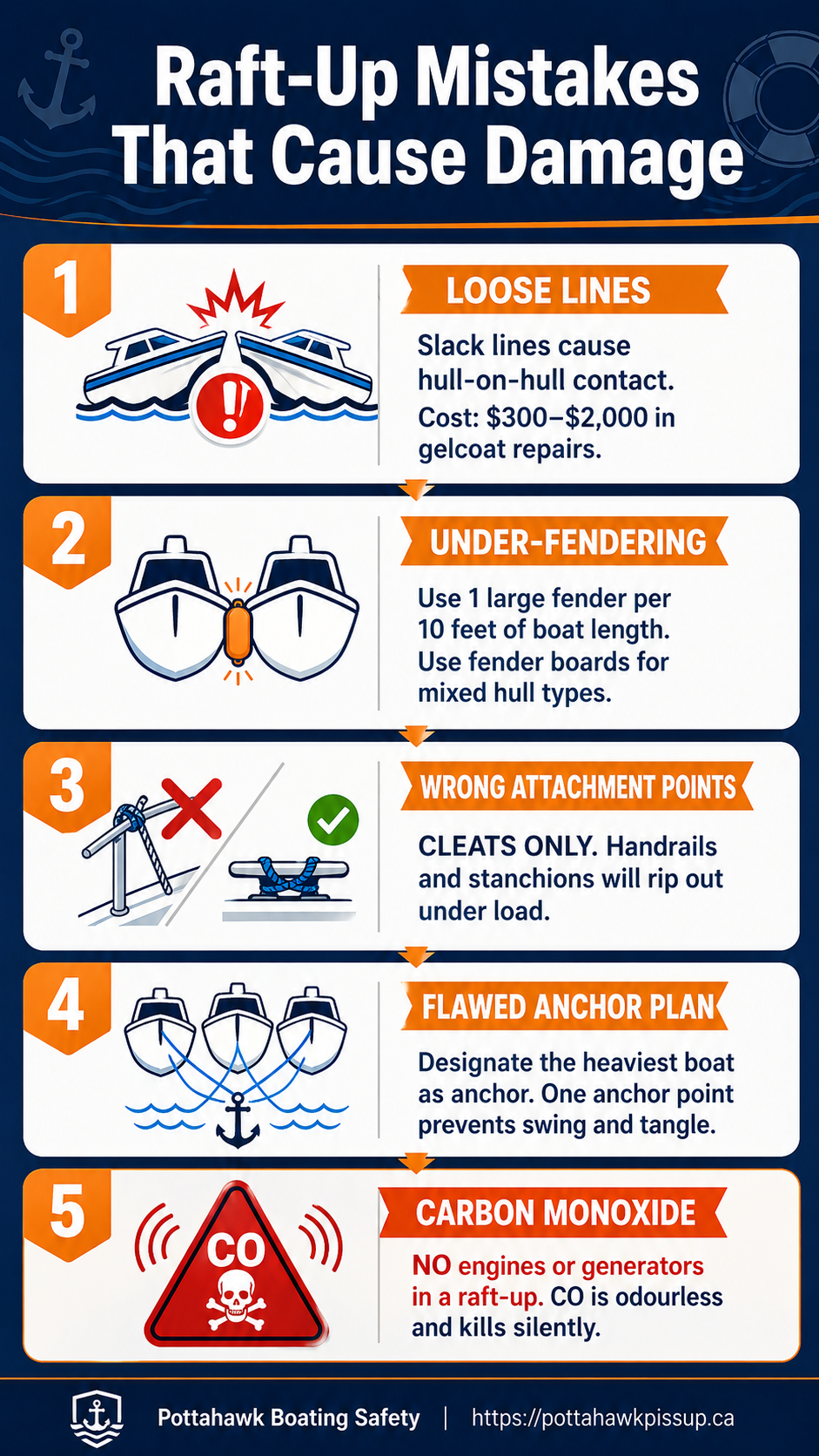
Loose Lines are #1: The most common mistake causing gelcoat scratches and fender failure.
Fenders are Your Friend: Use at least one large fender per 10 feet of boat length.
Cleats Only: Never tie off to handrails, stanchions, or bimini tops.
Anchor with the Heaviest: The largest boat in the group should set the main anchor.
Wakes are the Enemy: Passing boats can cause surge damage; slow down when approaching a raft-up.
CO is a Silent Killer: Never run engines or generators in a tight raft-up.
The Physics of a Floating Party
Before we dive into the mistakes, let’s quickly talk about why they happen. A single boat on the water is subject to wind, waves, and current. Now, tie ten boats together. You don’t have one boat anymore you have a single, massive object with a huge surface area for the wind to push against and a complex, unpredictable reaction to every wave. A 2024 USCG report noted that collisions with other vessels remain a top cause of accidents, and a crowded raft-up is a collision waiting to happen if not managed correctly.
When lines are loose, each boat has its own inertia. When a wake hits the raft, each boat accelerates and decelerates at a different rate. That’s when the slamming happens. The goal of a proper raft-up is to make all those individual boats act as one. That’s the secret.
Mistake #1: The Sin of the Loose Line
If there is one cardinal sin of rafting up, this is it. You’ve got your lines out, the boats are tied, and you think you’re good. But there’s slack in the lines. Each boat is rocking to its own rhythm, moving independently. This is a recipe for disaster.
When lines are loose, boats don’t move as a single unit. Instead, they become giant, multi-ton hammers, slamming into each other with every passing wake or gust of wind. Your fenders can only do so much. The constant, jarring motion will eventually work them out of place, and then you get hull-on-hull contact. That’s how you get those deep, ugly gelcoat gouges that are impossible to ignore.
The Financial Cost: A minor gelcoat scratch can cost $300-$500 to repair professionally. A deep gouge that requires filling and color matching? You’re easily looking at $1,000-$2,000. All because of a little slack.
The Fix: Once your lines are set, go back and tighten everything. And I mean everything. Bow lines, stern lines, and especially your spring lines. The goal is to make the entire raft so rigid that it moves as one solid mass on the water. It might seem counterintuitive, but a tight raft is a happy raft. It minimizes shock loads on your cleats and hardware and, most importantly, prevents your boat from playing bumper cars with your neighbour’s.
Mistake #2: Under-Fendering and Poor Placement
Showing up to a raft-up with a couple of tiny, undersized fenders is like bringing a squirt gun to a firefight. It’s just not going to cut it. Fenders are the only thing standing between your pristine hull and your buddy’s or neighbour. They need to be big enough, numerous enough, and placed correctly.
Most boaters simply don’t use enough fenders. The general rule of thumb, according to Discover Boating, is to use at least one fender for every 10 feet of boat length. For a 30-foot boat, that’s a minimum of three large fenders. And when rafting, more is always better.
Placement is just as critical. Simply hanging them over the side isn’t enough. You need to anticipate where the pressure points will be. Pay attention to the flare of the hull and where the boats are most likely to make contact. This is especially true when rafting with different types of boats. A pontoon boat’s flat side will interact very differently with a V-hull cruiser. Fender boards, a plank of wood with lines at each end, hung outside your fenders are a fantastic tool to bridge these gaps and spread the load across multiple fenders.
The Fix: Invest in large, high-quality fenders. Don’t skimp. And bring more than you think you’ll need. Before you even approach the raft, have your fenders deployed and ready. Adjust them as you get close, and don’t be afraid to ask your neighbour to adjust theirs. It’s a team effort.
Mistake #3: Using the Wrong Attachment Points
This one makes experienced boaters cringe. You see a line tied off to a bimini top support, a handrail, or a windshield stanchion. These are not load-bearing attachment points. They are designed for people to hold onto, not to secure a 10,000-pound boat.
When you tie off to something other than a cleat, you are asking for it to fail. A sudden wake from a passing boat can generate thousands of pounds of force. That handrail will rip right out of the fiberglass, leaving a nasty hole and a boat that is suddenly adrift. Now you have two problems, a damaged boat and a potential collision.
The Financial Cost: Replacing a bent stanchion or a ripped-out handrail can cost anywhere from $500 to $2,500, depending on the boat and the extent of the fiberglass damage.
The Fix: This is simple. Cleats only. Period. Your boat’s cleats are through-bolted with backing plates for a reason. They are designed to handle the immense stress of mooring and docking. Use them. If you don’t have a cleat in the perfect spot, use a spring line from a bow or stern cleat to get the angle you need. Never, ever be tempted to use a shortcut.
Mistake #4: The Flawed Anchor Plan
A raft-up is only as secure as its anchor, and the anchor plan is often where things go wrong. The most common mistake is having multiple boats drop their own anchors. This creates a tangled mess of anchor lines and a raft that can swing unpredictably.
The correct approach, as recommended by Sea Tow, is to have the largest, heaviest boat in the group act as the central anchor point. This boat should set a good, solid anchor before anyone else ties up. For added security in a large raft-up, this anchor boat should consider setting a second anchor off the stern to prevent swinging.
The Fix: Designate an anchor boat. This should be the biggest, heaviest vessel in your immediate group. Let them get settled and secure before you approach. All other boats will tie off to this central point, creating a stable, organized raft. This is a key part of our Art of the Raft-Up guide.
Mistake #5: Ignoring the Silent Killer: Carbon Monoxide
This is the mistake that can be deadly. In a tight raft-up, especially with swim platforms aligned, running engines or generators creates a pocket of stagnant air. Carbon monoxide (CO), an odourless, colourless gas, can quickly build up to lethal levels. The symptoms of CO poisoning, headache, dizziness, nausea are tragically similar to having a few too many drinks in the sun.
Boaters have died from this. It’s a well-documented risk, yet people still do it. The area around the swim platform is the highest-risk zone. People swimming or lounging on the back of the boat are directly in the path of the exhaust fumes.
The Fix: Institute a strict no engines, no generators rule within the raft-up as discussed in our article How to Safely Attend Large Boat Raft-Ups. If someone needs to charge their batteries, they should detach from the raft, motor away to a safe distance downwind, and run their generator there. Install marine-grade CO detectors in your cabin and check them regularly. Your life, and the lives of your friends, could depend on it.
The Pottahawk Departure: A Step-by-Step Protocol
Leaving a massive raft-up like Pottahawk, especially as the day winds down, requires a plan. Simply untying your lines and hitting the throttle is a recipe for causing a chain reaction of damage. You can destabilize the entire row, causing boats to swing into each other.
Here’s how to do it right:
Communicate: At least 15 minutes before you plan to leave, inform your immediate neighbours and the boats on either side of them. This gives everyone time to prepare.
Prepare Your Boat: Start your pre-trip inspection. Get your own lines and fenders ready for departure. Ensure your engine is ready to start, but do not start it yet.
The Untying Process: The person leaving is responsible for managing the lines. Start by untying the lines from your boat that are attached to your neighbours. Leave the lines from your neighbours that are attached to your boat for last. This gives them control.
The Push-Off: Once all lines are free, have crew members at the bow and stern gently push off the neighbouring boats. Do not use the engine to pull away. This is how you get prop-fouled lines and damaged props.
Clear the Area: Once you have a safe amount of space (at least 10-15 feet), you can start your engine and slowly motor away. Be mindful of your wake. The boats that remain are temporarily less stable, and a large wake from you can cause them to collide.
The Legal Side of Things
Remember, if your actions cause damage to another person’s boat, you are likely liable. This can lead to a messy insurance claim or even a lawsuit. Following proper etiquette and safety procedures isn’t just about being a good neighbour, it’s about protecting yourself legally and financially.
Putting it all together, a successful, damage-free raft-up isn’t about luck. It’s about communication, preparation, and respecting the immense forces at play. By avoiding these common mistakes, you can ensure your day on the water is memorable for all the right reasons.
Sources & Further Reading
Tags
Share
Read Next
 Guides
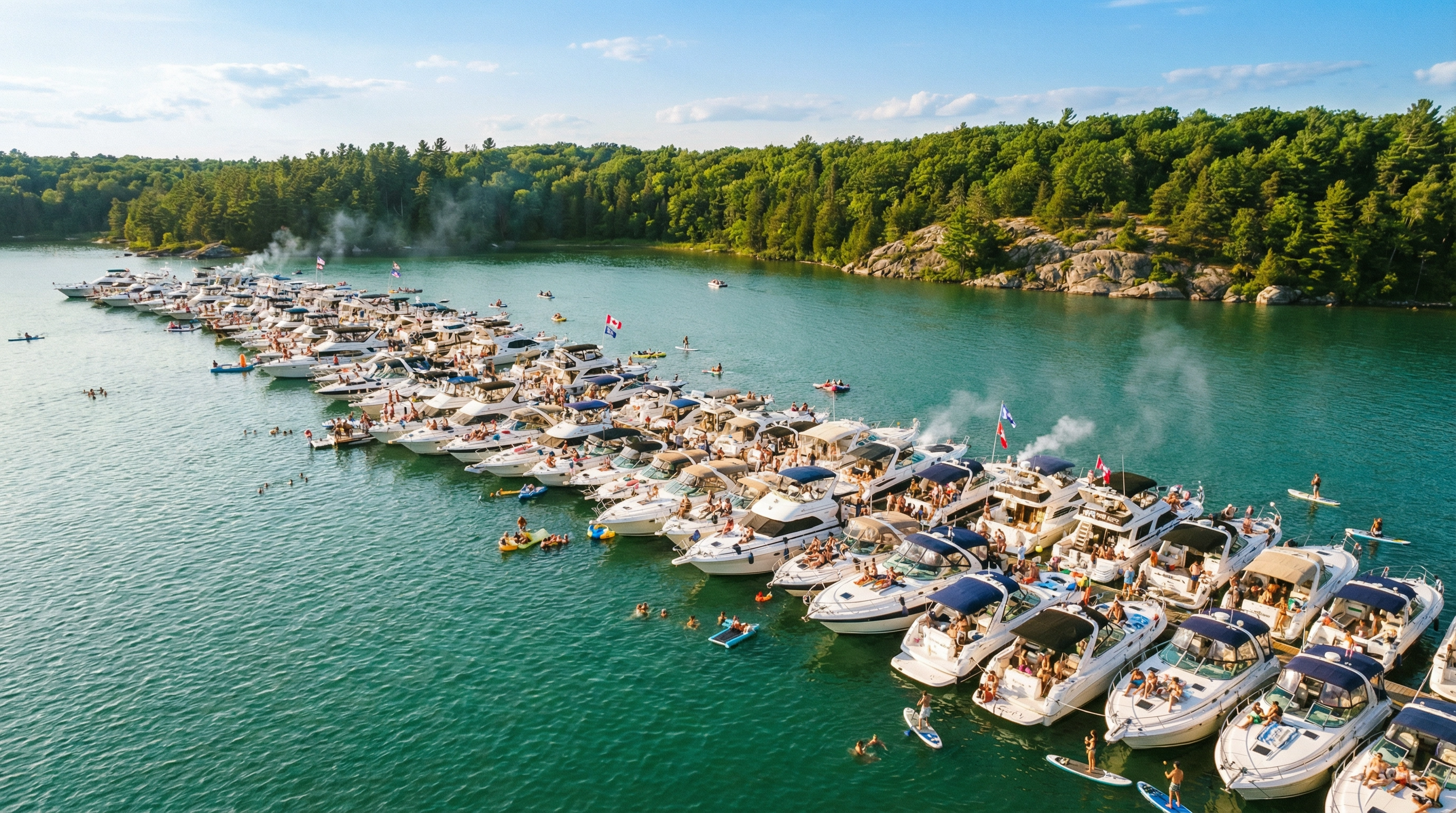
The Ultimate Guide to Raft-Up Safety: From Casual Cove to Pottahawk Chaos
There's a unique magic that happens when boats tie together on the water. It's the floating equivalent of a neighbourhood block party, a communal experience that turns individual vessels into a single, lively platform for swimming, grilling, and socializin

Dwayne Rodrigues
Boat Owner & Enthusiast
 Guides
Beginner's Guide to Boating in Canada
So, you’re thinking about getting into boating in Canada. Fantastic. You’re about to join millions of Canadians who take to our incredible lakes, rivers, and coastlines every year. It’s a world of breathtaking sunsets, unforgettable family moments, and the
Dwayne Rodrigues
Boat Owner & Enthusiast
 Guides
The Complete Guide to the Pottahawk Pissup
The Pottahawk Pissup is an unofficial, unsanctioned boat party held on the second Sunday of July at Pottahawk Point in Long Point Bay, Lake Erie. It is not an organized event. There are no official organizers, no tickets, and no formal schedule.
Dwayne Rodrigues
Boat Owner & Enthusiast