Why Group Behavior Changes Boating Decisions
Have you ever done something on your boat with a group of friends that you would never have done if you were alone? Maybe you pushed a little faster through a crowded channel, anchored a little closer to another boat than you normally would, or stayed out

Dwayne Rodrigues
Boat Owner & Enthusiast
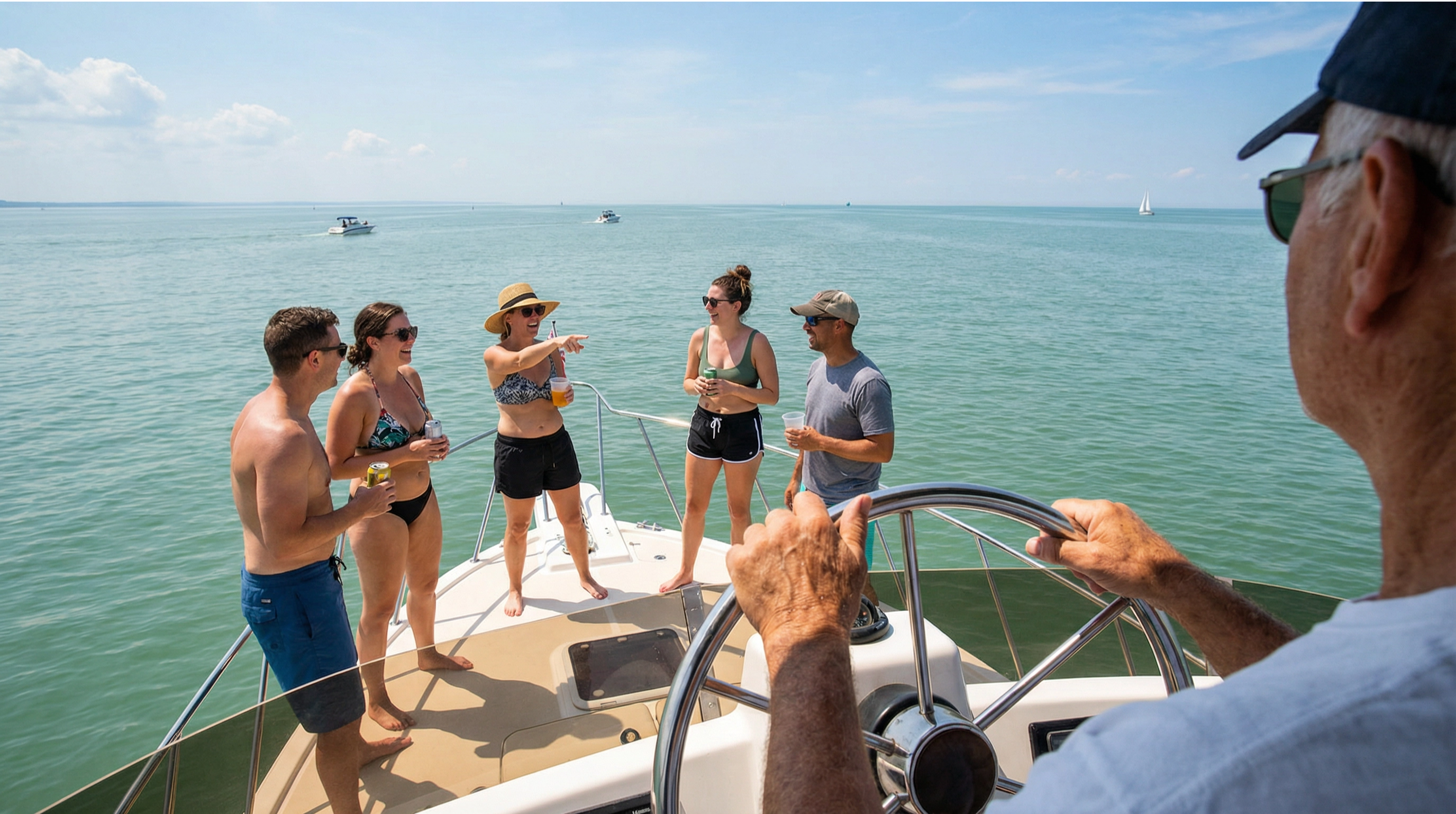
Have you ever done something on your boat with a group of friends that you would never have done if you were alone? Maybe you pushed a little faster through a crowded channel, anchored a little closer to another boat than you normally would, or stayed out just a bit longer after the sun went down. If you’re nodding your head, you’re not alone. I’ve been there. I think every boater has. There’s a powerful, often invisible, force that takes over when we’re in a group on the water. Our individual decision-making process, the one we rely on when we’re solo at the helm, gets hijacked by something else entirely. It gets replaced by a collective mindset, a group consciousness that doesn’t always have our best interests at heart.
This isn’t just a feeling; it’s a well-documented psychological phenomenon. And in the context of boating, where the consequences of a bad decision can be immediate and severe, it’s something we absolutely have to talk about. The goal of this site is to build a real authority on boating safety, and that means going deeper than just telling you to wear a life jacket. It means exploring the why behind our actions. Why do smart, experienced captains sometimes make questionable calls when their boat is full of people? Why does the presence of a crowd change our perception of risk? Understanding the psychology at play is the first step to counteracting it and becoming a safer, more effective captain.
Quick Takeaways
The Captain’s Brain on ‘Group Mode’ is Different. Social pressures like herd mentality and diffusion of responsibility can make you subconsciously outsource your decision-making to the group, even when you’re at the helm.
Risk Perception is Contagious. In a group, our individual sense of risk can be warped. We see others taking a chance and getting away with it, and our brain recalibrates what it considers “safe.”
The Designated Operator is a Psychological Shield. A sober captain isn’t just about avoiding a DUI; it’s about having someone on board whose judgment is not clouded by alcohol, making them more resilient to dangerous groupthink.
Verbalizing Your Plan is Your Best Defense. The simple act of saying your plan out loud to your crew re-establishes your authority as captain and forces you to consciously commit to a safe course of action, breaking the spell of silent group consensus.
The Psychology of the Full Cooler: What’s Happening in Our Brains?
To understand why we make different decisions in a group, we have to look at a few key psychological concepts. These aren’t just abstract theories; they are powerful forces that are actively at play every time you leave the dock with a boat full of friends.
Herd Mentality: The Urge to Follow
At its core, herd mentality is our innate human tendency to follow the actions of a larger group. It’s a survival instinct left over from a time when sticking with the tribe meant the difference between life and death. In modern life, this instinct often manifests as a desire to conform, to not be the one who sticks out. On a boat, this can be incredibly dangerous.
According to the leadership training firm Leadership IQ, “Group decision-making is susceptible to herd dynamics: individuals in a team may abandon independent analysis and go along with the dominant view, even if it contradicts their own information or beliefs.”
Think about a mass exodus from a big event like Pottahawk. You know you should wait for the traffic to die down, but you see a stream of boats heading for the channel. The herd is moving. Your brain screams, “They’re all going, so it must be okay! I don’t want to be the last one here.” So you pull anchor and join the chaotic rush, even though your rational mind knows it’s a bad idea. As research from Leadership IQ on the herding effect explains, this is a classic example of individuals abandoning their own analysis to go along with the dominant group behavior.
Diffusion of Responsibility: “Someone Else Will Handle It”
This is a big one on a boat. When you’re alone, you are 100% responsible for every aspect of the vessel’s operation and safety. There is no one else to blame. But as soon as you add more people, that sense of personal responsibility gets diluted. In a group, we subconsciously assume that someone else is watching, someone else is paying attention, someone else will step up if something goes wrong.
This is why a boat full of people can somehow fail to notice a dragging anchor until it’s too late. Everyone assumes someone else has it covered. The more people on board, the less individual responsibility each person feels. This isn’t because your friends are lazy or careless; it’s a fundamental feature of group psychology. It’s the reason why a single bystander is more likely to help someone in distress than a large crowd is.
Group Polarization: The Echo Chamber Effect
Group polarization is the tendency for groups to make decisions that are more extreme than the initial inclination of their members. If a few people in the group are leaning toward a slightly risky decision, the group discussion will often amplify that risk-taking tendency.
Imagine a scenario where the weather is starting to turn. Your gut says it’s time to head in. But then one person says, “It’s not that bad, let’s stay for one more.” Another agrees, “Yeah, my weather app says it’s going to pass.” Suddenly, the group’s collective decision is to stay, a riskier choice than the one you would have made on your own. The group has polarized toward the riskier option, and the desire to not be the “buzzkill” who insists on leaving is a powerful motivator to go along with it.
The Boating-Specific Triggers
These psychological principles are universal, but they are amplified by the unique environment of a boat.
The “Vacation” Mindset: When we step onto a boat, we often step out of our normal, responsible lives. We’re there to relax, have fun, and escape. This mindset makes us more susceptible to suggestion and less likely to be focused on safety and risk management.
Alcohol as an Amplifier: Alcohol is a massive factor in boating incidents, and it’s a powerful catalyst for all of these group dynamics. It lowers inhibitions, impairs judgment, and makes us more likely to give in to peer pressure. As Verywell Mind notes in a review of risk-taking behaviors, there's a strong correlation between alcohol use and engaging in risky activities. The presence of alcohol supercharges herd mentality and diffusion of responsibility.
The Desire to Be a Good Host: As the captain, you want your guests to have a good time. This can create an internal pressure to say “yes” when you should be saying “no.” You don’t want to be the one who cuts the party short or tells people they can’t do something. This desire to please can directly conflict with your primary responsibility as captain: the safety of your vessel and everyone on board.
The Antidote: How to Reclaim Your Captain’s Authority
So, how do we fight back against these powerful, invisible forces? It’s not about becoming an authoritarian captain who barks orders. It’s about being a smart, proactive leader who understands the psychology at play and uses it to their advantage.
The Pre-Launch Briefing: Setting the Tone
This is your single most powerful tool. Before you leave the dock, gather your crew. As we emphasize in our First-Time Attendee Guide, this is your moment to establish the ground rules.
Introduce the Designated Operator: Point to your sober skipper and say, “This is our captain for the day. Their word is law. If they say it’s time to go, we go. No arguments.” This immediately removes any ambiguity about who is in charge.
Empower Your Crew: Give everyone a job. “You’re on fender duty. You’re my lookout for other boats.” This counteracts diffusion of responsibility by giving people a specific, personal stake in the boat’s safety.
Verbalize the Plan: Say it out loud. “Our plan is to head to the north side of the point, anchor by 11 a.m., and be ready to head home by 4 p.m. before the rush.” This creates a social contract. The plan is now a real, tangible thing that the group has agreed to.
The Power of “I”: Using First-Person Language
When you’re at the helm, use “I” statements.
“I am not comfortable with how close that boat is.”
“I am going to slow down through this channel.”
“I think it’s time to start thinking about heading in.”
This language is subtle but incredibly powerful. It breaks the spell of group consensus. You are not asking for a vote; you are stating your decision as the captain. It reminds everyone, including yourself, that the ultimate responsibility rests with you.
Create a Culture of Safety, Not a List of Rules
No one likes being lectured. Instead of a list of “don’ts,” create a positive safety culture.
Praise Good Behavior: When someone points out a potential hazard, thank them. “Good eye, I didn’t see that.” This encourages everyone to be a lookout.
Explain the “Why”: Instead of just saying “don’t do that,” explain the reasoning. “Let’s not run the generator because of the carbon monoxide risk to the boats around us.” This builds respect for your judgment.
Lead by Example: Wear your own life jacket. Be the first to suggest putting on sunscreen. Your actions will set the tone for the entire boat.
Being a captain is about more than just knowing how to drive a boat. It’s about understanding people. It’s about recognizing that the social dynamics on a full boat are as real and as powerful as the wind and the waves. By understanding the psychology of group behavior, you can anticipate the challenges, counteract the risks, and create an environment where everyone can have an amazing, and safe, day on the water. That’s not just good seamanship; it’s good leadership.
Sources & Further Reading
Tags
Share
Read Next
 Safety
Marine Emergencies: A Complete Guide to On-Water Incidents
There is a moment every boater dreads. You are cruising along, enjoying the sun and the water, when suddenly the engine cuts out, smoke starts billowing from the hatch, or someone slips and falls over the rail. In that split second, the peaceful day on the

Dwayne Rodrigues
Boat Owner & Enthusiast
 Safety
Do You Need a Boating Licence in Canada?
If you are planning to spend any time on the water this summer, you have probably asked yourself the big question: do you need a boating licence in Canada? The short answer is yes. If your boat has a motor, you need a licence.
Dwayne Rodrigues
Boat Owner & Enthusiast
 Safety
How to Avoid Running Aground: A Boater's Guide to Shallow Water Safety
Running aground is one of those boating experiences that ranges from a minor, face-reddening embarrassment to a catastrophic emergency. One minute you are cruising along enjoying the sun, and the next, there is a sickening crunch, a sudden stop, and every
Dwayne Rodrigues
Boat Owner & Enthusiast