How Fast the Great Lakes Can Turn Dangerous (Real Scenarios)
It's a perfect summer afternoon on Lake Erie. The sun is out, the water is calm, and you're miles from shore without a care in the world. An hour later, you're clinging to a cooler, your boat is gone, and the Coast Guard is your only hope.

Dwayne Rodrigues
Boat Owner & Enthusiast
Quick Takeaways:
The Great Lakes can go from calm to dangerous in under 30 minutes.
A single large wave can swamp a 22-foot boat 10 miles from shore.
The lake's shallow depth (average 62 feet) is the primary reason for its rapid, violent weather changes.
Real-world incidents show survival often depends on life jackets and reliable communication.
Always have a survival plan before you leave the dock.
It's a perfect summer afternoon on Lake Erie. The sun is out, the water is calm, and you're miles from shore without a care in the world. An hour later, you're clinging to a cooler, your boat is gone, and the Coast Guard is your only hope.
Sound dramatic? It's not. It's a real scenario that played out on Lake Erie in July 2024. And it's a stark reminder of how quickly the shallowest of the Great Lakes can turn into a deadly trap.
We're not talking about a slow build-up of bad weather. We're talking about a catastrophic shift in conditions that can happen in the time it takes to drink a cup of coffee. In this post, we're going to look at real-life scenarios that show just how fast Lake Erie can turn dangerous, why it happens, and what you can do to make sure you're not the next boater to be caught off guard.
Scenario 1: The Single Wave That Ended a Day Trip (Timeline: Seconds)
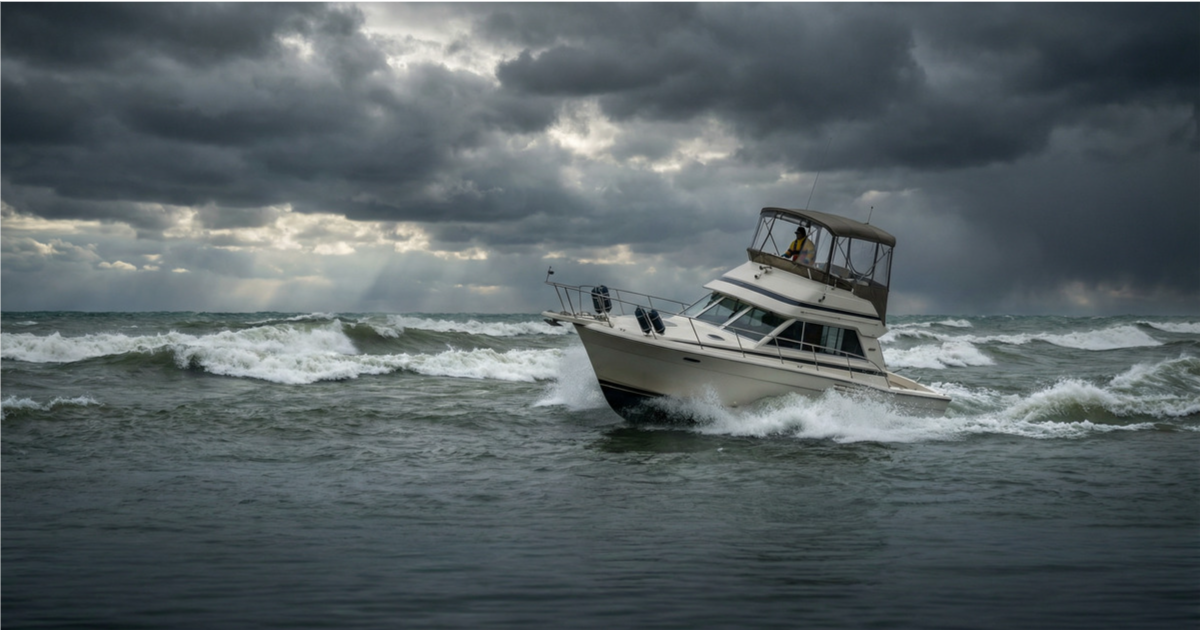
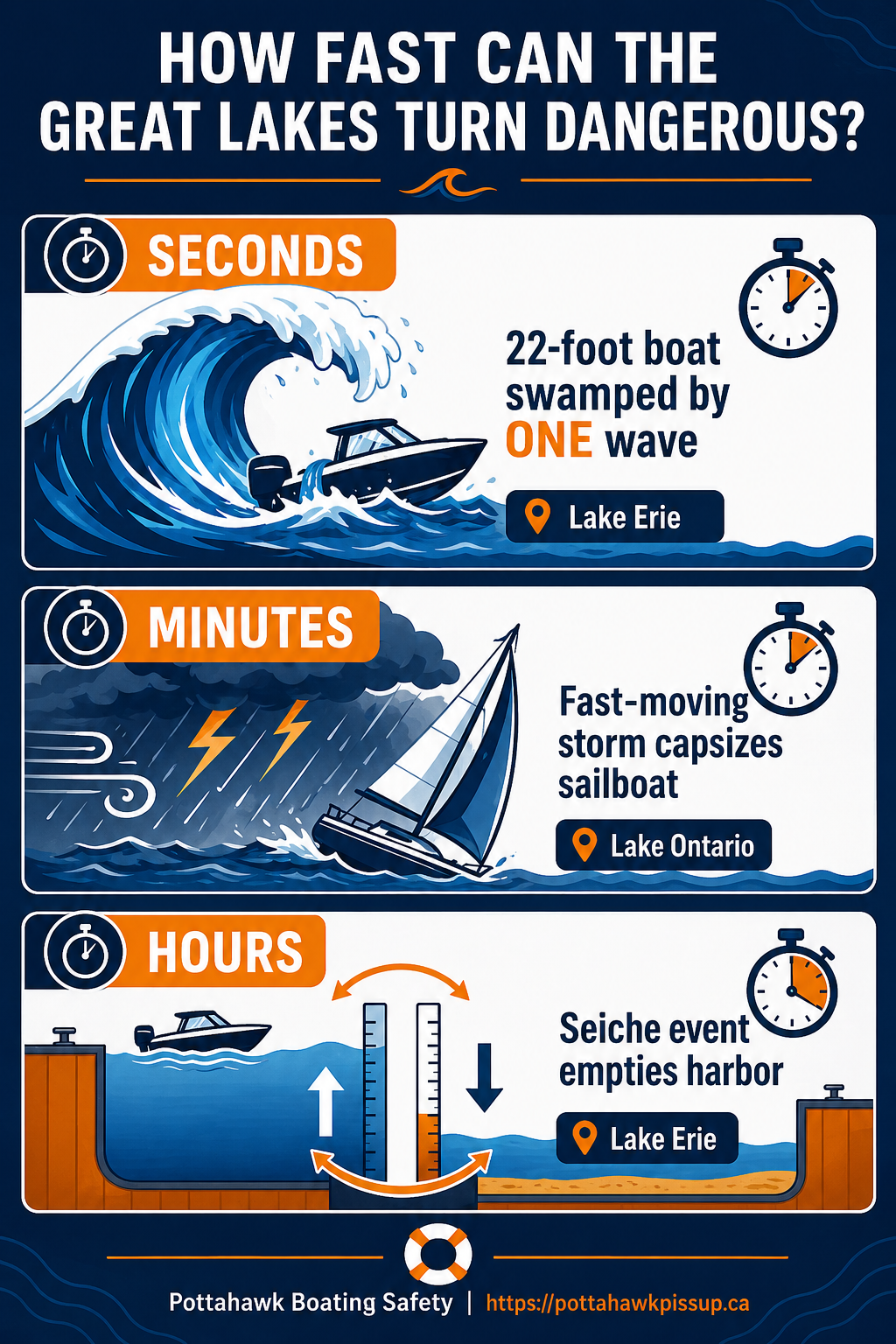
On a Saturday morning in July 2024, five people were enjoying a day on their 22-foot boat, about 10 miles off the coast of Ashtabula, Ohio. The weather was good, and the trip was going smoothly. Then, in an instant, everything changed.
A single, large wave came out of nowhere and completely swamped the boat. There was no time to react, no time to prepare. One moment they were boating; the next, they were in the water, their boat sinking beneath them.
Fortunately, they were all wearing life jackets and managed to cling to a cooler. One of them had a phone and was able to call 911. The U.S. Coast Guard responded and rescued all five, but the incident highlights a terrifying reality: on Lake Erie, it can take just one wave and a matter of seconds to go from safe to sinking.
"While we strongly recommend having a more reliable means to alert us of distress, the phone call led to lives saved!" the U.S. Coast Guard said in a social media post about the rescue.
This incident underscores the importance of wearing a life jacket at all times and having a reliable way to call for help. A VHF radio would have been even better than a cell phone, as it would have broadcast the distress call to all nearby vessels and the Coast Guard simultaneously. If you're serious about boating safety, consider investing in a quality VHF radio with AIS capability to ensure you can always call for help.
Scenario 2: The Fast-Moving Storm That Capsized a Sailboat (Timeline: Minutes)
In August 2025, a 20-foot sailboat was enjoying a pleasant evening on Lake Ontario, just 1 km south of Ontario Place in Toronto. Suddenly, a fast-moving storm rolled in, catching the boater completely by surprise. Within minutes, the sailboat had capsized, throwing the occupant into the water.
This incident, captured on video by the Toronto Police Marine Unit, shows how quickly a calm evening can turn into a life-threatening emergency. The storm wasn't in the forecast, and it moved in with incredible speed. The boater was rescued, but it's a powerful example of how even experienced sailors can be caught off guard by the unpredictable weather on the Great Lakes.
The lesson here is simple: even if the forecast looks good, you need to be constantly monitoring the sky and the water for signs of changing conditions. Dark clouds on the horizon, a sudden drop in temperature, or a shift in wind direction can all be early warning signs that conditions are about to deteriorate rapidly.
Scenario 3: The Seiche Event That Emptied a Harbor (Timeline: Hours)
In December 2025, powerful gale-force winds howled across Lake Erie, creating a dramatic and dangerous phenomenon known as a seiche. The sustained winds pushed the water from the western basin of the lake to the eastern basin, causing water levels to drop by several feet in the west and rise by several feet in the east.
This "bathtub effect" can happen over the course of a few hours, and it can have devastating consequences. Harbors can empty out, leaving boats stranded in the mud. In other areas, the rising water can cause massive flooding and create incredibly dangerous wave conditions. It's a powerful reminder that Lake Erie's dangers aren't just about storms; the lake itself can move in ways that are hard to comprehend.
If you've ever read our Lake Erie Weather Pattern Survival Guide, you'll know that seiches are one of the most unique and dangerous phenomena on the lake. They're unpredictable, powerful, and can catch even experienced boaters completely off guard.
Why Does Lake Erie Turn Dangerous So Fast?
So, what makes Lake Erie so much more volatile than the other Great Lakes? It comes down to one simple factor: it's incredibly shallow.
With an average depth of only 62 feet, Lake Erie is the shallowest of the Great Lakes. This means that when strong winds blow across its surface, the water has nowhere to go but up. The wind quickly whips the shallow water into steep, chaotic waves that can be incredibly dangerous for boaters.
In contrast, a deeper lake like Lake Superior (average depth 483 feet) can absorb much more wind energy before the surface becomes dangerously rough. The wind has to work much harder to create large waves on a deep lake.
This shallow depth is why a storm can go from a gentle breeze to a full-blown gale in under 30 minutes on Lake Erie. There's simply not enough water to absorb the energy, so it's all transferred to the surface in the form of waves.
The Science of Shallow Water Waves
Here's the technical explanation: wave height is determined by three factors: wind speed, wind duration, and fetch (the distance over which the wind blows). On Lake Erie, the fetch can be over 200 miles from west to east. When a strong wind blows across that distance over shallow water, it creates steep, closely spaced waves that are incredibly dangerous for small boats.
The shallow water also means that waves "feel" the bottom of the lake much sooner than they would in deeper water. This causes the waves to steepen and break more violently, creating the chaotic, unpredictable conditions that Lake Erie is famous for.
Lake Erie vs. The Other Great Lakes: A Dangerous Comparison
To put Lake Erie's volatility in perspective, let's compare it to the other Great Lakes:
Lake Superior: Average depth 483 feet, maximum depth 1,332 feet. The deepest and coldest of the Great Lakes. While it can certainly be dangerous, it takes much longer for conditions to deteriorate.
Lake Michigan: Average depth 279 feet, maximum depth 925 feet. More volatile than Superior but still much deeper than Erie.
Lake Huron: Average depth 195 feet, maximum depth 750 feet. Similar to Michigan in terms of volatility.
Lake Ontario: Average depth 283 feet, maximum depth 802 feet. Deeper than Erie but still prone to rapid weather changes.
Lake Erie: Average depth 62 feet, maximum depth 210 feet. The shallowest and most volatile of the Great Lakes.
As you can see, Lake Erie is in a league of its own when it comes to shallow water. This is why experienced Great Lakes boaters often say that Lake Erie is the most dangerous of the five.
When Is Lake Erie Most Dangerous? Seasonal Patterns
While Lake Erie can be dangerous at any time of year, certain seasons are riskier than others:
Spring (April-May): The lake is still cold, and the weather is highly unpredictable. Sudden storms can roll in with little warning, and hypothermia is a serious risk if you end up in the water.
Summer (June-August): This is peak boating season, but it's also when thunderstorms are most common. These storms can develop rapidly and produce dangerous winds and waves. The July 2024 incident with the swamped boat is a perfect example of summer dangers.
Fall (September-November): Fall storms on Lake Erie can be particularly violent, with strong winds and large waves. This is also when seiches are most common, as sustained winds can push water from one end of the lake to the other.
Winter (December-March): While most recreational boaters are off the water, winter storms can create incredibly dangerous conditions, including ice floes and extreme cold. The December 2025 seiche event is a reminder that Lake Erie is dangerous even in the off-season.
Your Survival Playbook: What to Do When Conditions Turn
Knowing that the weather can turn in an instant is one thing; knowing what to do about it is another. Here's a simple playbook to follow if you find yourself caught in a sudden Lake Erie storm:
Don Your Life Jackets Immediately. This is non-negotiable. The moment you suspect the weather is turning, everyone on board should put on a life jacket. The people in the single-wave incident survived because they were wearing them. If you're looking for a modern alternative to traditional life jackets, check out our guide on electronic flares and safety equipment.
Point Your Bow into the Waves. This is the most stable position for your boat in rough water. It allows the bow to cut through the waves rather than being hit broadside, which can lead to capsizing.
Reduce Your Speed. Don't try to outrun the storm. Slow down to a speed that allows you to maintain control of your boat without taking on water.
Issue a Distress Call. If you are in immediate danger, use your VHF radio to issue a Mayday call on Channel 16. If you don't have a VHF radio, use your cell phone to call 911. Don't wait until it's too late.
Stay with the Boat. If you do capsize, stay with the boat for as long as possible. It's a much larger target for rescuers to spot than a person in the water.
Head for the Nearest Safe Harbor. If you have time and the conditions allow, head for the nearest safe harbor. Don't try to make it all the way back to your home port if there's a closer option. Check out our guide to the best marinas near Pottahawk for safe harbor options.
What If You're in a Raft-Up When the Weather Turns?
If you're attending a large raft-up like Pottahawk and the weather suddenly turns dangerous, you need to act fast. Here's what to do:
Untie Immediately. Don't wait to see if the weather will improve. If you see dark clouds or feel a sudden wind shift, start untying from the raft-up immediately.
Communicate with Nearby Boats. Use your VHF radio to alert nearby boats that you're breaking away and heading for safety. This prevents collisions and helps coordinate a safe dispersal.
Follow the Survival Playbook. Once you're free from the raft-up, follow the survival playbook above: life jackets on, bow into the waves, reduce speed, and head for safe harbor.
Don't Panic. Panic leads to poor decision-making. Stay calm, focus on the task at hand, and trust your training and equipment.
For more detailed information on raft-up safety, check out our comprehensive guides on how to safely attend large boat raft-ups and the art of the raft-up.
Essential Equipment for Rapid Weather Changes
If you're going to boat on Lake Erie, you need to be prepared for rapid weather changes. Here's the essential equipment you should have on board:
VHF Radio with AIS: This is your lifeline in an emergency. A VHF radio allows you to communicate with the Coast Guard and nearby vessels, while AIS helps you avoid collisions in poor visibility.
Life Jackets for Everyone: Not just stored in a locker, but worn or immediately accessible. Modern inflatable life jackets are comfortable enough to wear all day.
Electronic Flares: Traditional pyrotechnic flares can be dangerous and have a limited shelf life. Electronic flares are safer, more reliable, and can be used multiple times.
Weather Radio or Smartphone with Marine Weather App: You need to be able to monitor the weather forecast and receive alerts in real-time.
Emergency Beacon (EPIRB or PLB): If you're going to be far from shore, an emergency beacon can save your life by alerting search and rescue to your exact location.
Before you head out on the water, make sure you've completed a thorough pre-trip inspection to ensure all your safety equipment is in working order.
The Bottom Line: Respect the Lake
The Great Lakes are a beautiful and exciting place to boat, but they demand respect. Its shallow waters and unpredictable weather can create life-threatening conditions in a matter of minutes. By understanding the risks, learning from real-life scenarios, and always having a survival plan, you can ensure that your adventures on the lake are safe and enjoyable.
Don't become another statistic. Check the forecast, wear your life jacket, have reliable communication, and never, ever underestimate how fast Lake Erie can turn dangerous. The lakes don't care how experienced you are or how nice your boat is. They only care about physics, and on the Great Lakes, physics works fast.
For more comprehensive information on Lake Erie safety, check out our Lake Erie Boating Safety Guide and our detailed analysis of Lake Erie weather and wave patterns.
Sources & Further Reading
Tags
Share
Read Next
 Guides
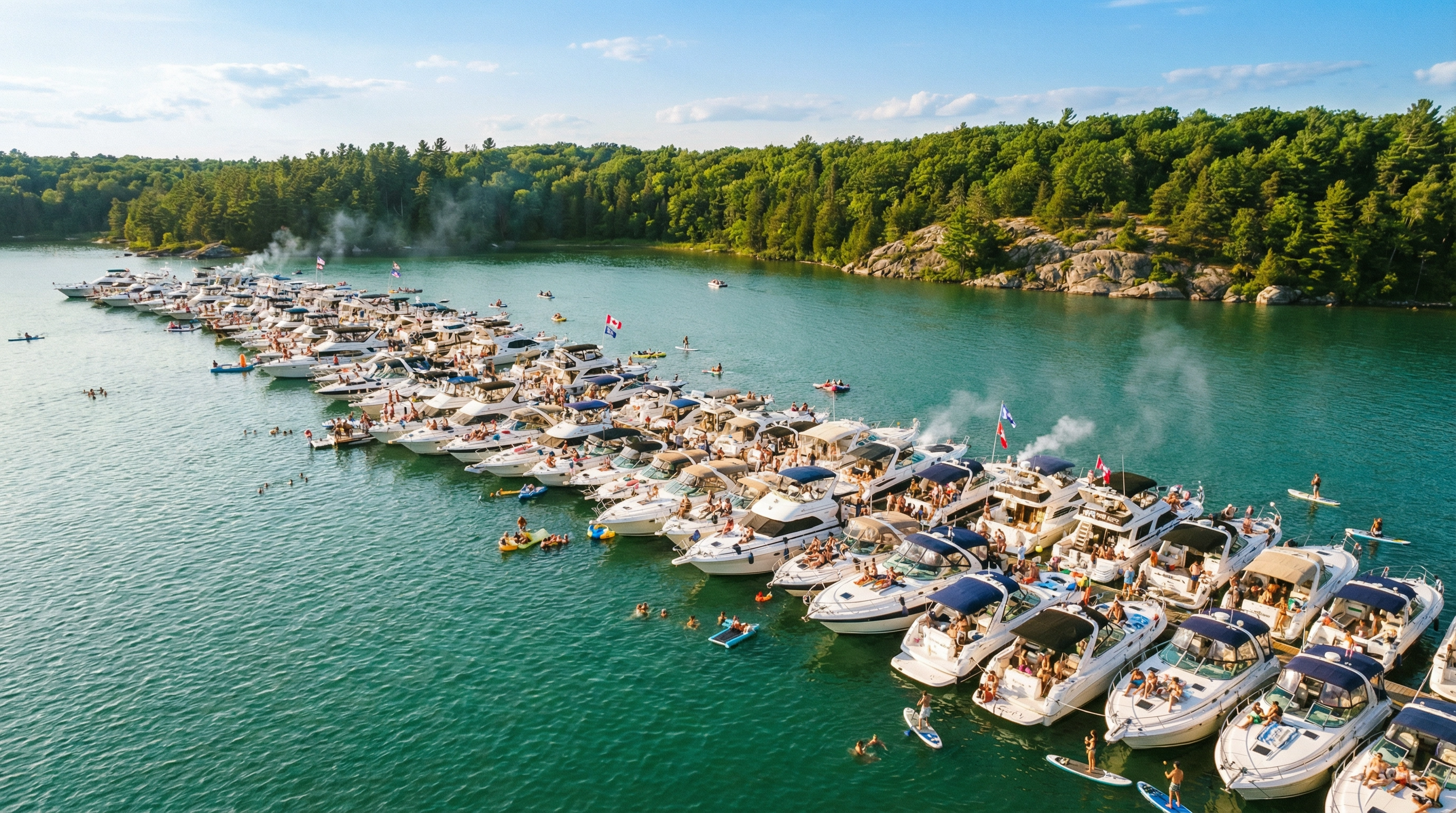
The Ultimate Guide to Raft-Up Safety: From Casual Cove to Pottahawk Chaos
There's a unique magic that happens when boats tie together on the water. It's the floating equivalent of a neighbourhood block party, a communal experience that turns individual vessels into a single, lively platform for swimming, grilling, and socializin

Dwayne Rodrigues
Boat Owner & Enthusiast
 Guides
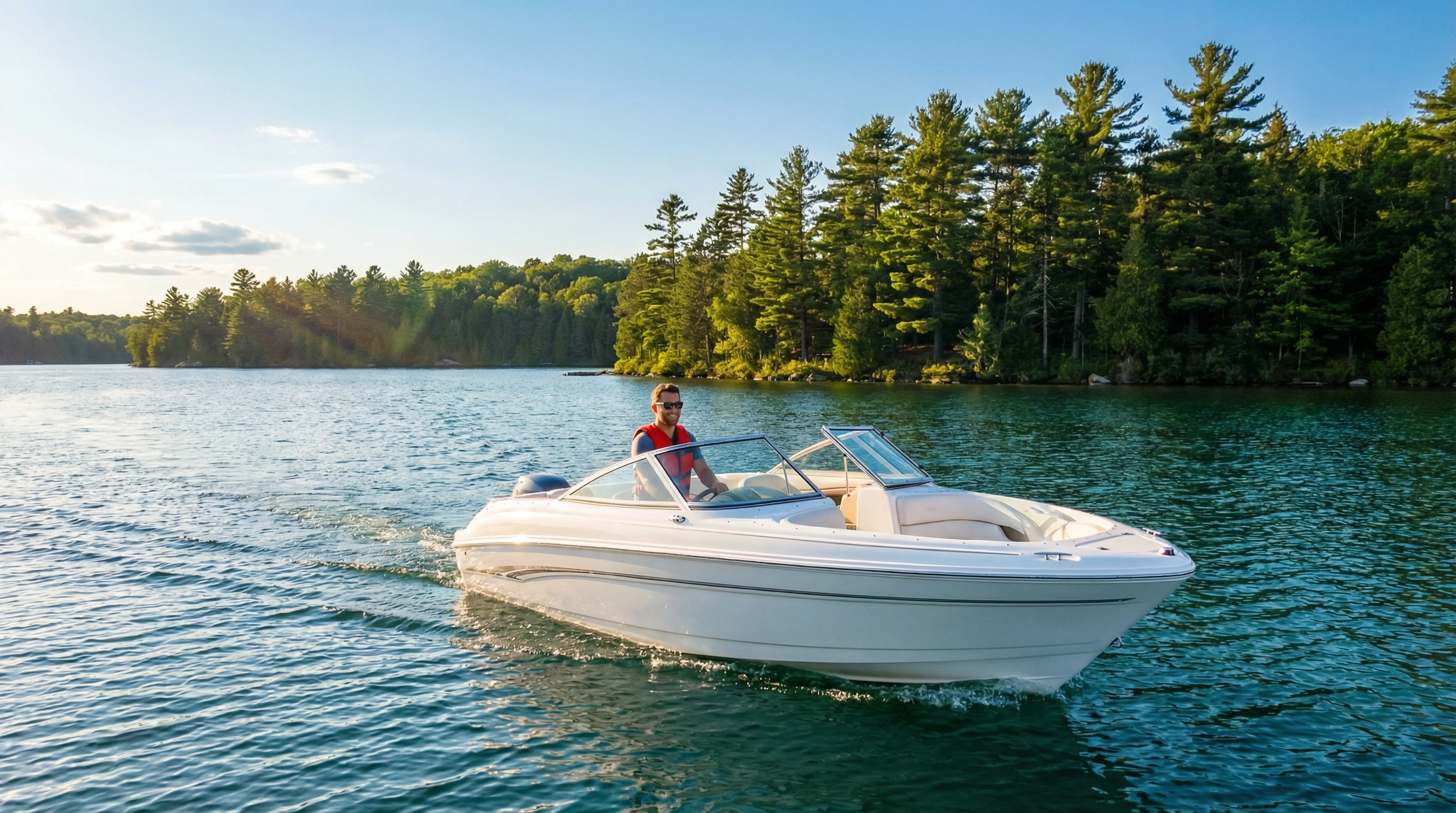
Beginner's Guide to Boating in Canada
So, you’re thinking about getting into boating in Canada. Fantastic. You’re about to join millions of Canadians who take to our incredible lakes, rivers, and coastlines every year. It’s a world of breathtaking sunsets, unforgettable family moments, and the
Dwayne Rodrigues
Boat Owner & Enthusiast
 Guides
The Complete Guide to the Pottahawk Pissup
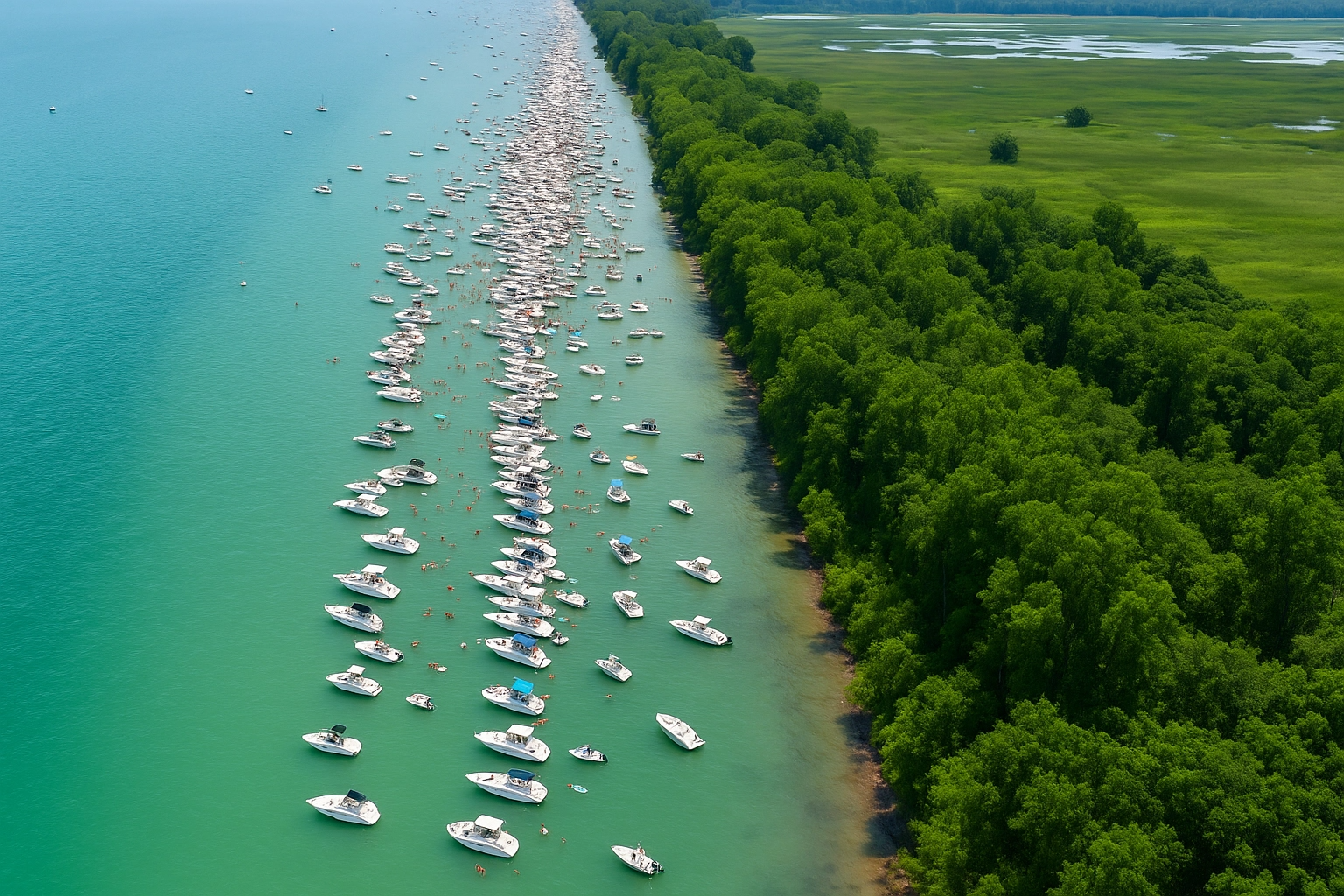
The Pottahawk Pissup is an unofficial, unsanctioned boat party held on the second Sunday of July at Pottahawk Point in Long Point Bay, Lake Erie. It is not an organized event. There are no official organizers, no tickets, and no formal schedule.
Dwayne Rodrigues
Boat Owner & Enthusiast