How to Summerize Your Boat: The Complete Spring Checklist for Canadians
There is a specific feeling that hits every Canadian boater around late April or early May. The ice has finally melted off Lake Erie, the sun is starting to feel genuinely warm, and you catch yourself staring at the boat trailer in the driveway. You know

Dwayne Rodrigues
Boat Owner & Enthusiast
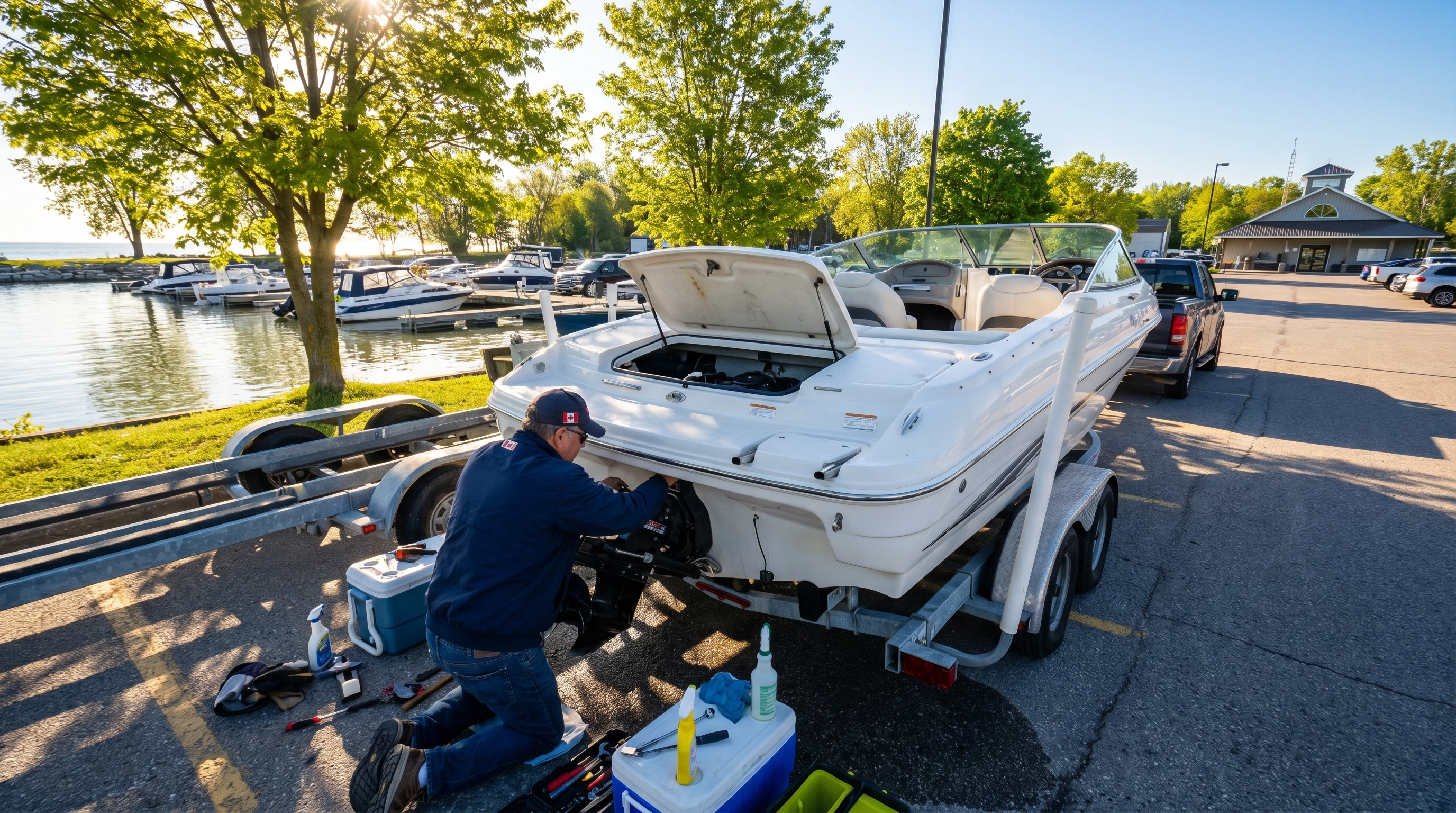
There is a specific feeling that hits every Canadian boater around late April or early May. The ice has finally melted off Lake Erie, the sun is starting to feel genuinely warm, and you catch yourself staring at the boat trailer in the driveway. You know what? It is time to get back on the water. But before you turn the key and hear that outboard rumble to life, there is one massive hurdle standing between you and the lake: summerization.
If you are a new boat owner gearing up for your first season, or even a seasoned veteran who just needs a refresher, getting your boat ready for summer is not something you want to rush. We have all seen that guy at the boat launch on the first nice weekend of the year, the one whose engine will not start, or worse, the one who forgot the drain plug. You do not want to be that guy.
Let me explain exactly what you need to do to de-winterize your vessel properly. This comprehensive spring commissioning checklist will walk you through everything from engine fluids to Transport Canada safety requirements, ensuring your first trip out is memorable for all the right reasons.
What Exactly is Boat Summerization?
Boat summerization (sometimes called spring commissioning or de-winterizing) is the exact reverse of the winterization process you went through last fall. Where winterization puts your boat to sleep to protect it from freezing Canadian temperatures, summerization wakes it back up.
It involves inspecting the engine, refreshing fluids, testing the battery, checking safety gear, examining the hull, and verifying that every electrical and mechanical system is in working order before your boat ever touches the water. Skipping these steps can lead to catastrophic engine failure, electrical fires, or finding yourself stranded mid-lake. Honestly, taking a few hours in the driveway now saves you thousands of dollars and ruined weekends later.
The 10-Step Spring Commissioning Checklist
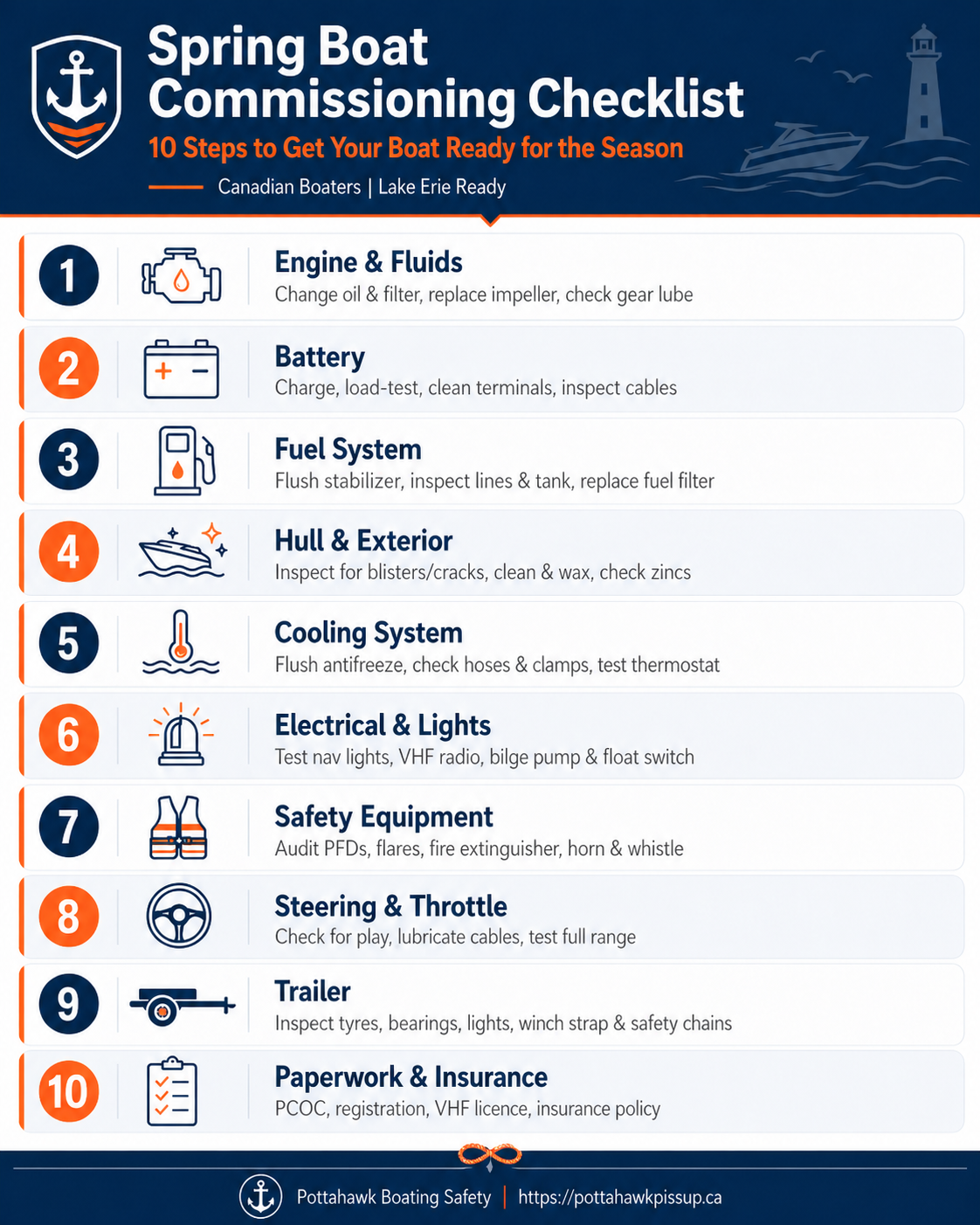
To make things easy, we have broken down the process into ten manageable steps. Feel free to save this infographic to your phone for quick reference when you are out in the driveway.
1. Engine and Fuel System Prep
Your engine is the beating heart of your boat, and it needs some love after sitting dormant for six months. Start by checking the oil and filter. If you did not change them during winterization (which you really should have), do it now.
Next, inspect the cooling system. If you ran antifreeze through the system last fall, you will need to flush it out completely. Check all hoses and clamps for stiffness, rot, or cracking. A cracked hose might look fine on the trailer but will burst under pressure on the water.
Finally, let's talk about fuel. If you stored your boat with a full tank treated with fuel stabilizer, you are generally in good shape. However, you should still inspect the fuel lines for any signs of wear or leaks, and replace the fuel filter or water separator. Bad gas is the number one reason boats fail to start in the spring.
2. Battery Inspection and Charging
A dead battery is the quickest way to ruin a boating trip. Over the winter, batteries naturally lose their charge. Before you do anything else, hook your battery up to a quality marine charger.
Once it is fully charged, inspect the terminals. Are they corroded? Clean them up with a wire brush and a mixture of baking soda and water. Check the cables to ensure they are securely fastened and not frayed. If your battery is more than three to five years old, or if it struggles to hold a charge, it is time to replace it.
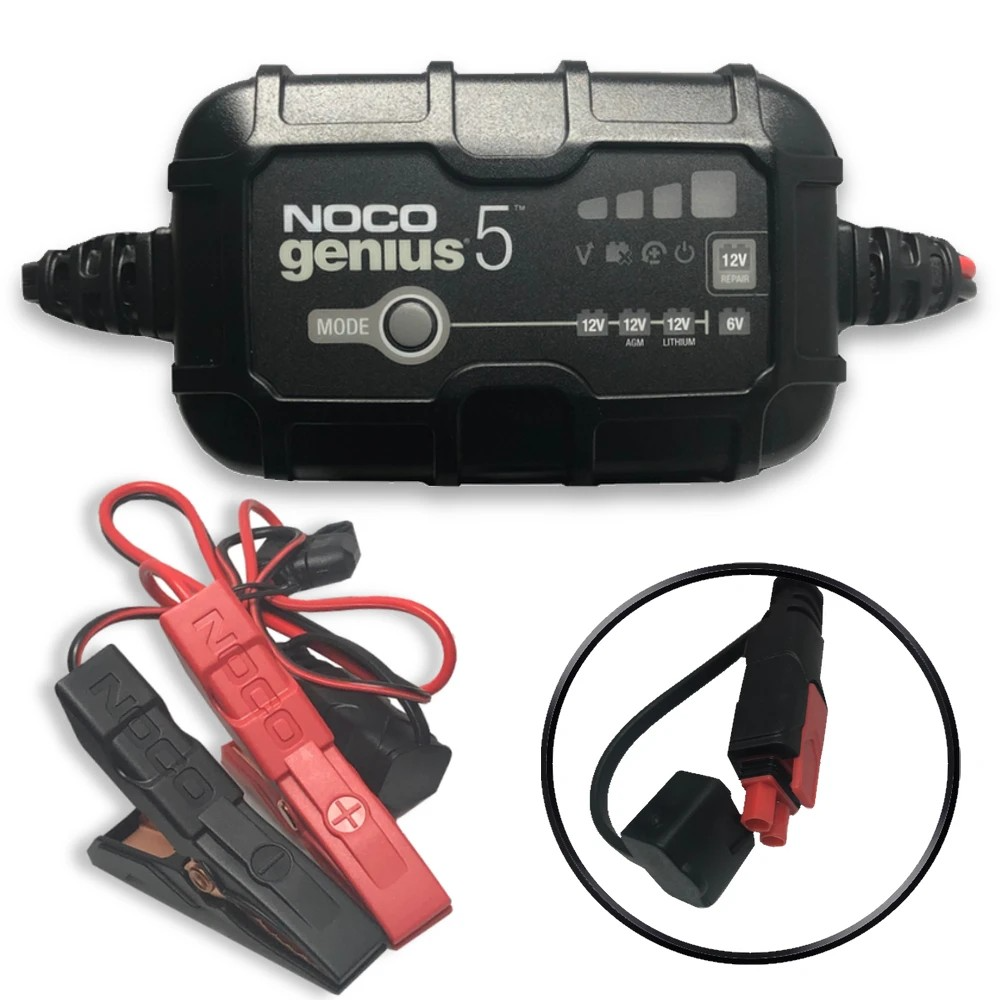
Budget Pick: The NOCO GENIUS5 is a fantastic, affordable option for keeping your battery topped up and maintained.
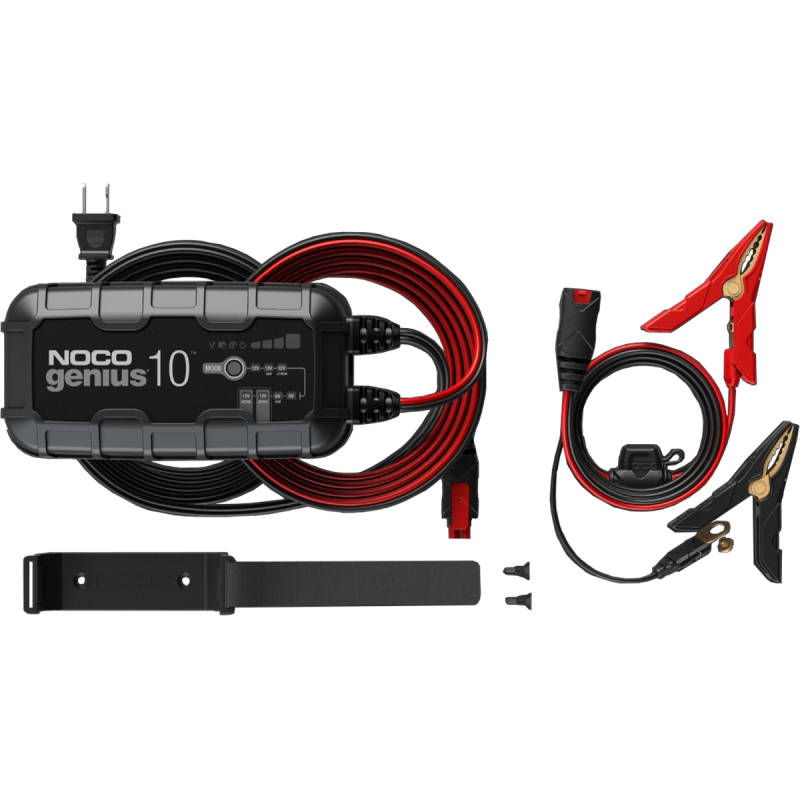
Premium Pick: For larger setups or multiple batteries, the NOCO GENIUS10 offers faster charging and advanced diagnostic features.
3. Hull and Exterior Maintenance
Walk around your boat and give the hull a thorough inspection. Look for any blisters, stress cracks, or distortions in the fibreglass. If you spot any significant damage, you might need professional repairs before launching.
This is also the perfect time to give your boat a deep clean and a fresh coat of wax. Waxing is not just about making your boat look pretty; it protects the gel coat from UV rays, saltwater corrosion, and general wear and tear.
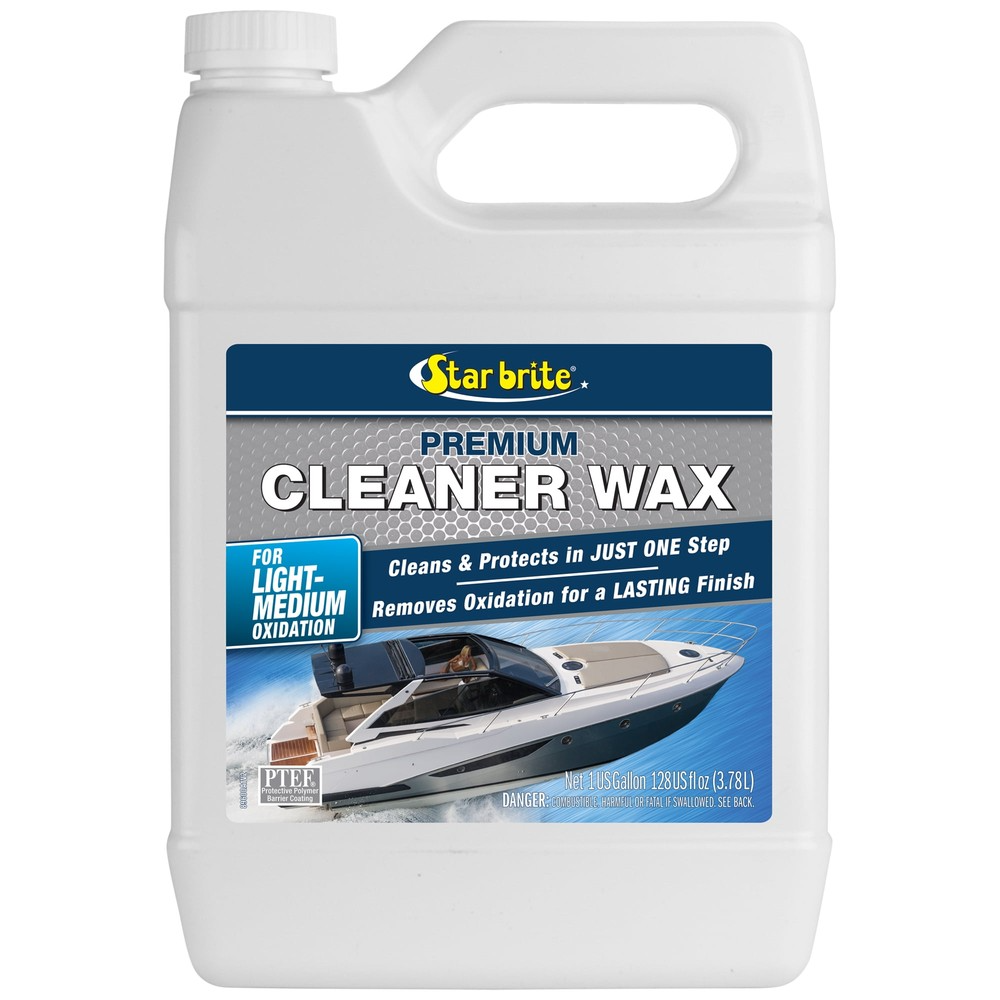
Budget Pick: Star brite Premium Cleaner Wax is a great one-step solution that cleans and protects in a single application.
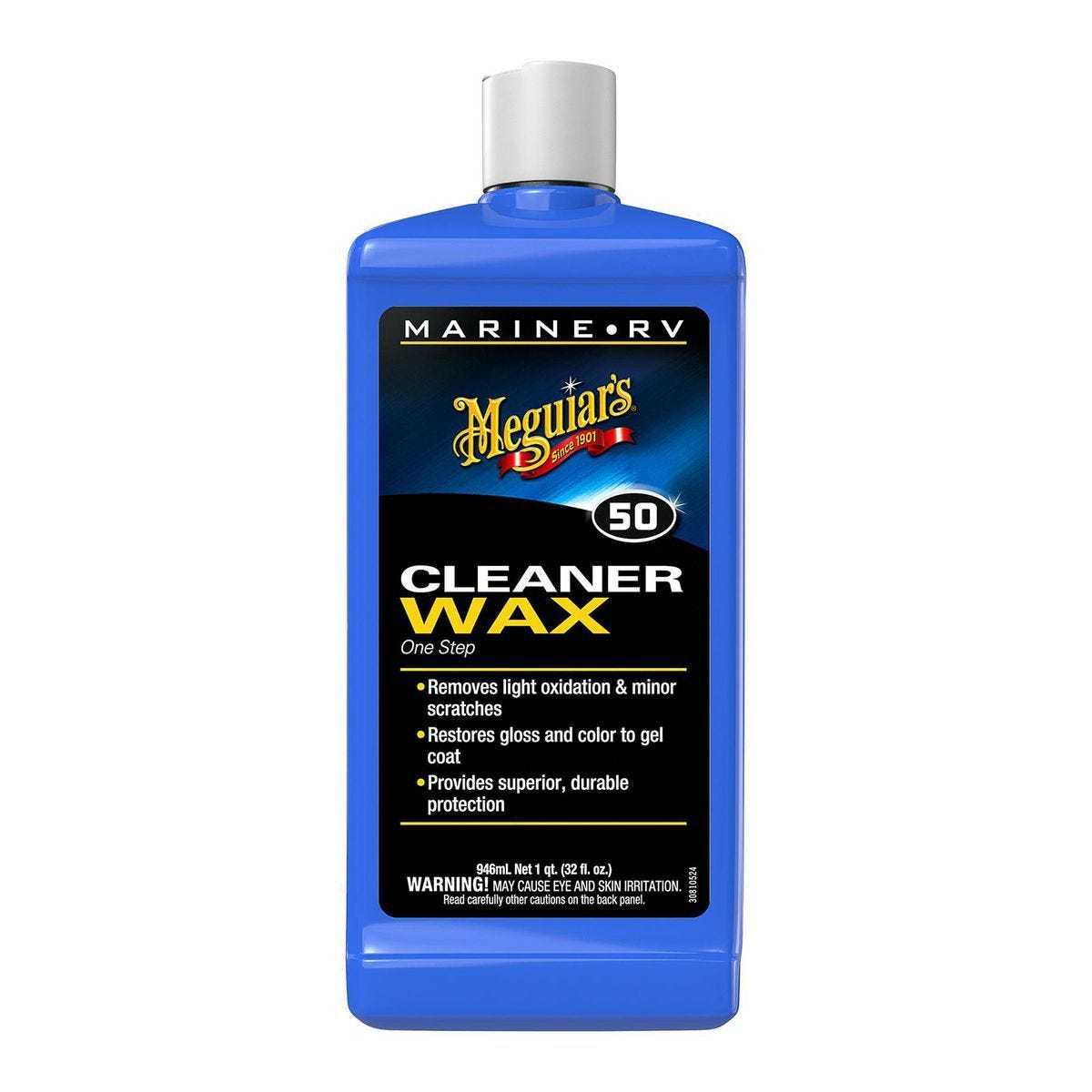
Premium Pick: Meguiar's Marine/RV One Step Cleaner Wax is the industry standard for restoring gloss and providing durable protection.
4. Electrical Systems and Lights
Go through every electrical component on your boat. Turn on the navigation lights, cabin lights, and any underwater LEDs. Transport Canada requires functioning navigation lights if you plan on boating after dark or in restricted visibility.
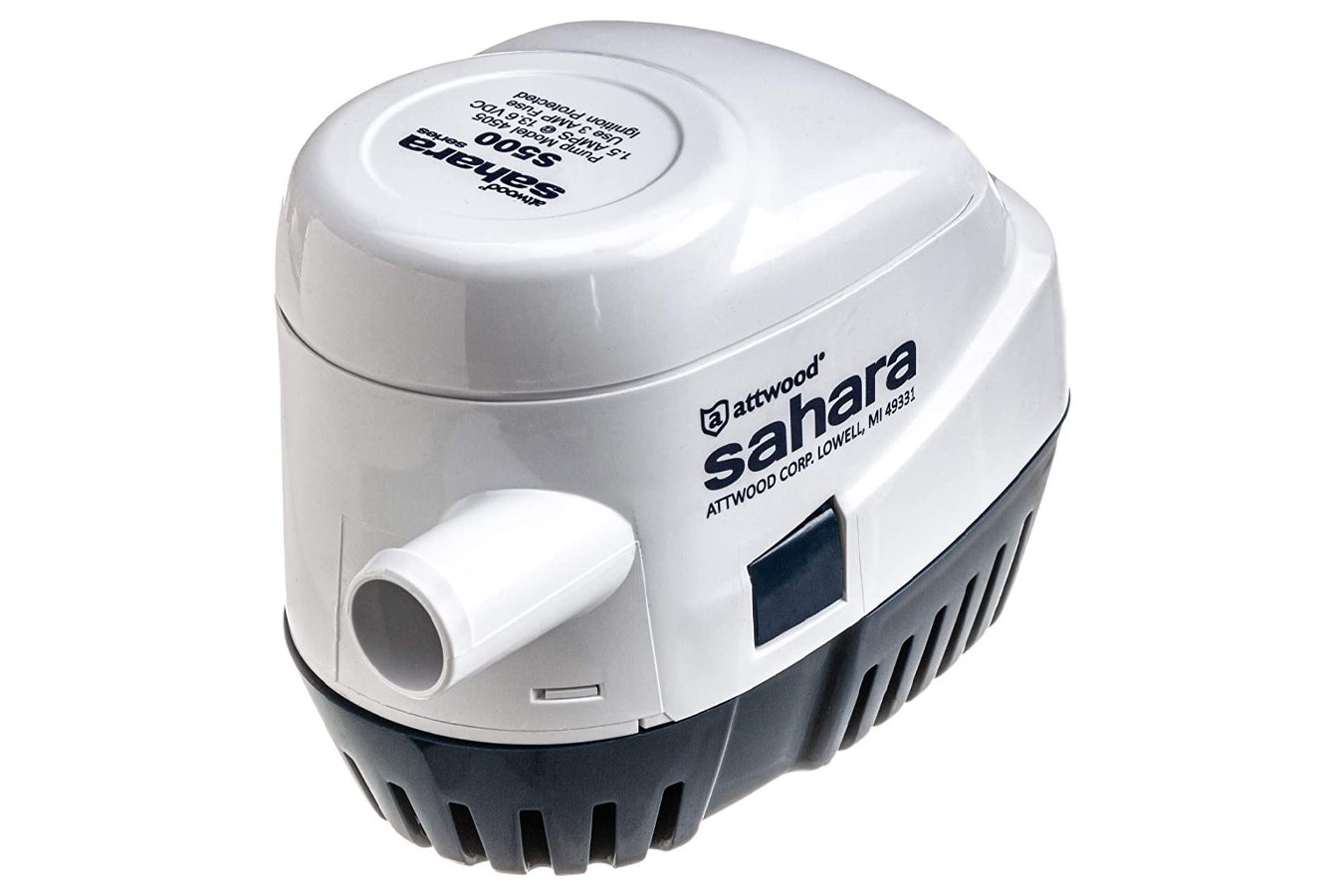
Test your VHF marine radio to ensure it is transmitting and receiving clearly. Check the bilge pump and the float switch. You can test the float switch by manually lifting it to see if the pump kicks on.
Premium Pick: If your bilge pump is acting up, replace it immediately. The Attwood Sahara Automatic Bilge Pump is a reliable, all-in-one unit that gives you peace of mind.
5. Safety Equipment Audit
This is arguably the most critical step. Transport Canada has strict requirements for safety equipment based on the size and type of your vessel. Pull out all your gear and do a complete boat safety equipment checklist.
Check your lifejackets (PFDs) for any rips, tears, or mold. Ensure you have enough properly fitting PFDs for every person on board, as mandated by Canadian lifejacket laws. Inspect your fire extinguishers to ensure they are fully charged and not expired. Check the expiration dates on your flares—if they are expired, consider upgrading to electronic flares, which are now legal in Canada and never expire. Finally, test your sound-signaling device (horn or whistle) and ensure your heaving line is easily accessible.
6. Steering and Throttle Check
Grip the steering wheel and turn it lock-to-lock. It should move smoothly without any binding or excessive play. If the steering feels stiff, the cables may need lubrication or replacement. Do the same with the throttle and shift controls. They should engage positively and smoothly.
7. Trailer Inspection
Your boat might be ready for the water, but is your trailer ready for the road? Inspect the trailer tires for dry rot, cracking, and proper inflation. Check the wheel bearings; if they have not been repacked recently, now is the time. Test the trailer lights and ensure the winch strap and safety chains are in good condition.
8. Paperwork and Insurance
Before you back down the ramp, make sure your paperwork is in order. Do you have your Pleasure Craft Operator Card (PCOC) on board? Ensure your boat registration numbers are clearly displayed on the bow and that you have the physical registration document with you.
This is also the perfect time to review your boat insurance policy. Make sure your coverage is up to date and adequate for your needs. As the experts at Westland Insurance point out, having the right coverage offers peace of mind, especially when dealing with the unpredictable nature of the Great Lakes.
9. The Drain Plug
It sounds incredibly obvious, but it happens every single year. Before the boat leaves the driveway, make sure the stern drain plug is installed and tightened securely. Double-check it when you arrive at the launch.
10. The First Run
For your first trip of the season, keep it short and stay close to the marina. This is a shakedown cruise. Let the engine warm up on the trailer before casting off. Once on the water, monitor the temperature gauges, listen for any unusual noises, and check the bilge for leaks. If everything looks and sounds good, you are officially ready for summer.
Preparing for Lake Erie's Unique Challenges
If you are boating on Lake Erie, spring commissioning carries a bit more weight. The lake is notoriously shallow and can whip up dangerous squalls in a matter of minutes. In May and early June, the water temperature is still dangerously cold, making cold water boating risks a serious concern.
Always check the marine weather forecasts before heading out, and make sure you know exactly what to do if your engine fails while out on the open water.
Taking the time to properly summerize your boat isn't just about protecting your investment; it is about protecting your family and friends. Work through the checklist, replace what needs replacing, and get ready for another incredible season on the water. We will see you out there.
Sources & Further Reading
Tags
Share
Read Next
 Resources
Boat Insurance in Ontario: What It Covers, What It Costs, and What Most Boaters Get Wrong
Let me ask you a question. If you back your boat into a slip at Port Dover and accidentally crunch the fiberglass on the cruiser next to you, who pays for it? What if a sudden summer squall rips through the anchorage at Pottahawk and your anchor drags,

Dwayne Rodrigues
Boat Owner & Enthusiast
 Resources
Transport Canada Boating Rules: The Complete Guide
Navigating the waters of Canada offers some of the most spectacular recreational boating in the world, from the vast expanses of the Great Lakes to the intricate networks of coastal inlets. However, this privilege comes with a profound responsibility.
Dwayne Rodrigues
Boat Owner & Enthusiast
 Resources
Fuel Planning for a Long Weekend: How to Never Get Stranded on the Water
That quiet, creeping anxiety is something almost every boater has felt at some point. Running out of fuel on the water is not just embarrassing. It's genuinely dangerous. You lose steerage, you lose the ability to respond to changing weather, and you becom
Dwayne Rodrigues
Boat Owner & Enthusiast